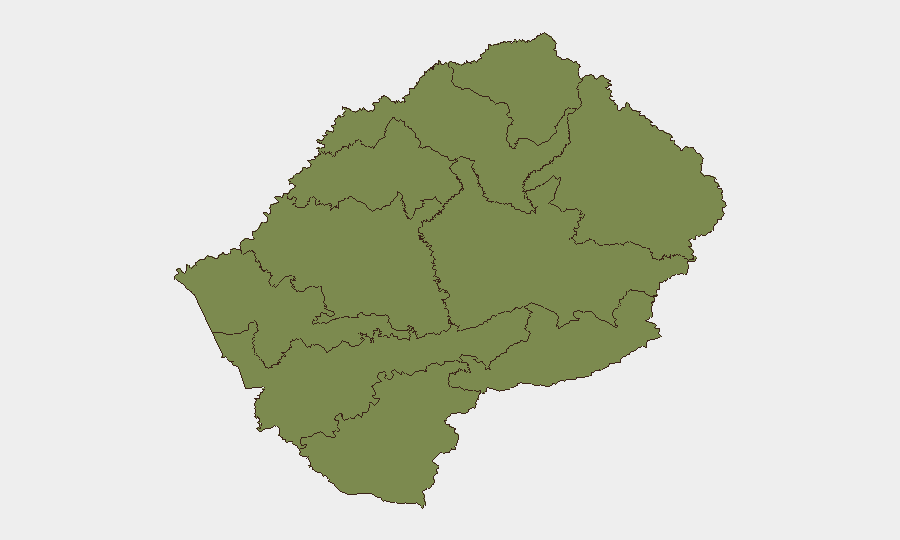
Situation Summary
Lesotho remains at baseline security risk (global rank #95, composite threat score 11) with no confirmed significant incidents reported in the last 24–48 hours. Administrative and judicial activity signals were recorded on 2026-07-04, but open-source verification has not corroborated any acute security event, civil unrest, or infrastructure disruption. The security environment continues to be shaped by chronic localized tensions in Mafeteng and Maseru districts rather than acute nationwide instability.
Key Developments
No confirmed security, civil-unrest, crime, political-instability, or infrastructure incidents affecting corporate operations or duty-of-care obligations have been corroborated in open, cross-checkable sources within the last 24–48 hours. Administrative and public statements were recorded 2026-07-04, but lack verified incident context or operational impact. Monitoring of local media, embassy advisories, and geolocated social streams has not surfaced breaking unrest, roadblocks, protests, or emergency declarations in Maseru, Mafeteng, or other major centers.
Recommendation: Teams should maintain routine situational awareness and monitor official Lesotho government channels and resident embassy security notices for any emerging alerts; absence of current reporting does not rule out rapidly developing local incidents outside open-source visibility.
Highest-Risk Areas
Mafeteng District (risk score 31.5) and Maseru District (risk score 24) account for the overwhelming majority of recorded threat signals. Mafeteng's elevated risk profile reflects persistent localized tensions and security events; Maseru, as the capital and largest urban center, concentrates administrative, commercial, and law-enforcement activity that generates both genuine incidents and administrative signals. All other districts score substantially lower (1.5–9), indicating concentrated rather than nationwide risk. Personnel and assets in Mafeteng and Maseru should observe heightened routine precautions; teams in peripheral districts face baseline Lesotho-wide threat levels.
How GeoBit Would Assist
AOI Monitoring & Early Warning with persistent, geolocated watch on Maseru and Mafeteng would detect emerging protest activity, roadblocks, or security operations with minimal latency. Intel Sweep and multi-source OSINT fusion (X/Twitter, Telegram, local media, radio SIGINT) would triangulate unconfirmed signals and separate administrative noise from genuine incidents. Risk & Threat Assessment updated weekly would flag any shift in district-level composite scores, alerting duty-of-care teams to deterioration before it affects operations on the ground.
7-Day Outlook
No acute destabilization is indicated in the 7-day horizon; Lesotho's risk profile is expected to remain at or near current baseline unless major political or criminal events surface. Routine monitoring should continue, with particular attention to Mafeteng and Maseru. Teams should maintain tested communication and evacuation protocols and ensure real-time access to embassy security notices and local news feeds, as rapid-onset localized incidents in either district could require swift response even if national-level instability does not materialize.
Highest-Risk Areas — Ranked
| # | State / Region | Risk |
|---|---|---|
| 1 | Mafeteng District | 31.5 |
| 2 | Maseru District | 24 |
| 3 | Thaba-Tseka District | 9 |
| 4 | Berea District | 1.5 |
| 5 | Mohale's Hoek District | 1.5 |
| 6 | Quthing District | 1.5 |
| 7 | Butha-Buthe District | 1.5 |
| 8 | Leribe District | 1.5 |
| 9 | Mokhotlong District | 1.5 |
| 10 | Qacha's Nek District | 1.5 |
Sources
Previous Daily Briefs
A new Lesotho brief is written every day — each with its own risk map and downloadable CSV. Here's the last week; use the calendar to go further back.
📅 Browse every day by calendar →
Highlighted days have a brief. Tap a day for that day's map & analysis, or “csv” for that day's dataset ($5).
Atlas — our AI intelligence desk — emails them this snapshot personally. Nothing else, no list.