Situation Summary
Mongolia remains a low-threat environment with a composite global threat ranking of #122 and no verified security incidents reported in the last 24–48 hours across open sources and OSINT aggregators. The country continues to experience stable governance and minimal civil unrest, though Dundgovi province presents an anomalously elevated risk profile requiring targeted monitoring. Overall security trajectory remains flat with no indicators of acute deterioration.
Key Developments
No verified, Mongolia-specific security, conflict, civil-unrest, crime, political-instability, infrastructure, or travel-disruption incidents have been confirmed in the last 24–48 hours by independent cross-referenced sources. Open-source news wires, regional outlets, Mongolian government and law-enforcement channels, and OSINT aggregators have not surfaced credible reporting of protests, riots, significant crimes, terrorism, border incidents, or infrastructure failures during this window. Recent event signals in the GeoBit feed are attributed to activity in other countries (notably European actors and events) rather than Mongolia-specific developments.
Highest-Risk Areas
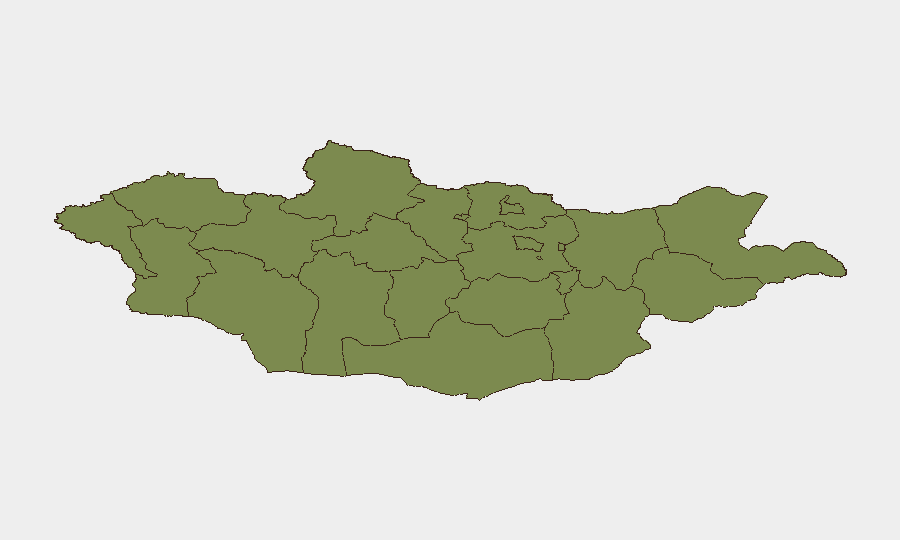
Dundgovi province (south-central Mongolia) dominates the sub-national risk profile with a composite score of 31.5—approximately six times higher than the national average and markedly elevated compared to all other provinces. The anomaly warrants investigation into underlying drivers (mining operations, cross-border activity, criminal networks, or environmental stress) to inform site-specific duty-of-care protocols. Ulaanbaatar (capital) carries a secondary risk score of 4.9, typical for major urban centers and reflecting concentration of people, infrastructure, and administrative activity. All other provinces cluster at 1.5, indicating relatively uniform low-level baseline risk outside the Dundgovi outlier.
How GeoBit Would Assist
Security teams should employ AOI Monitoring & Early Warning with persistent watch on Dundgovi and Ulaanbaatar to detect emerging civil unrest, crime spikes, or infrastructure incidents before they mature into operational threats. Intel Sweep and multi-language OSINT fusion (social media, local news, radio SIGINT) would surface early signals in Mongolian, Russian, and regional channels where English-language wires may lag. Network & Actor Analysis would map criminal and political networks within Dundgovi to contextualize the elevated risk score and identify specific threat actors or conditions warranting protective measures for personnel or assets.
7-Day Outlook
No acute security drivers are evident for the next seven days. Monitoring should focus on Dundgovi's underlying risk drivers and routine situational awareness in Ulaanbaatar; absent fresh triggering events (policy change, border incident, or resource-sector disruption), the current low-threat posture is expected to persist. Duty-of-care teams should maintain baseline protective measures and leverage GeoBit's early-warning capabilities to detect any deviation from the baseline.
Highest-Risk Areas — Ranked
| # | State / Region | Risk |
|---|---|---|
| 1 | Dundgovi | 31.5 |
| 2 | Ulaanbaatar | 4.9 |
| 3 | Orkhon | 1.5 |
| 4 | Selenge | 1.5 |
| 5 | Övörkhangai | 1.5 |
| 6 | Töv | 1.5 |
| 7 | Ömnögovi | 1.5 |
| 8 | Bayan-Ölgii | 1.5 |
| 9 | Uvs | 1.5 |
| 10 | Hovsgel | 1.5 |
| 11 | Arkhangai | 1.5 |
| 12 | Bayankhongor | 1.5 |
Previous Daily Briefs
A new Mongolia brief is written every day — each with its own risk map and downloadable CSV. Here's the last week; use the calendar to go further back.
📅 Browse every day by calendar →
Highlighted days have a brief. Tap a day for that day's map & analysis, or “csv” for that day's dataset ($5).