Situation Summary
Nepal remains at moderate composite threat level (#75 globally; score 11) with 24 tracked events, but faces acute near-term instability driven by recent government collapse, sustained Gen-Z protest mobilisation, and border tensions with India. Bagamati Province (Kathmandu region) dominates risk metrics at 31.4, reflecting concentrated civil unrest and security-force responses in the capital. Cross-border incidents and localised displacement operations in remote districts indicate fragmented security challenges across multiple provinces, with risk trajectory currently elevated but not yet indicating widespread escalation.
Key Developments
- Susta area, West Nawalparasi – 15 June 2026 – Indian SSB personnel allegedly crossed into Nepali territory, triggering a border face-off and local protests. Joint Nepali security deployment and temporary bases reported in response, raising bilateral tension.
- Kathmandu (multiple protest sites) – 14–15 June 2026 – Nepal Police used tear gas and force to disperse Gen-Z-led protests; viral footage alleges "rampage of violence" by security forces. Clashes and injuries reported; tensions remain elevated despite government fall announcement.
- Lampata, Budhinanda Municipality, Bajura District – 14–15 June 2026 – A 28-member joint security team (Nepal Police, Armed Police Force, Nepali Army) established a temporary base after three-day trek to address prior displacement and stabilise remote-area security.
- Nepal–India border (unspecified crossing) – 14–15 June 2026 – Viral video highlights apparent gaps in border checks and monitoring, prompting online debate on porous borders and smuggling vulnerabilities that may affect crossing procedures and security screening.
- Kathmandu and major towns – 14–15 June 2026 – Gen-Z protest mobilisation remains active within 48 hours of government fall; continued youth gatherings and political organising reported despite easing of immediate violence.
- Nationwide (digital channels) – 14–15 June 2026 – Persistent VPN usage and encrypted-app reliance observed following recent internet restrictions; highly digital protest environment continues, enabling rapid mobilisation and complicating official monitoring.
Highest-Risk Areas
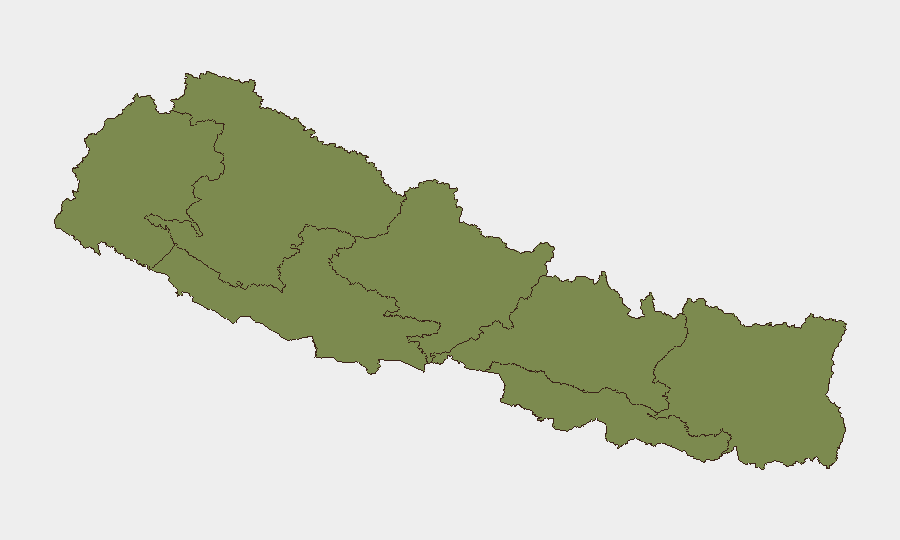
Bagamati Province (risk 31.4) is the dominant driver of national threat level, reflecting Kathmandu's status as the epicentre of political instability, protest activity, and police-civilian clashes. Gandaki Province (11.6) shows secondary but notable risk, likely linked to border-adjacent instability and local displacement. Remaining provinces (Sudurpashchim, Karnali, Lumbini, Koshi, Madhesh) register uniformly lower scores (1.4 each), though Sudurpashchim and Karnali warrant monitoring given their proximity to India and historical cross-border activity. The concentration of risk in Bagamati reflects the capital's outsize role in national politics and security; provincial risks are geographically dispersed and often tied to localised disputes rather than systemic threats.
How GeoBit Would Assist
Intel Sweep and OSINT fusion enable continuous monitoring of Nepali social media, news, and Telegram channels to track protest mobilisation, police responses, and border incidents in near-real time. AOI Monitoring & Early Warning with persistent watch on Kathmandu protest zones, Susta border area, and Bajura displacement site provides alerts when activity escalates or shifts. Sentiment & temporal analysis applied to recent Gen-Z digital organising would flag emerging protest triggers and forecast near-term crowd actions, supporting corporate duty-of-care protocols for personnel in or transiting Kathmandu.
7-Day Outlook
Government fall and Gen-Z protest momentum suggest continued civil unrest in Kathmandu over the next week, with likely sporadic clashes and police responses rather than sustained large-scale violence. Border tensions with India in West Nawalparasi may persist but are unlikely to escalate to military action absent new provocations. Remote-area displacement and security-force deployments (Bajura, etc.) will proceed incrementally; overall national risk trajectory remains elevated but not on an acute escalation path provided major new political or border triggers do not emerge.
Highest-Risk Areas — Ranked
| # | State / Region | Risk |
|---|---|---|
| 1 | Bagamati Province | 31.4 |
| 2 | Gandaki Province | 11.6 |
| 3 | Sudurpashchim Province | 1.4 |
| 4 | Karnali Province | 1.4 |
| 5 | Lumbini Province | 1.4 |
| 6 | Koshi Province | 1.4 |
| 7 | Madhesh Province | 1.4 |
Sources
Previous Daily Briefs
A new Nepal brief is written every day — each with its own risk map and downloadable CSV. Here's the last week; use the calendar to go further back.
📅 Browse every day by calendar →
Highlighted days have a brief. Tap a day for that day's map & analysis, or “csv” for that day's dataset ($5).