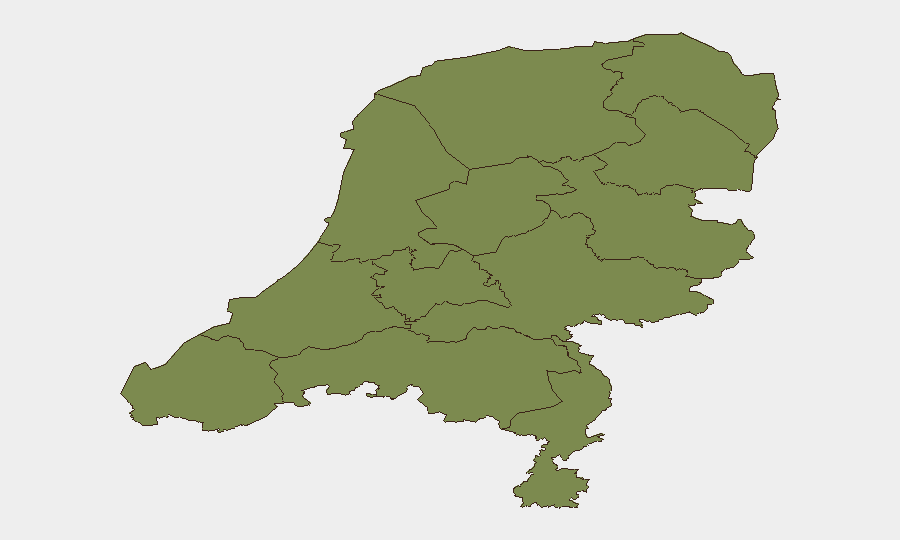
Situation Summary
The Netherlands remains a low-threat jurisdiction (global rank #168, composite score 4), but the past 48 hours have surfaced a cluster of concurrent incidents—physical security breaches, elevated cyber activity, and active criminal investigations—suggesting localized volatility rather than systemic instability. Flevoland dominates the sub-national risk profile at 31.4, more than three times higher than South Holland; however, recent event signals cluster in major urban centers (The Hague, Amsterdam, Ede) and point to criminal, infrastructure, and cyber vectors. The threat trajectory remains contained but warrants heightened operational awareness across corporate and critical-infrastructure sectors.
Key Developments
- The Hague – Explosion at office building (Apeldoornselaan), night of 19–20 July. Police investigating criminal intent after blast damaged front door and first-floor window of bookkeeping office; cause undetermined.
- Nationwide – Elevated cyber threat level, reported 20 July. Dutch/Belgian Cyber Dreigingsradar assessed "considerable" threat, citing multiple active campaigns against Dutch and Belgian organizations; heightened monitoring advised.
- Critical WordPress vulnerability (CVE-2026-63030) exploitation risk, current as of 20 July. Public proof-of-concept available for unauthenticated remote code execution ("wp2shell"); near-term risk of website compromise, defacement, and data theft for WordPress-dependent organizations.
- Ede, Gelderland – Police raids on 20 July morning. Five dwellings entered in online fraud investigation; offenses include fraud and weapons possession, indicating active multi-location criminal probe.
- The Hague – Shooting incident under investigation (Madame Curieplein). Police witness appeal issued 19 July following firearm discharge; incident unresolved.
- Inland waterway infrastructure stress – Low river levels (Waal River inlet, Meertje). Houseboats grounded due to water shortage; localized transport and supply-chain risk on inland waterways.
Highest-Risk Areas
Flevoland's composite risk score of 31.4 is anomalously elevated relative to peers and warrants investigation; South Holland (8.1) and North Holland (5.4) follow, but remain substantially lower. All other provinces cluster at 1.4, indicating Flevoland is the primary geographic outlier. Recent event signals do not geographically align with this ranking—incidents are concentrated in The Hague (South Holland), Amsterdam (North Holland), and Ede (Gelderland)—suggesting either delayed data integration or that Flevoland's risk score reflects ongoing but lower-visibility activity. Corporate security teams should treat Flevoland as a persistent watch area while maintaining operational focus on current hotspots in The Hague and surrounding metropolitan regions.
How GeoBit Would Assist
OSINT & Cyber Monitoring: Intel Sweep and multi-language web research pinpoint emerging cyber campaigns; Shodan and vulnerability tracking expose WordPress/critical-infrastructure exposure in real time.
Geographic & Criminal Intelligence: GIS analysis and network/actor mapping correlate Flevoland's elevated score against current event distribution; AOI Monitoring on The Hague, Amsterdam, and Ede provides persistent early warning of physical security incidents and criminal activity escalation.
Predictive & Routing: Early warning algorithms flag cyber-threat velocity and potential spillover to corporate networks; routing & network analysis supports alternative supply-chain and personnel movement planning amid water-infrastructure disruptions.
7-Day Outlook
Cyber activity is expected to remain elevated as CVE-2026-63030 exploitation windows remain open; organizations should prioritize WordPress patching and perimeter defense. The Hague firearm incident and Ede fraud/weapons investigation may generate secondary incidents (arrests, court activity, asset seizures) over the coming week. Drought conditions on inland waterways are likely to persist, constraining logistics; water-dependent supply chains should activate contingency routes and inventory planning.
Highest-Risk Areas — Ranked
| # | State / Region | Risk |
|---|---|---|
| 1 | Flevoland | 31.4 |
| 2 | South Holland | 8.1 |
| 3 | North Holland | 5.4 |
| 4 | Zeeland | 1.4 |
| 5 | Utrecht | 1.4 |
| 6 | North Brabant | 1.4 |
| 7 | Frisia | 1.4 |
| 8 | Groningen | 1.4 |
| 9 | Drenthe | 1.4 |
| 10 | Gelderland | 1.4 |
| 11 | Overijssel | 1.4 |
| 12 | Limburg | 1.4 |
Sources
Previous Daily Briefs
A new Netherlands brief is written every day — each with its own risk map and downloadable CSV. Here's the last week; use the calendar to go further back.
📅 Browse every day by calendar →
Highlighted days have a brief. Tap a day for that day's map & analysis, or “csv” for that day's dataset ($5).
Atlas — our AI intelligence desk — emails them this snapshot personally. Nothing else, no list.