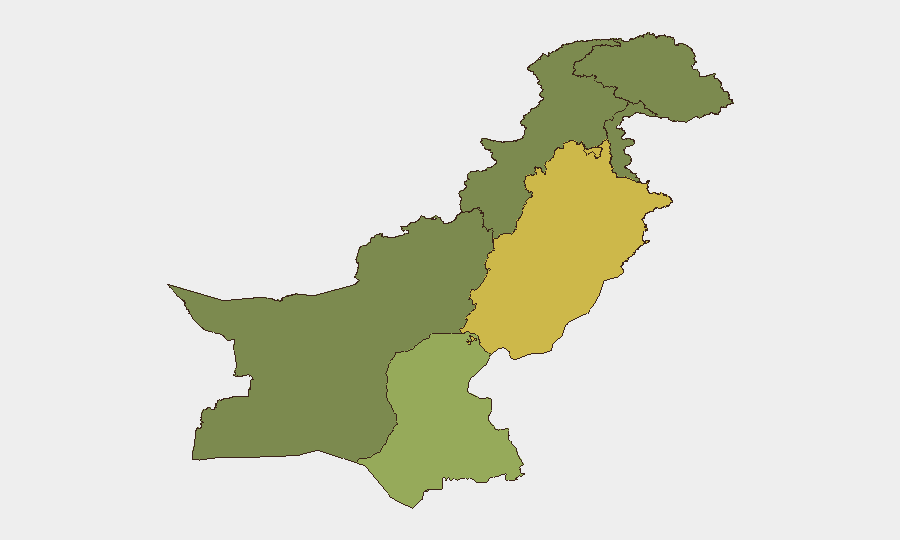
Situation Summary
Pakistan remains at elevated security risk (global rank #33, composite score 49.9), driven by active counter-terrorism operations, persistent militant activity in border regions, and targeted attacks on Chinese interests and diplomatic facilities. The capital and Punjab dominate the national risk profile, while Balochistan and Khyber Pakhtunkhwa remain designated no-travel zones by Western governments due to entrenched militant networks and kidnapping threats. The security posture across major urban centres has tightened significantly, with U.S. consulates in both Karachi and Lahore under reduced staffing following March evacuation orders. Without major new attack incidents reported in the past 24 hours, the environment reflects sustained operational intensity rather than acute escalation.
Key Developments
- Islamabad Capital Territory – heightened counter-terror sweep: Islamabad police conducted 3,413 search operations in May, checked over 250,000 persons, and arrested more than 600 individuals; security agencies maintain "high alert" status across the capital amid terrorism and crime crackdown operations.
- Gwadar, Balochistan – elevated security following BLA attack on Chinese consulate: Pakistani forces continue sustained operations in and around Gwadar port after late-May Baloch Liberation Army attack killed multiple security personnel; authorities have reinforced protective cordons around Chinese nationals and Belt-and-Road-Initiative infrastructure.
- North Waziristan, Khyber Pakhtunkhwa – ongoing TTP and militant presence: Sporadic clashes persist along key supply routes to Mir Ali and Miranshah; IED attacks and ambushes on security convoys remain high-probability risks in this long-standing militant stronghold.
- Quetta, Balochistan – persistent cycle of bombings and targeted killings: Recent assessments confirm elevated threat from IED incidents and sectarian/separatist assassination campaigns; Frontier Corps maintains heavy operational presence and frequent cordon-and-search operations.
- Karachi – U.S. consulate staffing reduction: U.S. State Department maintains Level 3 "Reconsider travel" advisory and ordered non-emergency personnel departure in March; persistent terrorism, kidnapping, and organised crime remain stated concern drivers.
- Lahore – diplomatic security tightening: U.S. Consulate reduced to emergency staffing; advisory reflects continued risk to diplomatic facilities and public venues despite Punjab's lower incident rate relative to western provinces.
- Khyber Pakhtunkhwa and Balochistan – reinforced no-travel zones: U.S. and UK advisories maintain extreme-risk classifications for former FATA districts and all of Balochistan due to terrorism, kidnapping, and attacks on convoys and rail infrastructure.
Highest-Risk Areas
Punjab (64.9) and Islamabad Capital Territory (60.3) drive the national risk score despite lower raw incident counts, reflecting the concentration of state institutions, diplomatic missions, and economic assets in these zones and correspondingly intensive targeting calculus by militant groups. Balochistan (34.9) and Khyber Pakhtunkhwa (39.8), while ranked lower in composite score, sustain the highest *frequency* of militant violence, IED attacks, and kidnapping incidents; their lower composite rankings reflect lower population density and fewer corporate/diplomatic assets. Sindh (45.6), anchored by Karachi, sits in the middle risk band due to large urban population, ongoing organised crime, and periodic terrorist incident clusters.
How GeoBit Would Assist
Security teams operating in Pakistan should deploy AOI Monitoring & Early Warning on high-risk nodes (Islamabad, Karachi, Lahore consulate precincts, Gwadar port, Quetta city centre, North Waziristan supply corridors) to flag emerging incident clusters and militant activity signals. Routing & Network Analysis enables duty-of-care teams to model alternative travel corridors and assess real-time convoy security postures. Conflict & Military battle mapping and Entity/Actor Network Analysis provide situational awareness of TTP, BLA, and security-force deployment patterns to inform travel timing and site-security posture decisions.
7-Day Outlook
No major escalation is forecast over the next week absent new attack events; counter-terrorism operations are expected to continue at current operational tempo in Islamabad, Balochistan, and Khyber Pakhtunkhwa. Threat posture in major cities and diplomatic precincts will remain elevated through sustained security deployments. Organisations with personnel or assets in Balochistan and North Waziristan should treat current travel restrictions as baseline for the near term.
Highest-Risk Areas — Ranked
| # | State / Region | Risk |
|---|---|---|
| 1 | Punjab | 64.9 |
| 2 | Islamabad Capital Territory | 60.3 |
| 3 | Sindh | 45.6 |
| 4 | Khyber Pakhtunkhwa | 39.8 |
| 5 | Gilgit-Baltistan | 37.8 |
| 6 | Balochistan | 34.9 |
| 7 | Azad Kashmir | 34.9 |
Previous Daily Briefs
A new Pakistan brief is written every day — each with its own risk map and downloadable CSV. Here's the last week; use the calendar to go further back.
📅 Browse every day by calendar →
Highlighted days have a brief. Tap a day for that day's map & analysis, or “csv” for that day's dataset ($5).