Situation Summary
Qatar remains at relatively low composite threat (rank #157 globally, score 4/100), with no credible new security incidents confirmed inside the country in the last 24–48 hours. However, the nation is operating under elevated vigilance following ballistic missile interceptions on 9–12 July and continued regional tensions involving Iran, prompted by attacks on shipping and regional partners. The security environment is contained but not normalized; official monitoring and alert posture persist.
Key Developments
- No new on-territory incidents (24–48h window). Open-source monitoring and official statements as of 15 July confirm no fresh attacks, civil unrest, crime incidents, or infrastructure damage inside Qatar beyond sustained air-defense readiness from earlier events.
- Regional diplomatic friction signaled. Multiple state actors (Iran, Germany, Sri Lanka, Israel) issued public statements or rejections on 13–15 July related to Qatar and regional disputes; these reflect diplomatic strain but do not indicate imminent domestic security risk to Qatar itself.
- Physical assault reported (14 July, location unspecified). GeoBit event signals recorded one physical assault incident on 14 July involving Qatar and a presidential figure; no verified details on severity, location, or outcome are available from open sources.
- Unconventional violence (business sector, 14 July). A single unconventional violence signal linked to a business entity was recorded on 14 July; specifics remain unclear and require corroboration.
- Military/defense tensions ongoing. Qatar rejected a military proposal or action on 13 July; concurrent Iranian artillery/tank activity against Qatari forces was recorded the same day, consistent with earlier regional escalation rather than a new phase.
- QatarEnergy operational adjustments persist. LNG tanker docking schedules and output-ramp plans at Ras Laffan remain paused as of 9–10 July in response to the Hormuz attack on the *Al Rekayyat*; no new maritime incidents have been reported in the last 48 hours.
Highest-Risk Areas
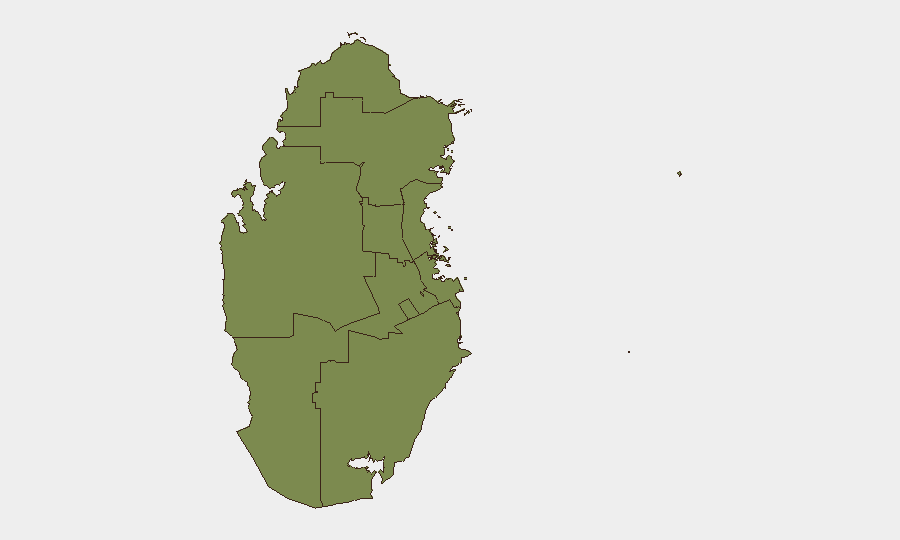
Al Shahaniya dominates the sub-national ranking (risk 31.5), an outlier reflecting its industrial and strategic significance; it houses critical energy infrastructure and is likely flagged due to its proximity to Doha and previous targeting patterns. Doha itself (risk 1.8) remains the second-highest area, consistent with its status as the capital and concentration of government, diplomatic, and commercial assets. The remaining emirates (Ash Shamal, Al Rayyan, Al Khor, Al-Daayen, Umm Salal, Al Wakrah) are near-equal and markedly lower (1.5 each), suggesting risk is highly concentrated in the capital region and industrial corridor rather than dispersed.
How GeoBit Would Assist
Security teams should deploy AOI Monitoring & Early Warning on Doha, Al Shahaniya, and the Ras Laffan industrial zone to detect renewed missile activity, maritime incidents, or unrest in real time. Intel Sweep (OSINT fusion, X/Twitter & Telegram, multi-language media) provides 24-hour monitoring of Iranian and regional state rhetoric and attack claims, enabling early warning of escalation intent. Maritime & Aviation tracking coupled with Routing & Network Analysis supports safe movement of personnel and assets, identifying alternative routes around Hormuz-linked disruptions and air-defense zones.
7-Day Outlook
Barring new Iranian strikes or a sharp escalation in regional hostilities, Qatar's domestic security posture is expected to remain elevated but stable over the next 7 days. Diplomatic friction will likely persist; monitoring of Iranian statements and military posturing remains essential. Maritime and energy logistics disruptions are expected to continue as a precaution, not due to new incidents.
Highest-Risk Areas — Ranked
| # | State / Region | Risk |
|---|---|---|
| 1 | Al Shahaniya | 31.5 |
| 2 | Doha | 1.8 |
| 3 | Ash Shamal | 1.5 |
| 4 | Al Rayyan | 1.5 |
| 5 | Al Khor and Al Thakhira | 1.5 |
| 6 | Al-Daayen | 1.5 |
| 7 | Umm Salal | 1.5 |
| 8 | Al Wakrah | 1.5 |
Sources
Previous Daily Briefs
A new Qatar brief is written every day — each with its own risk map and downloadable CSV. Here's the last week; use the calendar to go further back.
📅 Browse every day by calendar →
Highlighted days have a brief. Tap a day for that day's map & analysis, or “csv” for that day's dataset ($5).
Atlas — our AI intelligence desk — emails them this snapshot personally. Nothing else, no list.