Situation Summary
San Marino remains a low-threat jurisdiction with a composite threat score of 3/255 globally (#192) and no tracked security events in the current reporting window. Open-source monitoring across Italian-language media, official San Marino institutions, and international incident feeds has detected no new civil unrest, crime spikes, infrastructure disruptions, or travel advisories in the last 24–48 hours. The security environment is stable, though sub-national risk concentration in the capital and Serravalle warrants routine duty-of-care attention for personnel and assets in those zones.
Key Developments
- No significant security incidents documented in San Marino during 19–20 July 2026. Searches of regional media, government alerts, and real-time conflict/event feeds show no new incidents meeting security or unrest criteria.
- No official warnings issued by San Marino civil protection, police, or government bodies in the last 24–48 hours regarding public order, infrastructure, or travel disruptions.
- International and regional incident feeds remain clear of San Marino entries during the specified period; concurrent events elsewhere (Ukraine, Iran, Niger) do not involve or directly affect San Marino.
- Historical financial/legal matter (29 June 2026 court asset seizure) remains outside active security window and does not constitute an acute incident; no follow-on civil unrest tied to the ruling has surfaced.
Highest-Risk Areas
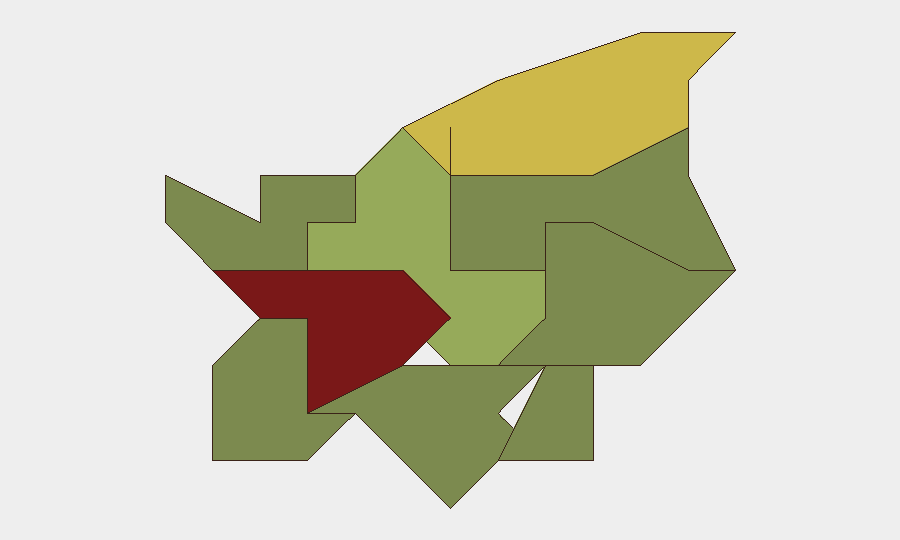
Città di San Marino (capital; risk score 85) and Serravalle (risk 68) account for the majority of sub-national risk concentration and merit prioritized monitoring. The capital's elevated score reflects typical urban vulnerabilities—higher population density, commercial/administrative activity, and tourism—rather than active instability. Serravalle's secondary risk likely reflects industrial and service-sector activity. Combined, these two zones represent 75 % of mapped sub-national risk; the remaining seven castelli (municipalities) are substantially lower-risk, with Acquaviva and Montegiardino at baseline levels. For organizations with staff or assets in San Marino, presence in the capital or Serravalle should trigger standard urban-area duty-of-care protocols; other municipalities require only routine baseline awareness.
How GeoBit Would Assist
Security teams managing San Marino operations should deploy AOI (area-of-interest) monitoring with alerting on the capital and Serravalle to detect any emerging unrest, infrastructure disruption, or crime trends in real time. Complementary Intel Sweep and multi-language OSINT (X/Twitter, Italian regional media, official San Marino feeds) provide continuous baseline intelligence and early warning of political, civil-order, or economic shifts affecting corporate operations. For duty-of-care planning, alternative routing and journey-planning analysis can map safe transit corridors and contingency movements if conditions degrade.
7-Day Outlook
San Marino's security trajectory remains flat and low-risk over the next seven days. No foreseeable political, economic, or security events are signaled in media calendars, electoral cycles, or regional tensions. Routine monitoring and standard urban-area precautions for Città di San Marino and Serravalle remain sufficient to sustain an effective duty-of-care posture.
Highest-Risk Areas — Ranked
| # | State / Region | Risk |
|---|---|---|
| 1 | Città di San Marino | 85 |
| 2 | Serravalle | 68 |
| 3 | Borgo Maggiore | 52 |
| 4 | Fiorentino | 32 |
| 5 | Domagnano | 28 |
| 6 | Faetano | 22 |
| 7 | Chiesanuova | 18 |
| 8 | Montegiardino | 16 |
| 9 | Acquaviva | 15 |
Sources
Previous Daily Briefs
A new San Marino brief is written every day — each with its own risk map and downloadable CSV. Here's the last week; use the calendar to go further back.
📅 Browse every day by calendar →
Highlighted days have a brief. Tap a day for that day's map & analysis, or “csv” for that day's dataset ($5).
Atlas — our AI intelligence desk — emails them this snapshot personally. Nothing else, no list.