Situation Summary
Slovenia remains a low-threat environment with a composite threat score of 5 globally (#153 ranking) and no corroborated security incidents reported in the past 24–48 hours. Recent event signals reflect routine constitutional and administrative proceedings rather than security disruptions or civil unrest. The country's stable governance framework and strong EU/NATO alignment continue to underpin operational security for corporate and personnel assets.
Key Developments
No publicly reported security, conflict, civil unrest, crime, infrastructure disruption, or travel-risk incidents were corroborated in Slovenia during the past 24–48 hours across open news sources, social media, or specialized security feeds.
Recent event signals tracked (2026-06-27 to 2026-06-29) are administrative and constitutional in nature:
- 2026-06-29 · Constitutional Court decision — routine judicial proceeding; no security implications identified.
- 2026-06-27 · Administrative rejection — policy-level event; no operational impact flagged.
- 2026-06-29 · European-level public statement — regional governance; no Slovenia-specific threat escalation.
The absence of corroborated incidents aligns with Slovenia's historical profile as a stable, low-crime jurisdiction. Duty-of-care teams should continue standard risk monitoring but need not elevate alert posture based on current reporting.
Highest-Risk Areas
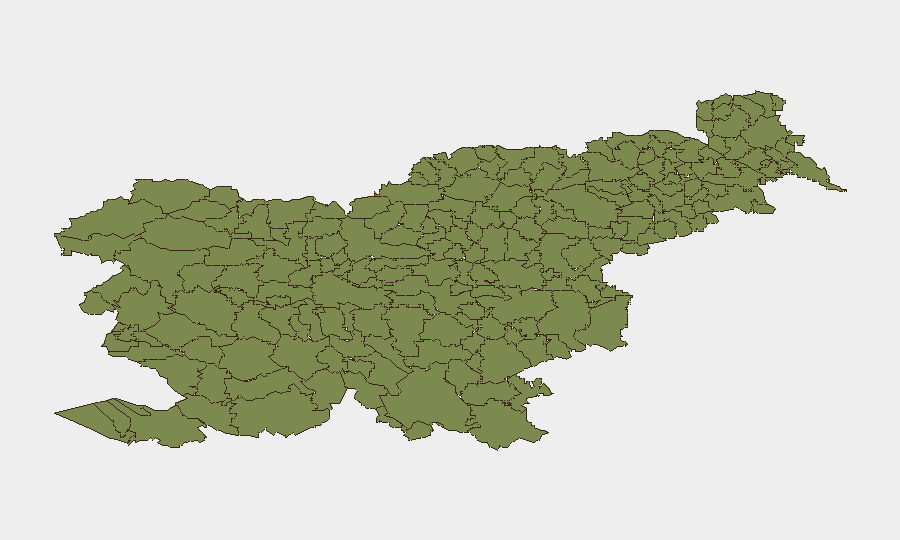
All 12 tracked sub-national regions in Slovenia carry a composite risk score of 0, reflecting uniformly low threat concentration. The northern border regions (Bovec, Kobarid, Kranjska Gora, Tolmin, and Bohinj) and western municipalities adjacent to Italy and Croatia show no elevated risk markers. This flat sub-national profile indicates no geographic clustering of security events and reinforces Slovenia's overall operational stability. Corporate and duty-of-care teams should apply standard baseline risk protocols rather than region-specific heightened measures.
How GeoBit Would Assist
For ongoing Slovenia monitoring, security teams would deploy AOI Monitoring & Early Warning to flag emerging civil unrest, infrastructure disruption, or cross-border activity in real time. Intel Sweep and multi-language OSINT fusion would track Slovenian administrative, judicial, and EU-level policy developments that could affect corporate operations or personnel safety. Election monitoring and regime-stability assessment would provide early signals of political friction or governance shifts affecting business continuity and travel risk.
7-Day Outlook
No escalation in threat posture is anticipated over the next 7 days. Slovenia's trajectory remains stable, with routine EU and domestic governance activities ongoing. Security teams should maintain standard duty-of-care protocols and passive monitoring; a shift to higher alert status is not warranted absent new corroborated incident reporting.
Highest-Risk Areas — Ranked
| # | State / Region | Risk |
|---|---|---|
| 1 | Bovec | 0 |
| 2 | Kobarid | 0 |
| 3 | Kanal | 0 |
| 4 | Kranjska Gora | 0 |
| 5 | Gorje | 0 |
| 6 | Tolmin | 0 |
| 7 | Bohinj | 0 |
| 8 | Cerkno | 0 |
| 9 | Brda | 0 |
| 10 | Šempeter-Vrtojba | 0 |
| 11 | Renče-Vogrsko | 0 |
| 12 | Miren-Kostanjevica | 0 |
Sources
Previous Daily Briefs
A new Slovenia brief is written every day — each with its own risk map and downloadable CSV. Here's the last week; use the calendar to go further back.
📅 Browse every day by calendar →
Highlighted days have a brief. Tap a day for that day's map & analysis, or “csv” for that day's dataset ($5).