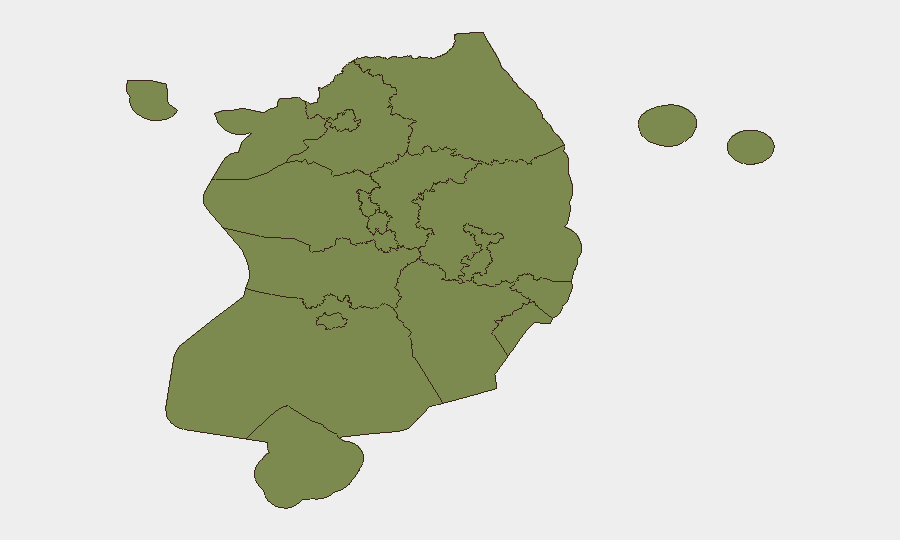
Situation Summary
South Korea remains a composite threat level 2 globally (#69 ranked), with 172 tracked events. The security environment is dominated by elevated inter-Korean tensions and multilateral diplomatic friction, particularly involving North Korea, China, Russia, and the United States. Seoul accounts for disproportionate risk concentration (31.4 composite score), reflecting both capital-city density and the locus of political decision-making and international engagement. The trajectory suggests sustained elevated rhetoric and diplomatic activity rather than imminent escalation, though the volatility of the Korean Peninsula context demands continuous monitoring.
Key Developments
- Seoul / North Chungcheong region: South Korean authorities conducted an arrest/detainment operation against a company on 2026-06-08; no further operational details available from public sources within the last 24 hours.
- Inter-Korean rhetoric: North Korean public statements targeting the South Korean President were issued on 2026-06-07, followed by South Korean counter-statements on 2026-06-07 and 2026-06-09.
- Multilateral diplomatic responses: UN Security Council sanctions measures against North Korea were formalized on 2026-06-07, with simultaneous statements from South Korean intelligence services on the same date.
- China–North Korea alignment signals: Chinese public statements on Chinese vs. North Korean affairs were issued 2026-06-08, and a separate statement from Xi Jinping expressing disapproval toward South Korea was logged the same period (2026-06-07), signaling possible diplomatic realignment.
- North Korean rejection stance: North Korea issued a public rejection of international community positions on 2026-06-09.
- Russia–North Korea military dimensions: A conventional military force event involving North Korean and Russian actors was logged 2026-06-08, suggesting either joint activity or signaling.
No acute civil unrest, infrastructure attacks, cyber incidents with operational impact, or mass-casualty events were reliably documented in the last 24–48 hours from accessible open sources.
Highest-Risk Areas
Seoul dominates the risk profile by a factor of approximately 1.7× over the second-ranked region (North Chungcheong), reflecting concentrated government, diplomatic, financial, and media infrastructure, and proximity to North Korean artillery and missile capabilities. North Chungcheong's elevated score (18.3) likely reflects its proximity to the DMZ and inter-Korean border regions, including military installations and civilian populations within strike range. Gyeonggi, Busan, and Incheon—all major population and logistics hubs—carry elevated but lower-intensity scores (2.5–4.2), reflecting moderate risk distribution outside the capital. All other regions score below 2, indicating substantially lower operational threat profiles for duty-of-care planning.
How GeoBit Would Assist
Corporate security teams should leverage AOI (Area-of-Interest) Monitoring & Early Warning capabilities to maintain persistent watch on Seoul and North Chungcheong, with alert thresholds tuned to diplomatic, military, and cyber event signals. Intelligence & OSINT (multi-language feeds, entity extraction, sentiment analysis, and social-media OSINT) enable real-time tracking of North Korean, Chinese, and Russian messaging, diplomatic shifts, and underground networks. Conflict & Military analysis—including force-structure and weapons-capability tracking—provides operational context on North Korean and allied posture changes that may affect travel corridors, port operations, and expatriate safety.
7-Day Outlook
Sustained elevated diplomatic tension is likely, with multilateral messaging continuing along current lines. Military posturing by North Korea and Russia may intensify symbolic gestures or exercises, but open conflict remains low-probability absent major miscalculation or escalation trigger. Seoul and border-adjacent regions warrant continued active monitoring; routine corporate operations in lower-risk provinces (Jeju, Gangwon, Sejong) face minimal near-term threat escalation.
Highest-Risk Areas — Ranked
| # | State / Region | Risk |
|---|---|---|
| 1 | Seoul | 31.4 |
| 2 | North Chungcheong | 18.3 |
| 3 | South Jeolla | 6.4 |
| 4 | Gyeonggi | 4.2 |
| 5 | Busan | 4.2 |
| 6 | South Chungcheong | 3.7 |
| 7 | South Gyeongsang | 2.9 |
| 8 | Incheon | 2.5 |
| 9 | Gangwon State | 1.8 |
| 10 | Jeju | 1.8 |
| 11 | Sejong | 1.4 |
| 12 | Jeonbuk State | 1.4 |
Previous Daily Briefs
A new South Korea brief is written every day — each with its own risk map and downloadable CSV. Here's the last week; use the calendar to go further back.
📅 Browse every day by calendar →
Highlighted days have a brief. Tap a day for that day's map & analysis, or “csv” for that day's dataset ($5).