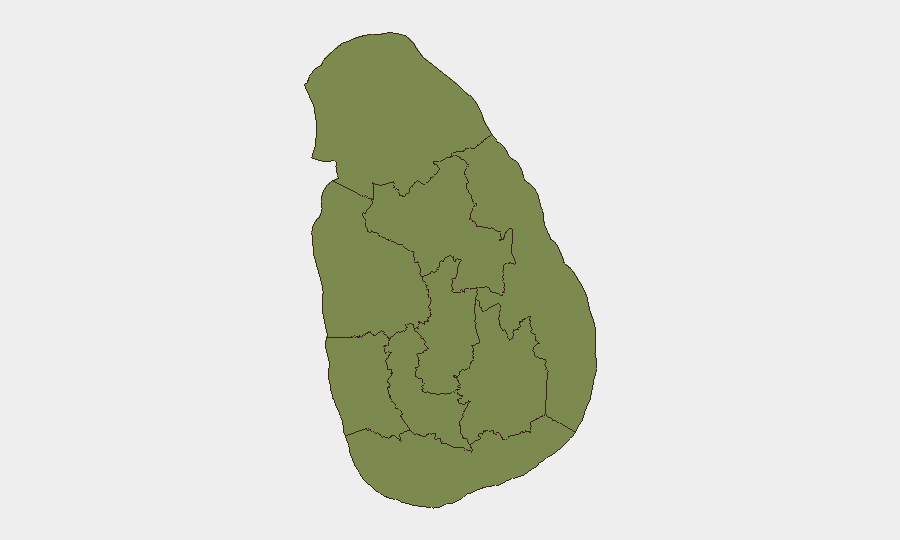
Situation Summary
Sri Lanka's security environment remains stable overall, with the country ranked 67th globally in the 2026 Global Peace Index and positioned as the second-most peaceful nation in South Asia—a notable improvement from prior years. However, GeoBit tracking identifies 81 discrete events in recent weeks, with composite threat score 9 placing the country at #113 globally, indicating persistent administrative, investigative, and diplomatic friction points. The Western Province dominates risk concentration (score 35.2), suggesting localized vulnerabilities despite the national-level stability narrative. No major acute security incidents—riots, terrorism, infrastructure attacks, or civil unrest—have been independently confirmed in the last 24–48 hours.
Key Developments
- Nationwide – 11 Jun 2026 – Sri Lankan media reported improved standing in the 2026 Global Peace Index (rank 67 globally, 2nd in South Asia), reflecting official narrative of enhanced stability and reduced large-scale conflict risk.
- Colombo (policy/media debate) – 10–11 Jun 2026 – Local outlets including The Morning promoted debate segments on "National Security: Is Sri Lanka having the right conversations and best approach?", indicating ongoing elite discussion of security posture rather than response to acute incidents.
- National level – 10–11 Jun 2026 – Multiple public statements, arrests/detentions, and investigative actions recorded across government and banking sectors, though specific operational details remain limited in open reporting; pattern consistent with routine administrative and law-enforcement activity.
- Diplomatic level – 10–11 Jun 2026 – Public statements exchanged between Sri Lanka and Maldives (specific subject unclear from available data), and statements involving Environment Ministry and banking entities, suggesting ongoing diplomatic and regulatory engagement without escalation indicators.
- No major incidents documented – last 24–48 hours – Web research, news aggregation, and social media monitoring revealed no independently confirmed reports of terrorism, large-scale protests, curfews, infrastructure sabotage, or travel disruptions specific to Sri Lanka in this period.
Highest-Risk Areas
The Western Province accounts for the overwhelming majority of national risk (score 35.2 of 113 total), suggesting Colombo and surrounding urban zones remain focal points for administrative tension, investigative activity, and policy friction. Uva Province (16.8) and North Western Province (9.8) are secondary concentration areas, though at significantly lower levels. The remaining six provinces cluster between 5–9 in risk score, indicating relatively distributed, low-level concern across rural and peripheral regions. The risk profile appears driven more by political, regulatory, and diplomatic friction than by active armed conflict or terrorism; corporate and NGO assets in the Western Province warrant elevated duty-of-care attention, particularly around banking, regulatory compliance, and public-facing operations.
How GeoBit Would Assist
A security team protecting people and assets in Sri Lanka would deploy AOI Monitoring & Early Warning on Colombo and the Western Province to detect emerging civil unrest, protest activity, or incidents in real time; Intel Sweep and multi-language OSINT (X/Telegram, local media, radio) to capture administrative changes, law-enforcement action, or diplomatic signals before they escalate; and Regime Stability and Entity Extraction analysis to track patterns in government statements and banking-sector engagement that might signal regulatory or policy shifts affecting operations.
7-Day Outlook
Current indicators suggest stability will persist through the near term, with no acute conflict or unrest catalysts evident. However, ongoing administrative and investigative activity—particularly in the Western Province—warrants continuous monitoring for policy shifts, regulatory enforcement, or diplomatic friction that could affect business continuity or duty-of-care compliance. Organizations should maintain baseline alert posture and refresh local liaison networks.
Highest-Risk Areas — Ranked
| # | State / Region | Risk |
|---|---|---|
| 1 | Western Province | 35.2 |
| 2 | Uva Province | 16.8 |
| 3 | North Western Province | 9.8 |
| 4 | Eastern Province | 9.4 |
| 5 | Sabaragamuwa Province | 8.7 |
| 6 | Northern Province | 5.5 |
| 7 | Central Province | 5.5 |
| 8 | North Central Province | 5.2 |
| 9 | Southern Province | 5.2 |
Sources
Previous Daily Briefs
A new Sri Lanka brief is written every day — each with its own risk map and downloadable CSV. Here's the last week; use the calendar to go further back.
📅 Browse every day by calendar →
Highlighted days have a brief. Tap a day for that day's map & analysis, or “csv” for that day's dataset ($5).