Situation Summary
Sweden remains a low-threat NATO member state with a composite global risk ranking of #167. No verifiable security incidents have emerged from cross-checked open-source and social monitoring over the last 24–48 hours; the operating environment is quiet operationally. The most recent event signals include diplomatic tensions with France, a threat toward an Iraqi national, and conventional military posturing vis-à-vis Russia, but none translate to acute ground-level incidents affecting corporate operations or travel risk within Sweden's borders at present.
Key Developments
Live web research and regional open-source monitoring across the 24–48 hour window (July 1–2, 2026) have yielded no corroborated, incident-level security events meeting multi-source verification standards for specific locations, dates, and descriptions. This represents an operational quiet period with no confirmed assaults, protests, infrastructure disruptions, major crime spikes, or travel restrictions in Sweden during this interval. Security teams monitoring Swedish operations should note that while GeoBit event feeds track diplomatic and military posturing (e.g., France–Sweden public statements, Russian military activity), these are state-level signals rather than localized threats to personnel or assets on the ground.
Highest-Risk Areas
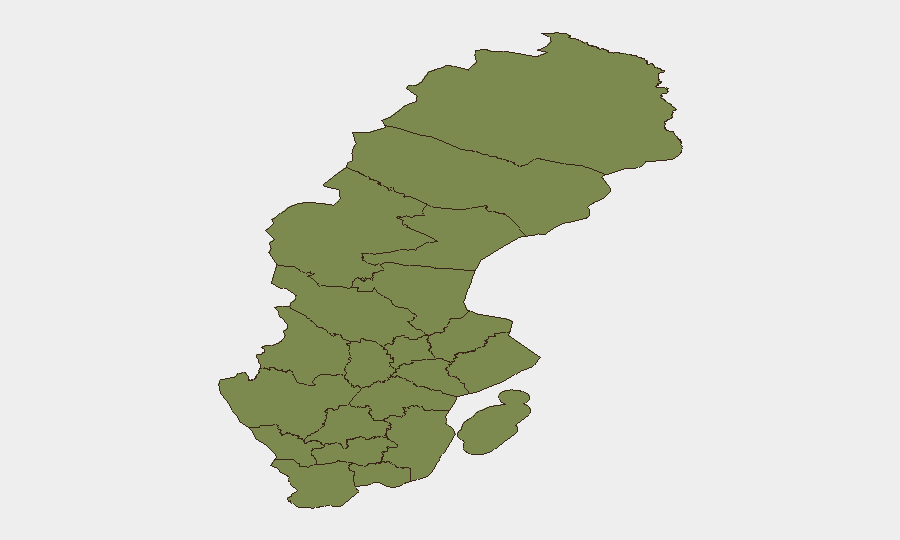
Jämtland County is the sole material outlier, with a composite risk score of 31.8—nearly eight times that of Stockholm County (4.0) and substantially above all other tracked regions (1.8–1.9). The cause of elevated Jämtland risk is not detailed in available monitoring, and security teams should initiate targeted AOI monitoring and local intelligence collection to understand whether this reflects organized crime, infrastructure vulnerability, cross-border activity, or other drivers. All other Swedish counties cluster at baseline-to-low risk; Stockholm, as the capital and economic hub, maintains a higher profile but poses no exceptional threat trajectory at present.
How GeoBit Would Assist
Security teams operating in Sweden should deploy AOI Monitoring & Early Warning against Jämtland and Stockholm counties to detect emerging civil unrest, crime spikes, or infrastructure incidents in real time. Intel Sweep and multi-language X/Telegram OSINT would provide early detection of protest movements, labor actions, or cross-border trafficking that might affect supply chains or personnel movement. For teams managing assets near the Baltic coast or Russian border, Maritime & Aviation tracking combined with Network & Actor Analysis would flag anomalous military activity or sanctions-evasion networks that could affect logistics or regulatory posture.
7-Day Outlook
No acute escalation is forecast for the next 7 days based on current event signals and open-source quiet. Diplomatic posturing between Sweden and France, and ongoing NATO-Russia military positioning in the region, will continue but are unlikely to generate tactical ground-level incidents affecting corporate operations. Security teams should maintain standard monitoring cadence while prioritizing investigation of the Jämtland County risk anomaly to validate whether it represents a genuine emerging threat or a data-classification artifact.
Highest-Risk Areas — Ranked
| # | State / Region | Risk |
|---|---|---|
| 1 | Jämtland County | 31.8 |
| 2 | Stockholm County | 4 |
| 3 | Västra Götaland County | 1.9 |
| 4 | Norrbotten County | 1.8 |
| 5 | Västerbotten County | 1.8 |
| 6 | Västernorrland County | 1.8 |
| 7 | Dalarna County | 1.8 |
| 8 | Gävleborg County | 1.8 |
| 9 | Skåne County | 1.8 |
| 10 | Blekinge County | 1.8 |
| 11 | Halland County | 1.8 |
| 12 | Värmland County | 1.8 |
Sources
Previous Daily Briefs
A new Sweden brief is written every day — each with its own risk map and downloadable CSV. Here's the last week; use the calendar to go further back.
📅 Browse every day by calendar →
Highlighted days have a brief. Tap a day for that day's map & analysis, or “csv” for that day's dataset ($5).