Situation Summary
Taiwan faces a composite threat score of 28 (rank #53 globally) driven by sustained cross-strait military pressure, domestic political volatility, and three concurrent criminal/regulatory crises that risk triggering public unrest. The last 48 hours have seen a record stock-market decline, accelerated defense-spending advocacy, continued PLA operational activity around the island, and a major food-safety scandal compounding pre-existing social friction. Security posture remains stable but fragile; political and economic confidence are measurably declining.
Key Developments
- Taichung, July 17: President Lai Ching-te formally requested parliamentary approval for a T$210 billion drone-defense acquisition package (2026–2031), framing the request against "rising security threats" and emphasizing Taiwan's collective defense responsibility—a high-profile political signal of escalating threat perception.
- Yilan County, July 17: The Army's Lanyang Regional Command concluded rapid cross-regional deployment drills as part of Joint Defense Exercises, demonstrating tactical readiness and mobility against potential Chinese military contingencies; drills ended Friday.
- Taiwan Strait, July 17 (ongoing): Taiwan's Ministry of National Defense reported sustained PLA aircraft and naval vessel operations around Taiwan and within the air defense identification zone, continuing a documented pattern of military pressure; multiple daily sorties logged.
- Nationwide financial markets, July 17: Taiwan's benchmark stock index suffered its largest single-day loss on record—a 2,953.71-point plunge—driven by AI-sector selloff following U.S. market declines, with implications for domestic economic stability and political confidence.
- Taichung City, July 17: The Taichung District Court ordered Central Union Oil Corp. General Manager Yu Ling-chung detained (overturning bail) in connection with a tainted edible-oil scandal; opposition parties have already announced a major food-safety protest rally scheduled for later in July in Taipei.
- New Taipei City, July 17: Prosecutors indicted a speech therapist on 29 counts of sexual abuse of minors with speech and cognitive impairments; the prosecution is seeking a 20-year sentence and the case is drawing high public scrutiny.
- Tainan City, July 17: Police and social welfare authorities opened an investigation into the death of a one-year-old in the care of an unlicensed babysitter, likely to spur local unrest and regulatory pressure on childcare oversight.
Highest-Risk Areas
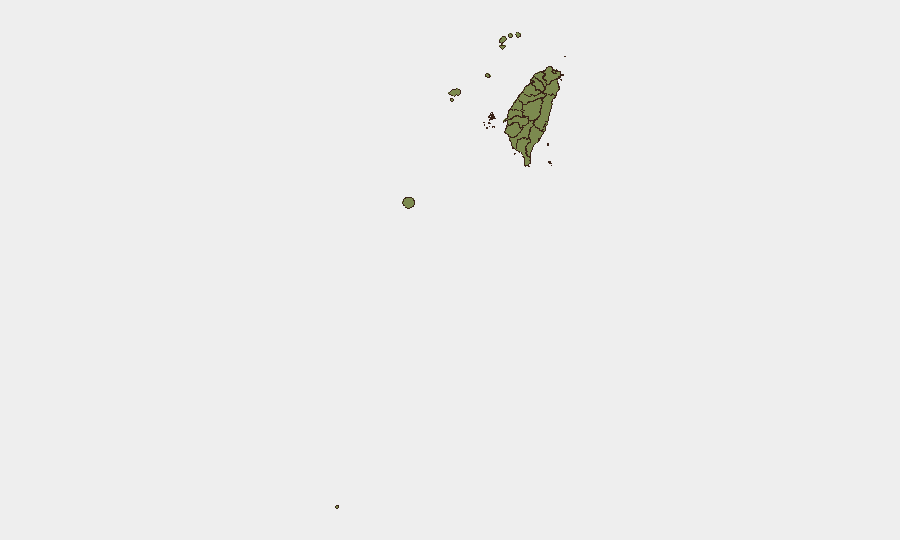
Nantou County dominates the sub-national risk landscape with a composite score of 31.8, significantly exceeding all other regions; the driving factors are not detailed in current reporting but warrant focused intelligence collection. Taipei (6.0) ranks second and is the focal point for political events, financial markets, and planned opposition protest activity. All other tracked regions cluster at 1.8, suggesting that risk concentration is highly geographic and that protective measures should prioritize Nantou and metropolitan Taipei.
How GeoBit Would Assist
Organizations with personnel or assets in Taiwan should leverage GeoBit's Intel Sweep, X/Twitter OSINT, and multi-language search to monitor opposition rally planning, regulatory enforcement actions, and market-sentiment shifts in real time. Persistent AOI Monitoring & Early Warning focused on Nantou County, Taipei, and Taichung would detect emerging protest sites, police deployments, and civil unrest triggering events. Regime-stability and economic-trade search would track political confidence, legislative outcomes on defense spending, and cross-strait signaling that could alter threat timelines.
7-Day Outlook
The food-safety scandal and planned opposition protest in Taipei (late July) are near-term flashpoints with potential to trigger larger public demonstrations and further erode political confidence. Continued PLA operational activity and President Lai's defense-spending push are expected to sustain cross-strait tension. Stock-market recovery or further decline will materially affect domestic stability messaging and corporate risk appetite through month-end.
Highest-Risk Areas — Ranked
| # | State / Region | Risk |
|---|---|---|
| 1 | Nantou County | 31.8 |
| 2 | Taipei | 6 |
| 3 | Kaohsiung | 1.8 |
| 4 | Pingtung County | 1.8 |
| 5 | Taitung County | 1.8 |
| 6 | Lienchiang County | 1.8 |
| 7 | Kinmen | 1.8 |
| 8 | Penghu | 1.8 |
| 9 | Changhua County | 1.8 |
| 10 | Miaoli County | 1.8 |
| 11 | Taichung | 1.8 |
| 12 | Yunlin County | 1.8 |
Sources
Previous Daily Briefs
A new Taiwan brief is written every day — each with its own risk map and downloadable CSV. Here's the last week; use the calendar to go further back.
📅 Browse every day by calendar →
Highlighted days have a brief. Tap a day for that day's map & analysis, or “csv” for that day's dataset ($5).
Atlas — our AI intelligence desk — emails them this snapshot personally. Nothing else, no list.