Situation Summary
Tunisia is experiencing an acute infrastructure crisis driven by an exceptional nationwide heatwave (45–49°C across most governorates) that has triggered widespread power cuts, water outages, and a surge in fire incidents. Civil Protection has responded to approximately 2,800 interventions and over 600 fires in the last 48 hours alone, while the national electricity company STEG has implemented rotating load-shedding across multiple regions to prevent grid collapse. President Kaïs Saïed convened a high-level meeting on 23–25 July to address what he termed "abnormal" service disruptions, signaling heightened political sensitivity around infrastructure failures and potential social unrest. The situation remains acute and operationally demanding but has not yet escalated to armed conflict or mass civil disorder.
Key Developments
- Nationwide (all major regions) – 24–25 July 2026 – Rotating power cuts and grid instability warning
STEG announced that rotating blackouts would occur between 06:00–12:00 in northern regions, Greater Tunis, Sfax, and southern governorates, with the list of affected zones remaining "evolutive" based on real-time grid conditions. The measure is intended to prevent systemic failure during peak heat demand.
- Northwest Tunisia (forest zones, multiple governorates) – up to 24–25 July 2026 – Sustained wildfire containment operations
Between 11–21 July, Civil Protection intervened in 86 forest fires, with 74 fully contained and 9 remaining active as of the latest update. Operations have been concentrated in northwest governorates and are ongoing.
- Tunis (Carthage Palace) – 23–25 July 2026 – Presidential directive on service outages and security concerns
President Saïed chaired a meeting with Interior, Energy, Equipment, and Agriculture ministry officials and senior utility/emergency leadership, ordering pre-announcement of all unavoidable cuts and warning against deliberate disruption or social incitement. The framing suggests authorities view the outages as a potential vector for political destabilization.
- Nationwide – 24–25 July 2026 – Unconfirmed mortality reports linked to blackouts and heat stress
The Organisation of Young Doctors in Tunisia cited 150–200 heat and outage-related deaths; however, official government sources have not confirmed or publicly addressed these figures, creating potential for credibility disputes and public anger if the toll is later acknowledged.
- Nationwide (various regions) – 24–25 July 2026 – Peak emergency response surge
Civil Protection reported 914 interventions in a 24-hour period during the heatwave, including 162 firefighting operations, 163 road-accident rescues, and 398 medical assistance calls outside traffic incidents, indicating severe strain on emergency capacity.
Highest-Risk Areas
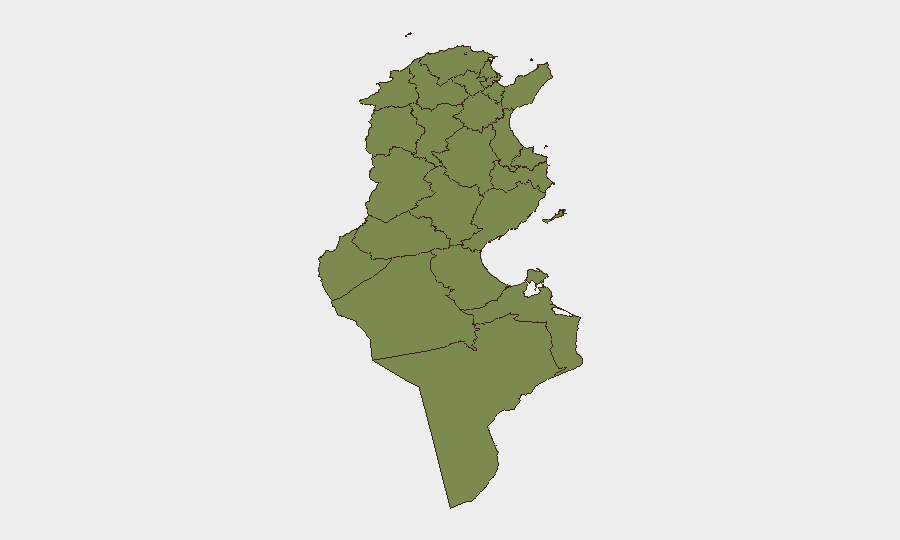
Tunis (risk 31.3) dominates the national risk profile due to concentration of population, critical infrastructure, and political sensitivity; blackouts and service failures in the capital directly affect government operations and public perception. Al Kaf (17.2) and Sfax (4.7) face elevated risk from wildfire proximity, power-cut frequency, and heat-related medical demand. The remaining southern and eastern governorates show baseline risk largely driven by dispersed heat exposure and heatwave-related accidents rather than conflict or security incidents.
How GeoBit Would Assist
Security teams managing operations or personnel in Tunisia should deploy AOI Monitoring & Early Warning on critical infrastructure zones (STEG substations, major hospitals, transport hubs) to track power-cut timing and identify patterns of deliberate disruption. Multi-language OSINT feeds and X/Telegram monitoring will capture emerging social sentiment and early indicators of protest activity triggered by extended outages or mortality acknowledgment. GIS & Spatial Analysis combined with satellite imagery can track active wildfire zones and road closures in real time, enabling safe routing and evacuation planning.
7-Day Outlook
The heatwave is forecast to persist through late July, sustaining power-cut risk and wildfire activity; rotating blackouts will likely continue unless temperatures drop sharply. Political pressure and public frustration will mount if mortality figures are formally confirmed or outages extend beyond emergency management windows, raising the risk of localized protests or civil unrest, particularly in Tunis and major urban centers.
Highest-Risk Areas — Ranked
| # | State / Region | Risk |
|---|---|---|
| 1 | Tunis | 31.3 |
| 2 | Al Kaf | 17.2 |
| 3 | Sfax | 4.7 |
| 4 | Nabeul | 2.5 |
| 5 | Bizerte | 2.5 |
| 6 | Tataouine | 1.3 |
| 7 | Monastir | 1.3 |
| 8 | Mahdia | 1.3 |
| 9 | Médenine | 1.3 |
| 10 | Jendouba | 1.3 |
| 11 | Béja | 1.3 |
| 12 | Ariana | 1.3 |
Sources
Previous Daily Briefs
A new Tunisia brief is written every day — each with its own risk map and downloadable CSV. Here's the last week; use the calendar to go further back.
📅 Browse every day by calendar →
Highlighted days have a brief. Tap a day for that day's map & analysis, or “csv” for that day's dataset ($5).
Atlas — our AI intelligence desk — emails them this snapshot personally. Nothing else, no list.