Situation Summary
Turkey's overall threat environment remains moderate (rank #22 globally, score 68.2) but faces acute regional pressures tied to Israeli military operations in Syria and Lebanon. President Erdoğan's parliamentary statements on 2026-06-10 signal heightened sensitivity to Israeli actions near Turkish borders and in the Eastern Mediterranean, raising the risk of Turkish escalatory rhetoric and potential military posturing. Domestic security incidents in the last 48 hours remain limited in available reporting, though signals indicate ongoing political statements and at least one unconventional-violence event on 2026-06-10. The threat picture is driven by regional dynamics rather than immediate internal instability.
Key Developments
- Ankara, 2026-06-10: President Erdoğan issued a parliamentary statement asserting that Israeli strikes on Syria and Lebanon now "threaten Turkey" and warned Ankara would not "turn a blind eye" to further escalation.[^1]
- Ankara, 2026-06-10: Erdoğan framed Israeli activities as part of a broader destabilization campaign targeting the Eastern Mediterranean and Cyprus, expanding the security narrative beyond Syria-Lebanon to Turkish strategic interests.[^1]
- Turkey, 2026-06-10: GeoBit event signals flagged an unconventional-violence incident; specific location and operational details remain unclear from available open-source reporting.[^2]
- Turkey, 2026-06-09–10: Multiple public statements by Turkish officials and government entities were recorded; statements also directed at the UK and against a trade minister, suggesting domestic political friction alongside regional messaging.[^2]
- Turkey, 2026-06-10: Turkish rejection of a Finnish position and Iraqi rejection of a Turkish position were logged, indicating diplomatic friction on multiple vectors.[^2]
- Turkey, 2026-06-09: A demand was issued by a business entity against the Turkish state, flagging potential commercial or sanctions-related grievances.[^2]
Data Caveat: Open-source reporting from the past 24–48 hours is dominated by the Erdoğan parliamentary remarks. Specific details on the unconventional-violence event, domestic incidents, or Turkish military/security operations remain limited in available web results.
Highest-Risk Areas
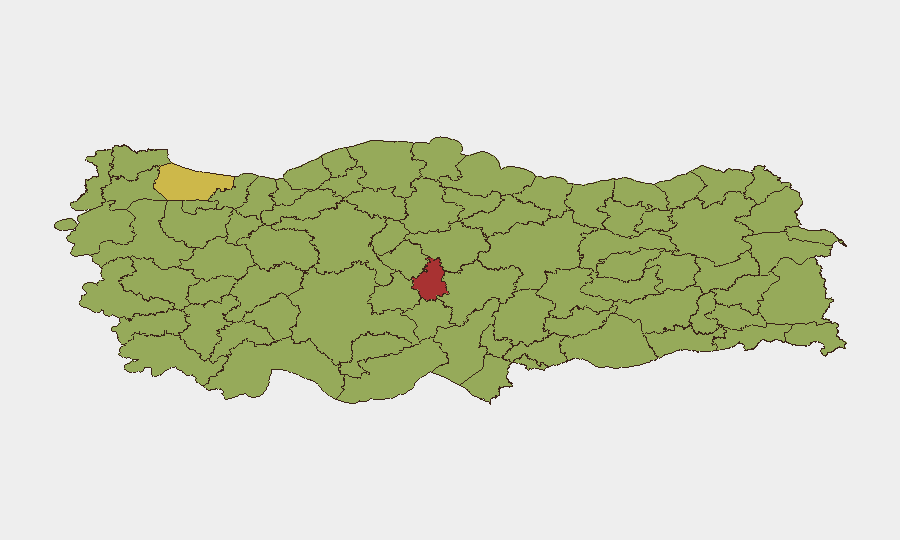
Nevşehir (77.7) ranks highest but does not correspond to a major population or strategic center, warranting verification of the underlying event drivers. Istanbul (60.4), the economic and transport hub, remains the second-highest-risk region and carries the greatest exposure for multinational staff and corporate assets; Ankara (53.7) follows, reflecting political-risk sensitivity around government decision-making and diplomatic friction. Southeast regions (Diyarbakır, Mersin, Adana) maintain moderate-to-elevated scores consistent with PKK-related activity, border volatility, and proximity to Syria and Iraq. The ranking reflects a blend of political signaling, regional geopolitical stress, and underlying asymmetric-threat patterns rather than a single driver.
How GeoBit Would Assist
Security teams should activate Intel Sweep and OSINT fusion to correlate Turkish official statements, military movements, and Israeli/regional military activity in real time, and deploy AOI Monitoring & Early Warning with persistent watch on Istanbul, Ankara, and border regions (Mersin, Hatay, Diyarbakır) to capture rapid changes in threat posture. Conflict & Military tracking and Satellite & Imagery analysis would provide force-disposition visibility if Turkish military mobilizes in response to regional escalation. Routing & Network Analysis can support duty-of-care teams in pre-positioning alternative travel routes for personnel in high-risk areas.
7-Day Outlook
Expect continued Turkish political statements and posturing on the Israel-Syria-Lebanon situation, with risk of military exercises or border reinforcements if Israeli operations intensify. Domestic commercial and political friction (flagged in recent statements) may generate secondary incidents, particularly in Istanbul and Ankara. The threat environment is likely to remain elevated but not acutely crisis-level unless a direct Turkish-Israeli incident or major Kurdish/PKK event occurs.
[^1]: Ankara parliamentary statement, 2026-06-10.
[^2]: GeoBit event signals, 2026-06-09 to 2026-06-10.
Highest-Risk Areas — Ranked
| # | State / Region | Risk |
|---|---|---|
| 1 | Nevşehir | 77.7 |
| 2 | Istanbul | 60.4 |
| 3 | Ankara | 53.7 |
| 4 | Bursa | 51.5 |
| 5 | Diyarbakır | 51.2 |
| 6 | Mersin | 51.2 |
| 7 | Erzurum | 49.5 |
| 8 | Izmir | 49.2 |
| 9 | Adana | 48.9 |
| 10 | Ordu | 48.9 |
| 11 | Hatay | 48.2 |
| 12 | Yozgat | 48 |
Sources
Previous Daily Briefs
A new Turkey brief is written every day — each with its own risk map and downloadable CSV. Here's the last week; use the calendar to go further back.
📅 Browse every day by calendar →
Highlighted days have a brief. Tap a day for that day's map & analysis, or “csv” for that day's dataset ($5).