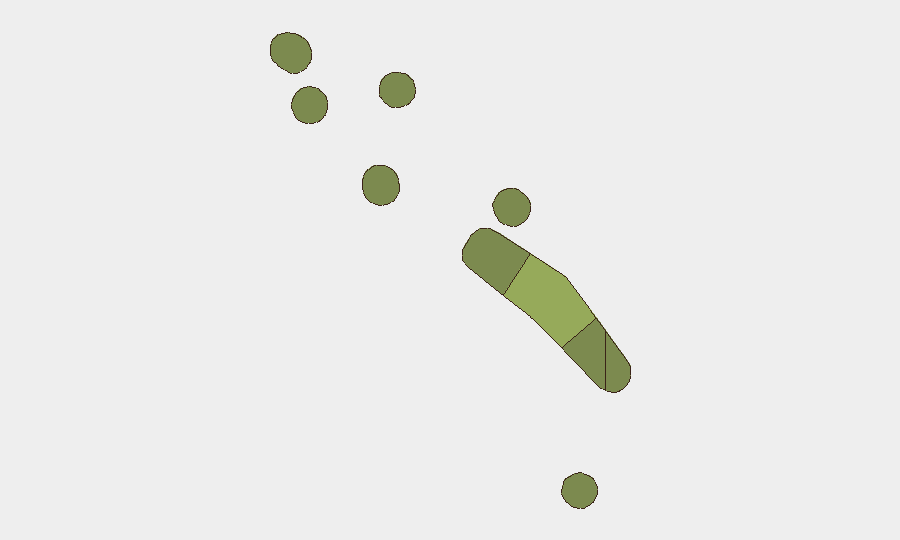
Situation Summary
Tuvalu remains a stable, low-threat operating environment with no verified security incidents, civil unrest, or crime escalations reported in the past 24–48 hours. The country's composite threat score of 2.2 places it #187 globally, reflecting minimal domestic security risk. Recent diplomatic statements regarding regional geopolitical tensions (Chinese missile testing, 7–9 July) have generated official concern but no domestic operational impact or travel restrictions.
Key Developments
- Nanumea Lagoon, Tuvalu – 13 July 2026: Prime Minister Feleti Teo formally welcomed a Royal Australian Navy task unit conducting explosive ordnance disposal operations under Operation Render Safe. Controlled survey and clearance activities may temporarily limit local maritime access around Nanumea Lagoon but pose no acute security threat.[6][7]
- Tuvalu (diplomatic statement) – 8–9 July 2026, assessed current through 13 July: Tuvalu's government formally condemned a Chinese ballistic missile test conducted over Pacific airspace (7–9 July), citing concern for regional peace and security. No resulting civil unrest, protests, or domestic security incidents have been documented.[1][9]
- Tuvalu Government Media – July 2026: Official social media posts publicly questioned the missile's trajectory and speculated on geopolitical implications. Public discourse reflects strategic concern but does not correspond to on-the-ground disturbances or operational disruption.[8]
- Tuvalu (national security posture) – 8–13 July 2026: No infrastructure disruptions, travel advisories, or domestic security alerts have been issued. Operational conditions for corporate and NGO personnel remain normal and stable.[1]
Highest-Risk Areas
Funafuti (risk 45) significantly exceeds all other sub-national divisions and drives Tuvalu's overall risk profile, likely reflecting its concentration of government, commercial, and maritime activity. Vaitupu (28) and Nui (25) represent secondary focal points, though all other atolls remain below risk threshold 25. The absence of discrete security events across all nine island groups suggests that sub-national rankings reflect structural or capacity factors (port activity, population density, governance infrastructure) rather than active incidents or unrest.
How GeoBit Would Assist
For continuous duty-of-care monitoring, GeoBit's AOI (Area of Interest) Monitoring & Early Warning capability enables persistent watch over Funafuti and secondary nodes with real-time alerting on security, infrastructure, or civil-unrest triggers. Intelligence Sweep and multi-language OSINT fusion would correlate government statements, media, and social signals to distinguish strategic diplomatic developments from operational threats—critical for interpreting statements like recent missile-test condemnations without escalating response posture. Maritime & Aviation tracking would allow security teams to monitor the ongoing Australian Navy operation in Nanumea Lagoon and confirm any temporary access restrictions or port activity changes affecting supply chains or personnel movement.
7-Day Outlook
No acute threats are anticipated in the seven-day outlook; Tuvalu's security environment is expected to remain stable and low-risk. Attention should remain on the Nanumea Lagoon clearance timeline and any official announcements regarding maritime zone restrictions. Regional geopolitical tensions (Pacific missile testing, great-power competition) may continue to generate diplomatic statements but are unlikely to produce direct operational impact within Tuvaluan territory.
Highest-Risk Areas — Ranked
| # | State / Region | Risk |
|---|---|---|
| 1 | Funafuti | 45 |
| 2 | Vaitupu | 28 |
| 3 | Nui | 25 |
| 4 | Nukufetau | 22 |
| 5 | Niutao | 20 |
| 6 | Nanumanga | 18 |
| 7 | Nanumea | 15 |
| 8 | Nukulaelae | 12 |
Sources
Previous Daily Briefs
A new Tuvalu brief is written every day — each with its own risk map and downloadable CSV. Here's the last week; use the calendar to go further back.
📅 Browse every day by calendar →
Highlighted days have a brief. Tap a day for that day's map & analysis, or “csv” for that day's dataset ($5).
Atlas — our AI intelligence desk — emails them this snapshot personally. Nothing else, no list.