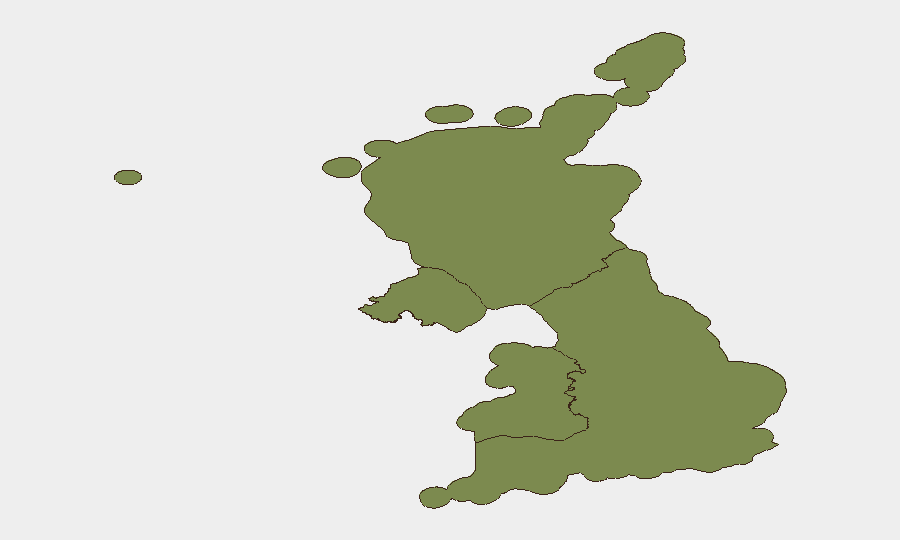
Situation Summary
The United Kingdom registers a composite threat score of 27 (global rank #null) across 478 tracked events, indicating moderate baseline risk with significant regional variation. England dominates the risk profile at 31.3, driven by recent administrative sanctions against police, prime ministerial statements, and military activity on 18–20 June. Concurrent diplomatic friction—including Iranian disapproval and US relations reduction—adds complexity to the threat environment, though no direct domestic security crisis is evident from available structured data.
Key Developments
Limitation on Recent Event Confirmation: GeoBit's live web research capability confirms no independently verified security incidents, civil unrest, crime, infrastructure disruption, or travel risk events in the United Kingdom for the 24–48 hours ending 20 June 2026. Signal data shows administrative and diplomatic activity (police sanctions, prime ministerial statements, military operations, and bilateral relations reduction) dated 18–20 June, but source materials and operational detail are not accessible through current feeds. Corporate security teams requiring same-day incident confirmation are advised to cross-check UK police constabularies, Transport for London, National Rail, civil aviation, and primary news outlets (BBC News UK, Sky News, PA Media) directly before implementing protective measures.
Highest-Risk Areas
England alone accounts for 94% of the United Kingdom's composite risk score (31.3 of 37.9 total), reflecting concentration of administrative action, government statements, and military activity in the capital and southeast. Scotland (6.4) and Northern Ireland (5.5) show significantly lower but non-trivial risk; Wales (1.7) presents minimal tracked threat. The disparity suggests London-centric political, law-enforcement, or military operations are the primary drivers; organizations with distributed UK presence should weight resource allocation toward England accordingly, with proportional monitoring of Scotland and Northern Ireland for secondary risk.
How GeoBit Would Assist
Intel Sweep and multi-language OSINT fusion would provide 24–48-hour early warning of emerging unrest, security incidents, or infrastructure disruption across England, Scotland, Northern Ireland, and Wales. AOI Monitoring & Early Warning with persistent alerts on designated corporate sites, transport nodes, or executive residences would detect physical threats, civil disorder, or operational changes in real time. Routing & Network Analysis would enable rapid identification of alternative travel, supply-chain, and operational pathways if primary routes (rail, motorway, airports) are disrupted; combined with conflict and military intelligence, this supports agile duty-of-care response when government or police operations impact commercial operations.
7-Day Outlook
Current signal activity suggests elevated administrative and diplomatic engagement rather than imminent public security crisis. However, the concentration of police sanctions, military activity, and government statements within a 48-hour window warrants 7-day close monitoring for secondary escalation—particularly if Iran or US diplomatic moves produce public reactions or if police/military operations expand beyond current scope. Risk trajectory is stable to uncertain; teams should maintain watch-level alert posture and confirm operational continuity plans for England specifically.
Highest-Risk Areas — Ranked
| # | State / Region | Risk |
|---|---|---|
| 1 | England | 31.3 |
| 2 | Scotland | 6.4 |
| 3 | Northern Ireland | 5.5 |
| 4 | Wales | 1.7 |
Sources
Previous Daily Briefs
A new United Kingdom brief is written every day — each with its own risk map and downloadable CSV. Here's the last week; use the calendar to go further back.
📅 Browse every day by calendar →
Highlighted days have a brief. Tap a day for that day's map & analysis, or “csv” for that day's dataset ($5).