Situation Summary
Albania faces elevated civil unrest centered on environmental and anti-corruption protests against a proposed luxury coastal development linked to Jared Kushner, with demonstrations in Tirana drawing thousands over the past 48 hours under the "Flamingo Revolution" banner. Prime Minister Edi Rama's government has responded with polarizing rhetoric characterizing opponents as foreign proxies, intensifying political divisions. Security risks remain largely confined to localized protest zones in the capital and coastal areas, with low-level confrontation potential between demonstrators and police, but no immediate threat to broader stability or international operations.
Key Developments
- Tirana, 29 June 2026 – Thousands of demonstrators gathered again in central Tirana during the evening, marching under "Albania is not for sale" banners and demanding PM Rama's resignation; crowds were dense, police presence was heavy, and minor confrontation risk was present but crowds remained largely peaceful.
- Tirana central boulevards and main square, 28–29 June – "Flamingo Revolution" daily evening rallies continued, blocking traffic around the prime minister's office and parliament; crowd numbers in the thousands and recurring gathering pattern indicate sustained mobilization.
- Sazan Island and surrounding waters, 28–29 June – Activists and environmental groups escalated campaigns against survey and preparatory development works; while the island itself remains restricted, risk of water-based protest actions or confrontations with security personnel has risen.
- Narta Lagoon area (Vlora), 28–29 June – Environmental organizations and local residents intensified monitoring and minor protest actions; messaging focused on irreversible ecosystem damage and wildlife impacts, contributing to national anti-development sentiment.
- Tirana government/media sphere, 28–29 June – PM Rama and Socialist Party officials publicly characterized protesters and certain media as "spokespersons of Iran," amplifying rhetoric on social media and sharpening political polarization.
- Tirana and national social media, 28–29 June – Video of a private security guard dragging a coastal protester across sand circulated widely on X/Twitter, Instagram, and Facebook; authorities arrested a security employee and opened investigations, but viral spread has intensified public anger and expanded international scrutiny.
Highest-Risk Areas
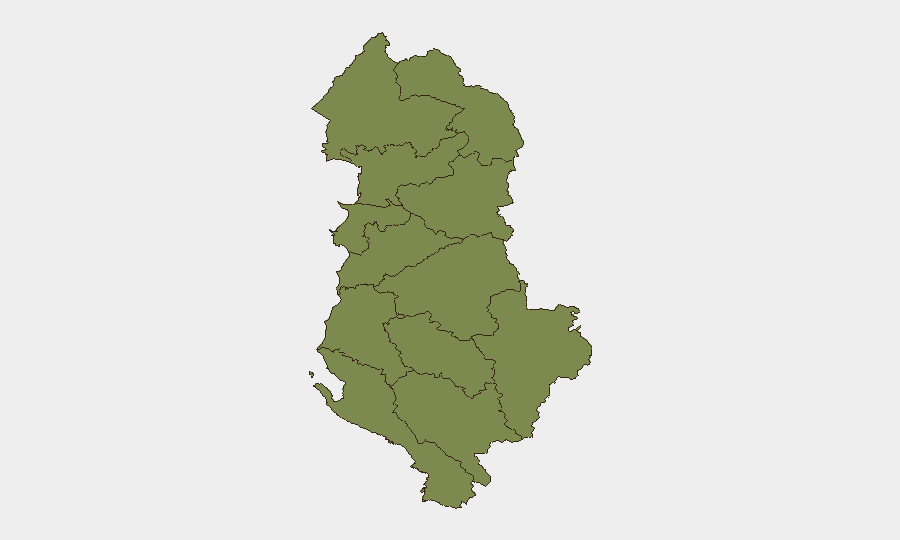
Elbasan County dominates the sub-national risk ranking with a composite score of 31.6, more than double that of Tirana County (11.2), likely reflecting a history of organized crime, trafficking, and internal security incidents rather than current protest activity. However, Tirana County remains operationally critical for corporate and expatriate presence, as the capital is the epicenter of current civil unrest; even a moderate risk score (11.2) reflects active demonstrations and government confrontations. Coastal counties—Lezhë, Vlorë, and Durrës—show lower scores (4.8 to 1.6) but host the environmental flashpoints (Sazan Island, Narta Lagoon) driving national attention. The remaining interior and southern counties register baseline risk (1.6) with no active security signals.
How GeoBit Would Assist
Security teams with personnel or assets in Albania should employ AOI Monitoring & Early Warning capabilities to track protest sites in Tirana and coastal zones, with alerting thresholds set for crowd size or police-demonstrator escalation. OSINT & multi-language search capabilities (X/Twitter, Telegram, Instagram, local media) provide real-time sentiment tracking and social-media mobilization signals preceding major demonstrations. Routing & Network Analysis functionality allows duty-of-care teams to plan safe transit corridors around Tirana boulevards and government districts during peak protest hours.
7-Day Outlook
Demonstrations are likely to continue at current levels (evening rallies in central Tirana, smaller actions at coastal sites) through early July, barring major government concessions or police escalation. Viral social-media incidents (such as the security-guard video) carry risk of attracting larger or more volatile weekend crowds. No indication of armed conflict, organized violence, or threats to international business operations; corporate risk remains localized disruption and reputational exposure.
Highest-Risk Areas — Ranked
| # | State / Region | Risk |
|---|---|---|
| 1 | Elbasan County | 31.6 |
| 2 | Tirana County | 11.2 |
| 3 | Lezhë County | 4.8 |
| 4 | Vlorë County | 4.4 |
| 5 | Fier County | 2.8 |
| 6 | Durrës County | 1.6 |
| 7 | Shkodër County | 1.6 |
| 8 | Kukës County | 1.6 |
| 9 | Dibër County | 1.6 |
| 10 | Berat County | 1.6 |
| 11 | Korçë County | 1.6 |
| 12 | Gjirokastër County | 1.6 |
Sources
Previous Daily Briefs
A new Albania brief is written every day — each with its own risk map and downloadable CSV. Here's the last week; use the calendar to go further back.
📅 Browse every day by calendar →
Highlighted days have a brief. Tap a day for that day's map & analysis, or “csv” for that day's dataset ($5).