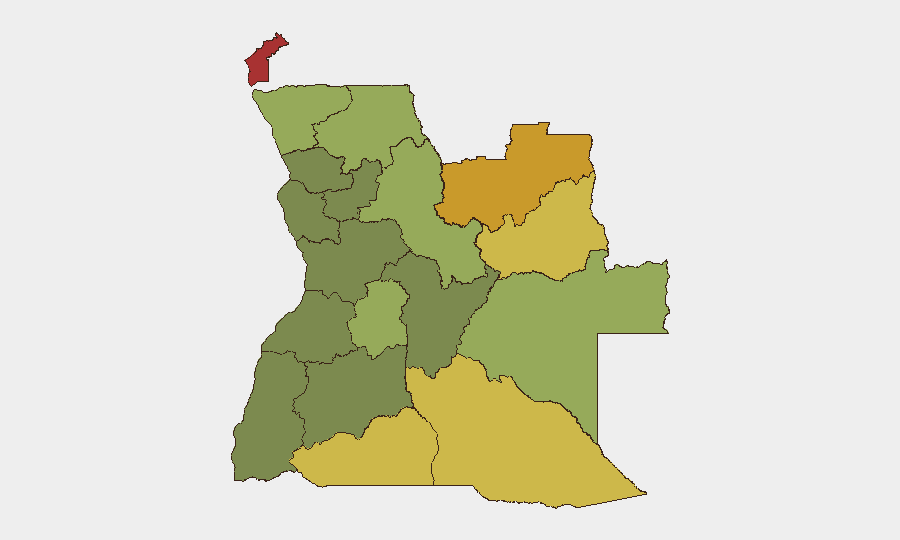
Situation Summary
Angola maintains a composite threat ranking of #43 globally (score 49), reflecting a security environment characterized by localized conflict and resource-driven instability rather than nationwide systemic breakdown. No major security incidents or unrest have been independently corroborated in mainstream or diplomatic reporting within the last 24–48 hours. The country's risk profile remains substantially driven by subnational armed activity and competition for natural resources, concentrated in the northeastern and eastern provinces.
Key Developments
No significant security, conflict, civil unrest, or infrastructure incidents have been reliably reported within the last 24–48 hours. Recent indexed news coverage of Angola is dominated by energy sector announcements (e.g., offshore oil contracts), rather than security events. Open-source monitoring detected two small-arms combat signals on 2026-06-21, but geographic specificity, casualty data, and corroboration by independent sources remain unavailable at this time. Multiple wildfire events have been recorded across central and eastern Angola in recent weeks, with potential downstream effects on regional access and air quality, but no immediate threat to populated centers or major infrastructure has been confirmed. Routine urban crime and localized tensions remain baseline risks in Luanda and provincial capitals, consistent with historical patterns.
Highest-Risk Areas
Cabinda Province (risk 78) and Lunda Norte Province (risk 72) present the highest composite threat levels, driven by long-standing resource competition, armed group activity, and limited state capacity. These northeastern territories have historically been flashpoints for separatist movements and transnational mineral-trafficking networks. Lunda Sul (68) and Cuando Cubango (64) in the southeast also sustain elevated risk from similar drivers—diamond-mining conflict, cross-border flows of weapons and combatants, and weak governance. By contrast, Luanda, Bengo, and western coastal zones score substantially lower, reflecting higher state presence and economic formality, though petty and organized crime remain persistent concerns for business and expatriate populations.
How GeoBit Would Assist
AOI Monitoring & Early Warning on Cabinda and the Lundas would provide persistent, automated alerts to changes in armed activity, movement patterns, or emerging flashpoints before they escalate to mass casualty or infrastructure events. Conflict & Military capabilities—force-structure tracking, weapons-capability assessment, and network analysis of armed actors—enable security teams to distinguish tactical shifts from strategic escalation, informing duty-of-care decisions for personnel in or near high-risk provinces. Routing & Network Analysis supports real-time journey planning for staff or asset movements, with alternative corridors that minimize exposure to known conflict zones or roadblock patterns. OSINT fusion across X/Twitter, local media, and diplomatic channels fills reporting gaps when mainstream media coverage is sparse, critical for early warning in remote eastern provinces.
7-Day Outlook
No imminent nationwide security escalation is indicated by current signals. However, the elevated and persistent risk in Cabinda and the Lundas—driven by ongoing resource competition and armed-group presence—suggests continued localized incidents are probable. Organizations with personnel or assets in these provinces should maintain heightened situational awareness and flexible contingency posturing, particularly given limited real-time incident reporting from remote areas.
Highest-Risk Areas — Ranked
| # | State / Region | Risk |
|---|---|---|
| 1 | Cabinda Province | 78 |
| 2 | Lunda Norte Province | 72 |
| 3 | Lunda Sul Province | 68 |
| 4 | Cuando Cubango Province | 64 |
| 5 | Cunene Province | 62 |
| 6 | Moxico Province | 58 |
| 7 | Zaire Province | 54 |
| 8 | Huambo Province | 50 |
| 9 | Uíge Province | 48 |
| 10 | Malanje Province | 42 |
| 11 | Bié Province | 35 |
| 12 | Huíla Province | 32 |
Sources
Previous Daily Briefs
A new Angola brief is written every day — each with its own risk map and downloadable CSV. Here's the last week; use the calendar to go further back.
📅 Browse every day by calendar →
Highlighted days have a brief. Tap a day for that day's map & analysis, or “csv” for that day's dataset ($5).