Situation Summary
Armenia remains a low-threat environment globally (composite score 28), but concentrated risk in Yerevan reflects acute domestic tensions combining violent crime, political-judicial disputes, and sovereignty concerns over transit corridor agreements. The last 48 hours have seen a high-profile armed shooting with grenade use in central Yerevan, health complications for a detained opposition figure, and Justice Ministry pushback against a U.S.–Azerbaijan transit corridor agreement perceived to conflict with Armenian law. While no large-scale armed clashes or border escalations are reported, the combination of urban violence, opposition detention, and political friction over territorial sovereignty creates conditions for civil unrest and potential protest activity.
Key Developments
- Central Yerevan armed incident (20–22 July): Video documentation of an armed shooting and grenade attack in the city center; one fatality, one hospitalization, one suspect detained, investigation ongoing. Indicates access to firearms and explosives in the capital and capability for coordinated violent crime.
- Justice Ministry legal challenge to TRIPP corridor (21 July): Armenia's Justice Ministry stated that the proposed U.S.–run transit corridor through Armenian territory to Azerbaijan violates Armenian law, escalating domestic political friction over sovereignty and the so-called "Trump Route" agreement.
- Detained opposition leader health emergency (20–24 July): Andranik Tevanyan, leader of the pro-Russian *Mother Armenia* party and subject of a treason case, experienced sudden health deterioration during medical examination; a potential flashpoint for opposition mobilization and anti-government rhetoric.
- Investigative Committee institutional expansion (20–24 July): Appointment of 35 new investigators signals increased enforcement capacity for criminal and political investigations, reflecting government posture on judicial and security cases.
- Ongoing protest activity and Azerbaijan border tension: Advisories remain current warning of common demonstrations in Yerevan (affecting movement near government/embassy zones) and potential for rapid deterioration near the Armenia–Azerbaijan border due to checkpoint controls and sudden closures.
Highest-Risk Areas
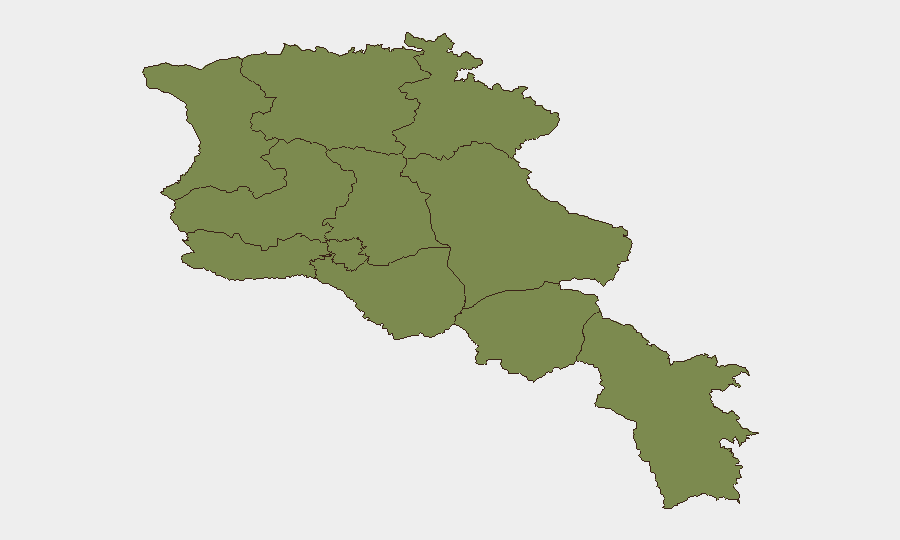
Yerevan dominates the risk profile (31.3), driven by the armed incident in the city center, detention and judicial proceedings against political figures, ongoing protest activity, and concentration of government institutions. Ararat Province (8.1) represents secondary risk, likely reflecting border proximity; all other provinces score uniformly low (1.3–2.2), indicating risk is highly concentrated in the capital. Organizations with staff or assets in central Yerevan should prioritize awareness of protest routes, avoid areas near government buildings during announced demonstrations, and maintain situational awareness given the demonstrated use of firearms and explosives in public spaces.
How GeoBit Would Assist
Security teams should deploy AOI Monitoring & Early Warning on central Yerevan (government, embassy, and commercial districts) to flag protest announcements and civil unrest in near-real-time via OSINT feeds and social media intelligence. Intel Sweep and multi-language OSINT fusion on opposition party communications, Justice Ministry statements, and Telegram/X networks will track political escalation and detention-related rhetoric before mass mobilization. Routing & Network Analysis capabilities enable alternative journey planning for staff around protest-affected areas and checkpoints, particularly in the Syunik corridor region should transit tensions accelerate.
7-Day Outlook
Near-term risk is likely to remain elevated in Yerevan contingent on developments in the Tevanyan case and public reaction to the TRIPP corridor dispute; any opposition statement or health deterioration announcement could trigger street protests. Border stability remains stable but dependent on Azerbaijan–Armenia diplomatic posture and international involvement in transit corridor negotiations. The July 23–30 window should be monitored for opposition rallies, court proceedings, and any escalation of armed crime patterns in the capital.
Highest-Risk Areas — Ranked
| # | State / Region | Risk |
|---|---|---|
| 1 | Yerevan | 31.3 |
| 2 | Ararat Province | 8.1 |
| 3 | Syunik Province | 2.2 |
| 4 | Lori Province | 1.3 |
| 5 | Tavush Province | 1.3 |
| 6 | Kotayk Province | 1.3 |
| 7 | Gegharkunik Province | 1.3 |
| 8 | Vayots Dzor Province | 1.3 |
| 9 | Shirak Province | 1.3 |
| 10 | Aragatsotn Province | 1.3 |
| 11 | Armavir Province | 1.3 |
Sources
Previous Daily Briefs
A new Armenia brief is written every day — each with its own risk map and downloadable CSV. Here's the last week; use the calendar to go further back.
📅 Browse every day by calendar →
Highlighted days have a brief. Tap a day for that day's map & analysis, or “csv” for that day's dataset ($5).
Atlas — our AI intelligence desk — emails them this snapshot personally. Nothing else, no list.