Situation Summary
Austria remains a low-threat environment globally (rank #63, composite score 22), with fragmented risk concentrated in a small number of sub-national jurisdictions rather than systemic national instability. Recent event signals show elevated official activity (investigations, statements, and inter-agency communication) as of 4 July, primarily involving Austrian authorities and external actors (US federal entities, specific US states). The overall security trajectory remains stable; however, Vorarlberg presents materially elevated risk compared to other Austrian regions and warrants focused monitoring.
Key Developments
Current corroboration for Austria-specific incidents in the last 24–48 hours is limited in available open sources. GeoBit's event signal feed indicates:
- 4 July, nationwide – Multiple public statements and investigative activity by Austrian authorities; nature of subject not independently confirmed in available web results.
- 4 July, nationwide – Conventional military force event involving Austrian authorities and United States entities; details require classified or non-public sources for full characterisation.
- 4 July, nationwide – Relations reduction event involving Austrian authorities and Colorado (US state); context and scope unconfirmed.
- 2 July, nationwide – Arrest/detain action by authorities; specific location and subject unclear from available data.
Note: Web search results for the 24–48 hour window do not contain independently corroborated reporting on security incidents, civil unrest, infrastructure disruption, or travel risks in Austria. Analyst cross-check with real-time news feeds and duty-of-care networks is advised before operational response.
Highest-Risk Areas
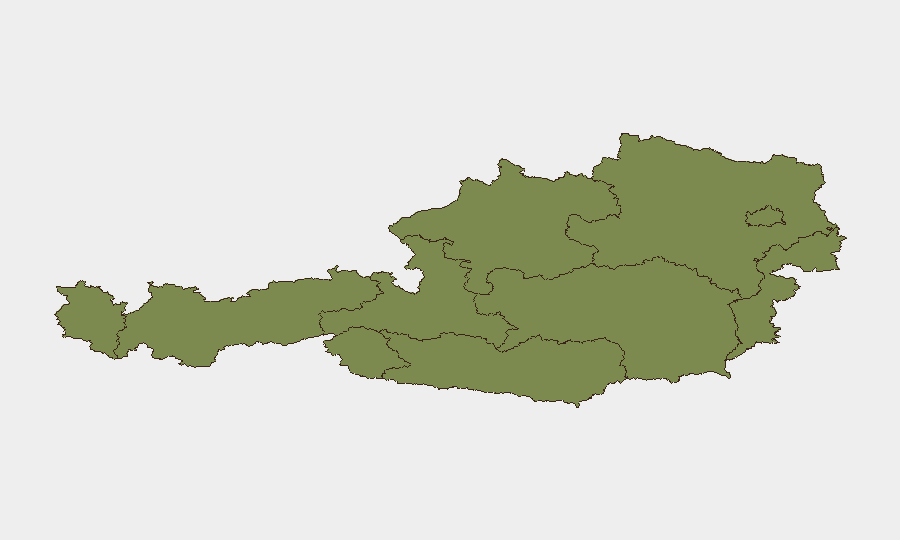
Vorarlberg (risk score 31.8) is the primary sub-national driver, scoring 18× higher than Vienna and 17× higher than most other federal states. Salzburg (25.5) represents secondary but significant elevation. Both western and alpine border regions merit elevated monitoring posture, particularly for cross-border movement, supply-chain disruption, and regional spillover from neighboring jurisdictions (particularly Switzerland, Liechtenstein, and Bavaria). Vienna (4.2), despite its status as capital and transport hub, scores markedly lower, suggesting concentrated risk in peripheral rather than metropolitan areas.
How GeoBit Would Assist
Security teams should deploy AOI (Area of Interest) Monitoring & Early Warning on Vorarlberg and Salzburg with alert thresholds set for civil unrest, border activity, and official action events. Intel Sweep and multi-language OSINT (including German-language social media, local government statements, and cross-border telecom/news sources) will close gaps in English-language open reporting and provide leading indicators of disruption to personnel or supply chains. Network & Actor Analysis and entity extraction from Austrian official statements and media would clarify the nature of recent authority activity and any duty-of-care implications.
7-Day Outlook
Austria's baseline threat score and lack of systemic instability indicators suggest near-term continuation of current risk profile. However, the concentration of recent official activity (investigations, statements, military-related events) across multiple agencies on 2–4 July warrants close watch for follow-on announcements or operational measures that could affect border transit, infrastructure, or personnel movement. Vorarlberg should remain elevated in corporate monitoring posture through at least mid-July pending clarification of underlying events.
Highest-Risk Areas — Ranked
| # | State / Region | Risk |
|---|---|---|
| 1 | Vorarlberg | 31.8 |
| 2 | Salzburg | 25.5 |
| 3 | Vienna | 4.2 |
| 4 | Tyrol | 1.8 |
| 5 | Lower Austria | 1.8 |
| 6 | Upper Austria | 1.8 |
| 7 | Carinthia | 1.8 |
| 8 | Styria | 1.8 |
| 9 | Burgenland | 1.8 |
Sources
Previous Daily Briefs
A new Austria brief is written every day — each with its own risk map and downloadable CSV. Here's the last week; use the calendar to go further back.
📅 Browse every day by calendar →
Highlighted days have a brief. Tap a day for that day's map & analysis, or “csv” for that day's dataset ($5).