Situation Summary
Belarus remains a lower-tier global threat (rank #108) but faces elevated localized risk concentrated in Minsk Region (31.8) and the capital itself (10.4), driven by diplomatic friction with Poland and Latvia, internal financial-sector pressure, and persistent Russian military transit through Belarusian airspace toward Ukraine. Recent signals include threats issued by unnamed actors, public disapproval statements by multiple state actors, and banking-sector demands on government. The security environment is stable relative to neighboring conflict zones but shows sustained strain from regional geopolitical positioning and domestic financial stress.
Key Developments
- Nationwide, 15 July 2026: Interior Ministry confirmed 34 telephone-fraud ("vishing") crimes within 24 hours, with two cash couriers detained and over 30,000 BYN seized—indicating organized financial-crime activity.
- Belarusian airspace, 6–12 July 2026: Ukrainian monitoring documented 26 Russian drones transiting Belarusian airspace; Belarusian air force scrambled in response, underscoring continued Russian military use of Belarusian territory.
- Belarusian airspace, 12 July 2026: A Belarusian Mi-24 helicopter shot down a Russian Gerbera strike drone heading toward Ukraine—rare incident of Belarusian air-defense engagement with Russian assets.
- Brest Region (Malaryta and Drahichyn districts), 7–31 July 2026: Territorial defence training and reservist mobilization ongoing in border districts adjacent to Ukraine, indicating heightened preparedness posture.
- Nationwide, 16 July 2026: Forest-access restrictions/bans implemented across all regions as of evening 16 July—cause and duration not yet clarified in available reporting.
- Brest Region, 18 July 2026: Orange-level weather hazard warning issued for thunderstorms, heavy rain, and wind gusts 15–20 m/s in western border areas; potential impact on transport and outdoor operations.
- Diplomatic friction (17–18 July 2026): Threats, public disapproval statements, and demands among Belarus, Poland, Latvia, Ukraine, and Russia in rapid succession—signals ongoing diplomatic strain without confirmed specifics of underlying incidents.
Highest-Risk Areas
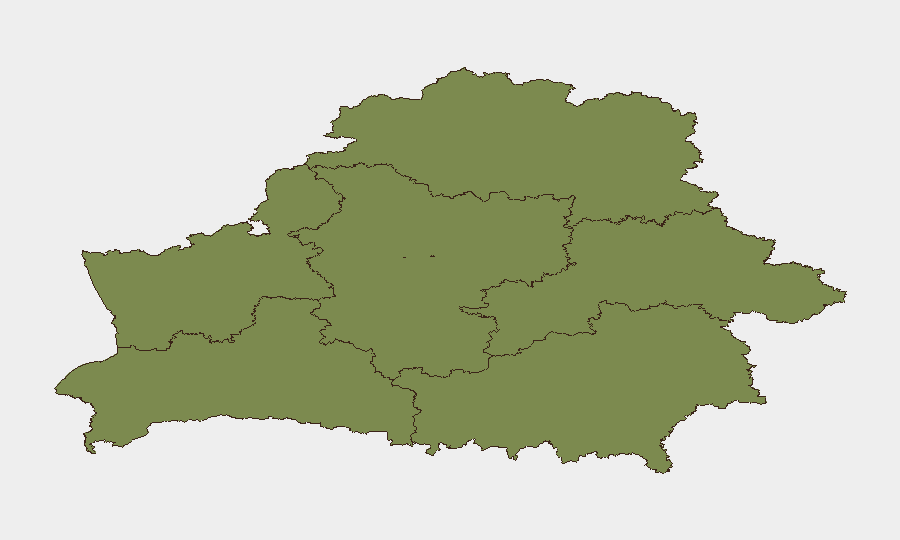
Minsk Region dominates risk (31.8), more than tripling the capital's score (10.4), suggesting concentration of security events, infrastructure vulnerability, or economic/political sensitivity in the periphery rather than the city center itself. All other regions cluster at 1.8, indicating that risk is sharply polarized toward the capital metropolitan zone. The border regions (Brest, Hrodna, Vitsebsk) are not flagged as elevated despite territorial defence training in Brest, suggesting current activity is routine or localized. Corporate and government assets in Minsk and Minsk Region warrant heightened monitoring; routine operations in provincial areas present low incremental risk beyond baseline national exposure.
How GeoBit Would Assist
GeoBit's Intel Sweep and multi-language OSINT fusion capabilities would enable continuous corroboration of diplomatic signals and financial-crime reporting to distinguish routine posturing from material escalation. AOI Monitoring & Early Warning pinned to Minsk Region and Belarusian airspace corridors would provide persistent watch on state-sector activity, Russian military transit, and border training intensity. Conflict & Military force-structure and weapons-capability tracking, paired with satellite & imagery analysis, would offer corporate teams granular visibility into Belarusian and Russian military positioning near client operations in border zones.
7-Day Outlook
Diplomatic friction is likely to persist without major escalation; Belarus will continue balancing Russian military transit demands against restrained diplomatic responses to Poland and Latvia. Territorial defence training in Brest Region should be monitored but is not imminent indicator of conflict. Weather disruption (west) and financial-crime trends (nationwide) are near-term operational considerations for duty-of-care teams; no material security deterioration is forecast for the next seven days absent new triggering events.
Highest-Risk Areas — Ranked
| # | State / Region | Risk |
|---|---|---|
| 1 | Minsk Region | 31.8 |
| 2 | Minsk | 10.4 |
| 3 | Vitsebsk Region | 1.8 |
| 4 | Hrodna Region | 1.8 |
| 5 | Brest Region | 1.8 |
| 6 | Mahilyow Region | 1.8 |
| 7 | Homyel Region | 1.8 |
Sources
Previous Daily Briefs
A new Belarus brief is written every day — each with its own risk map and downloadable CSV. Here's the last week; use the calendar to go further back.
📅 Browse every day by calendar →
Highlighted days have a brief. Tap a day for that day's map & analysis, or “csv” for that day's dataset ($5).
Atlas — our AI intelligence desk — emails them this snapshot personally. Nothing else, no list.