Situation Summary
Bulgaria's overall security posture remains stable, with no credible reports of civil unrest, political violence, or major crime waves in the last 24–48 hours. The primary near-term risk stems from widespread fire activity—119 fires recorded nationwide on 19 July, with three injuries and 15 residential buildings damaged—and associated infrastructure disruptions affecting road networks and border crossings. Sub-national risk concentration is heavily weighted toward Varna (31.3) and Sofia-City (21.3), reflecting localized operational and transit vulnerabilities rather than systemic instability. The trajectory suggests manageable but persistent fire-related and traffic safety hazards through the near term, with no indication of deterioration in political or security governance.
Key Developments
- Nationwide fire activity (19 July 2026): Bulgaria's General Directorate for Fire Safety recorded 119 fires and 41 rescue operations across multiple regions, resulting in three injuries and severe damage to 15 residential buildings, indicating elevated wildfire and structural fire risk in dispersed locations.
- Stara Zagora region—Baritna mine area (19 July 2026): A large grassland wildfire consuming approximately 600 decares of dry grass and pasture was fully extinguished by fire services, reducing immediate localized risk but underscoring sustained fire danger in the region.
- National motorway network (19 July 2026, 15:30–22:00): The Road Infrastructure Agency imposed temporary restrictions on heavy goods vehicles exceeding 12 tons on the Trakia, Struma, and I-1 Sofia–Kulata motorways to manage traffic and fire-related safety hazards.
- Kalotina border checkpoint—Bulgaria–Serbia (morning, 19 July 2026): Extremely heavy passenger vehicle congestion was reported at the entrance, creating delays and traveler disruption at this key western crossing point.
- Varna–Sofia intercity route (19 July 2026): A serious road traffic accident between Arkus and Dobri Dyal junction (Veliko Tarnovo region) injured five persons, including three children, highlighting ongoing intercity road-safety risks.
- Rila–Rhodope mountains (afternoon, 19 July 2026): Mountain Rescue Service issued alerts for cumulonimbus clouds, short-term precipitation, and thunderstorms, creating rapid-onset weather hazards for outdoor and hiking activities in these regions.
Highest-Risk Areas
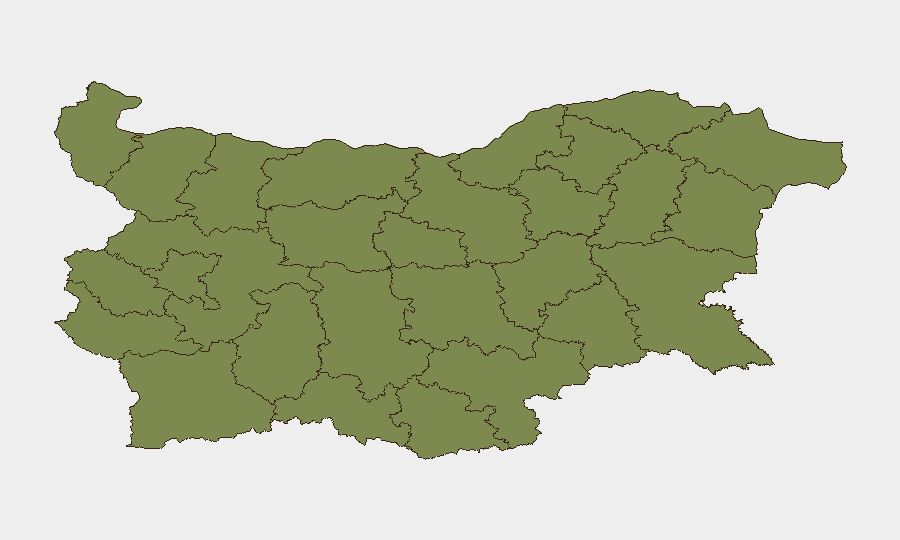
Varna and Sofia-City account for the overwhelming majority of tracked risk (31.3 and 21.3 respectively), driven by concentration of critical infrastructure, international transit hubs, and population density. Varna's elevated score reflects port operations, tourism infrastructure, and cross-border traffic exposure; Sofia-City concentrates political and business assets alongside congestion-prone motorway junctions and fire-adjacent dispersal zones. Plovdiv registers markedly lower but non-negligible risk (6.3), while the remaining 9 tracked regions remain below 2.0, suggesting that operational personnel should prioritize Varna and Sofia for continuous situational awareness and contingency planning, while maintaining standard precautions elsewhere.
How GeoBit Would Assist
Security and duty-of-care teams should deploy AOI Monitoring & Early Warning on Varna port facilities, Sofia-City business districts, and key motorway junctions to detect fire, congestion, and civil activity escalation in near-real time. Routing & Network Analysis capabilities enable rapid identification of alternative transport corridors around fire zones and border congestion—critical for supply chains and personnel movement. Intel Sweep, OSINT fusion, and multi-language search across official fire-service alerts, traffic authorities, and regional media provide corroborated, time-verified situational updates to replace reactive incident response.
7-Day Outlook
Fire-related hazards are expected to persist through elevated temperatures and dry conditions typical of mid-to-late July. Border and motorway congestion are likely to remain episodic and traffic-driven rather than security-driven. No indicators suggest imminent civil unrest, sectoral strikes, or policy disruption; standard operational security protocols remain appropriate for all personnel and assets in Bulgaria.
Highest-Risk Areas — Ranked
| # | State / Region | Risk |
|---|---|---|
| 1 | Varna | 31.3 |
| 2 | Sofia-City | 21.3 |
| 3 | Plovdiv | 6.3 |
| 4 | Yambol | 1.3 |
| 5 | Kardzhali | 1.3 |
| 6 | Haskovo | 1.3 |
| 7 | Burgas | 1.3 |
| 8 | Vidin | 1.3 |
| 9 | Pernik | 1.3 |
| 10 | Kyustendil | 1.3 |
| 11 | Montana | 1.3 |
| 12 | Vratsa | 1.3 |
Sources
Previous Daily Briefs
A new Bulgaria brief is written every day — each with its own risk map and downloadable CSV. Here's the last week; use the calendar to go further back.
📅 Browse every day by calendar →
Highlighted days have a brief. Tap a day for that day's map & analysis, or “csv” for that day's dataset ($5).
Atlas — our AI intelligence desk — emails them this snapshot personally. Nothing else, no list.