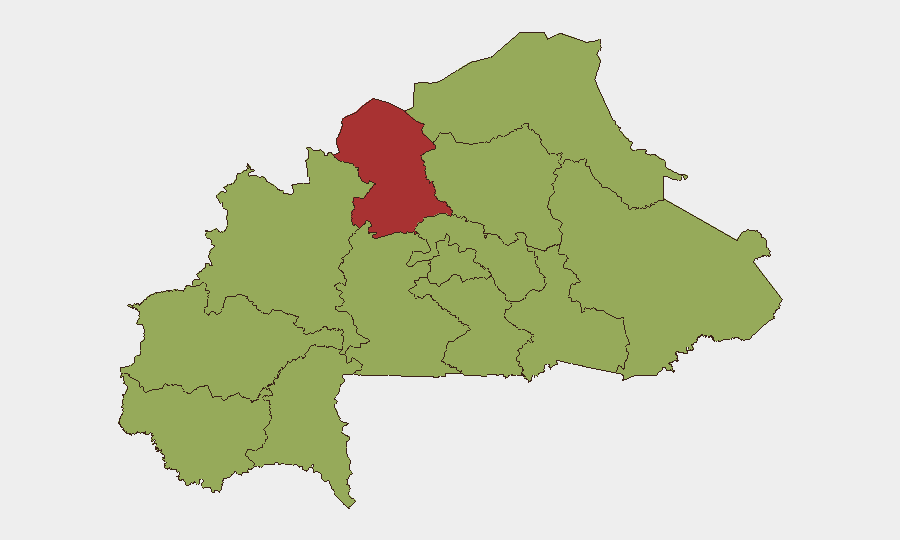
Situation Summary
Burkina Faso remains the 25th highest-threat country globally (composite score 68), driven primarily by active insurgency across multiple regions. The past 48 hours have seen a notable spike in state-level diplomatic tension, unconventional violence targeting foreign nationals, and internal institutional friction, signaling potential escalation in political instability alongside persistent armed group activity. The concentration of highest risk in the North (77.6) reflects ongoing militant operations, while secondary risk zones span the Sahel belt and central regions. Trajectory remains elevated with no clear de-escalation in sight.
Key Developments
- 2026-06-20, Location TBD: Physical assault incident involving hospital and prosecutor personnel reported; institutional conflict may indicate state fragility or targeted intimidation of judicial processes.
- 2026-06-19, National: Burkina Faso government expelled French diplomatic/consular personnel, signaling rupture in Western relations and potential impact on international security cooperation and NGO/corporate operations dependent on French-backed infrastructure.
- 2026-06-18, Embassy location (Ouagadougou presumed): Unconventional violence directed at U.S. Embassy against American nationals; indicates elevated anti-Western sentiment and possible targeting of foreign mission personnel and nearby corporate assets.
- 2026-06-18, Location TBD: Conventional military force deployed by Bahamian entity against citizen(s); unclear operational context but suggests foreign military involvement or proxy activity requiring urgent clarification.
- 2026-06-18, Location TBD: Presidential disapproval statement toward United States; reflects diplomatic strain and potential policy shift affecting foreign business environment and security cooperation.
- 2026-06-18, Location TBD: Formal investigation initiated by Bahamian entity into Burkina government; indicates possible sanctions, accountability measures, or external pressure on regime.
- 2026-06-18, Multiple: U.S. State Department and White House issued public statements on Burkina Faso; likely response to embassy incident and broader policy concern, increasing media/activist attention and risk of secondary targeting.
Note: Specific locations and operational details for several incidents remain incomplete. Verification across independent sources is ongoing. Older background: Insurgency across North and Sahel has been continuous since 2015; diplomatic tension with France has escalated since 2021 military transitions.
Highest-Risk Areas
The North region (score 77.6) dominates threat landscape, driven by concentrated militant operations, limited state presence, and ongoing armed group recruitment and IED activity. The nine regions clustered at 47.6 (Upper-Basins, Boucle du Mouhoun, Central-West, Central-South, Central-East, Waterfalls, Southwest, Sahel, Central-North, East, Centre) reflect distributed secondary risk—primarily associated with spillover from northern insurgency, communal tension, banditry, and state capacity gaps. Recent diplomatic and institutional fractures suggest risk is also now concentrated in Ouagadougou (capital), where foreign nationals, diplomatic missions, and regime-adjacent targets may face heightened exposure.
How GeoBit Would Assist
Security teams should employ AOI Monitoring & Early Warning on Ouagadougou, North region, and Sahel belt to capture emerging militant activity, protest movements, and checkpoint/military deployments in real time. Conflict & Military (force structure, weapons-capability tracking) and Network & Actor Analysis would clarify the nature of the Bahamian military involvement and any foreign proxy operations. Intel Sweep and X/Twitter & Telegram OSINT with multi-language sentiment analysis would track anti-Western messaging, diplomatic rhetoric shifts, and secondary targeting signals against corporations or NGOs.
7-Day Outlook
Diplomatic rupture with France and U.S. tension are likely to deepen state paranoia and anti-Western operations, creating secondary risk to foreign-staffed facilities and supply chains dependent on Western partners. Militant operations in the North are expected to continue at current tempo; no military offensive or peace initiative is signaled in the near term. Risk of further institutional instability (demonstrated by hospital–prosecutor incident) suggests potential policy reversals or security sector realignment affecting business licensing and asset security.
Highest-Risk Areas — Ranked
| # | State / Region | Risk |
|---|---|---|
| 1 | North | 77.6 |
| 2 | Upper-Basins | 47.6 |
| 3 | Boucle du Mouhoun | 47.6 |
| 4 | Central-West | 47.6 |
| 5 | Central-South | 47.6 |
| 6 | Central-East | 47.6 |
| 7 | Waterfalls | 47.6 |
| 8 | Southwest | 47.6 |
| 9 | Sahel | 47.6 |
| 10 | Central-North | 47.6 |
| 11 | East | 47.6 |
| 12 | Centre | 47.6 |
Sources
Previous Daily Briefs
A new Burkina Faso brief is written every day — each with its own risk map and downloadable CSV. Here's the last week; use the calendar to go further back.
📅 Browse every day by calendar →
Highlighted days have a brief. Tap a day for that day's map & analysis, or “csv” for that day's dataset ($5).