Situation Summary
Colombia remains a #37 global threat with a composite score of 38.3 and 139 tracked events. The country is experiencing a convergence of election-period political polarization, journalist targeting, and criminal-group activity in ungoverned border and Amazon regions. The June 21 runoff election is occurring amid elevated protest activity, cross-candidate violence in the capital, and documented coercion risk in criminally controlled municipalities. Security conditions are volatile but not yet at national crisis level; localized deterioration is the primary concern.
Key Developments
- Cúcuta, Norte de Santander (June 6, reported June 8): Journalist Cristian Hernando Herrera Nariño was shot and killed by gunmen in the Quinta Oriental neighborhood. Authorities have announced a reward and press freedom groups are treating it as work-related. This is the second documented journalist killing signal in the past 48 hours.
- Bogotá, Teusaquillo (June 5, reported June 8): Violent street clashes between supporters of presidential candidates Iván Cepeda and Abelardo de la Espriella outside De la Espriella's campaign headquarters. President Petro called for calm; the incident underscores election-period polarization in the capital.
- Bogotá, National University area (early June, reported within 48h): Large student mobilization in support of candidate Cepeda and in protest of first-round results favoring De la Espriella. Demonstrations involved march-style activity with political speeches; potential for traffic disruption and escalation near campus.
- Amazonas Department, rural Colombia–Brazil border (early June, reported June 8): At least two minors killed during armed clashes involving illegal armed groups. Briefing signals intensified criminal dynamics and deteriorating local security in Amazon municipalities at risk of criminal control.
- Nationwide – Electoral Security (reported June 8): Municipalities categorized as "at risk of criminal control" show disproportionate first-round support for De la Espriella. Analysts warn of elevated coercion, vote-buying, and intimidation ahead of June 21 runoff in these overlapping crime-and-politics zones.
- U.S.–Colombia Diplomatic (early June): Donald Trump's public endorsement of De la Espriella has drawn accusations of foreign intervention and intensified domestic polarization. Security observers cite potential for protests near U.S. diplomatic facilities and campaign venues in coming days.
Highest-Risk Areas
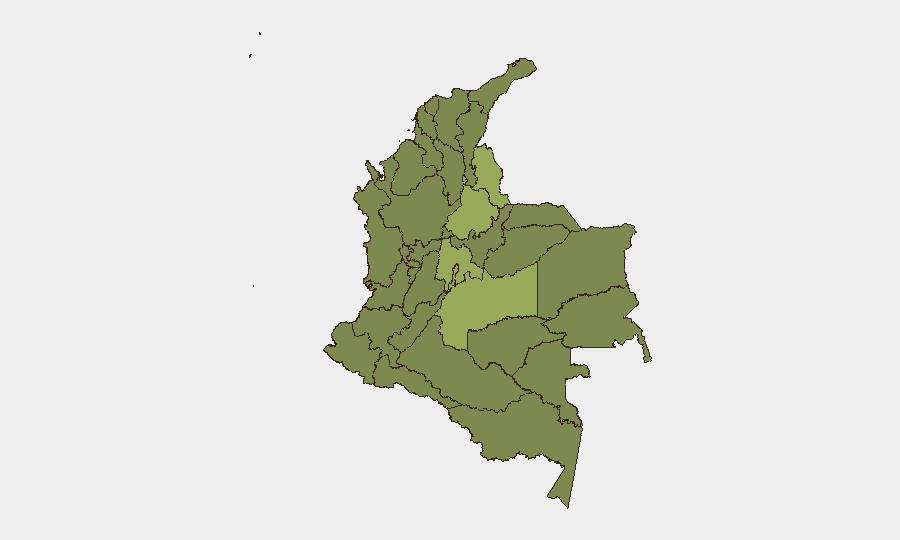
Norte de Santander (56.8) and the Capital District (53.8) dominate the risk ranking and are driving national concern. Norte de Santander, anchored by Cúcuta on the Venezuela border, combines narcotics trafficking, cross-border armed-group presence, and now documented journalist targeting. The Capital District risk reflects election-period street violence, protest activity, and political faction clashes. Cundinamarca (49.4) and Meta (49.1) show elevated rural and Amazon-border threat from illegal armed groups and criminal control dynamics. The clustering of high risk in border departments (norte de Santander, Nariño) and the Amazon (Meta, Amazonas, Caquetá) reflects ungoverned space and transnational criminal networks.
How GeoBit Would Assist
Security teams would deploy AOI Monitoring & Early Warning on high-risk departments (Norte de Santander, Capital District, Cundinamarca) to detect escalations in armed activity, protests, and targeted violence in near-real time. Intel Sweep and multi-language OSINT fusion across social media, news, and local sources enable tracking of election-period rhetoric, candidate security, and criminal group positioning. Election monitoring capabilities and sentiment & temporal analysis support risk forecasting in criminally controlled municipalities ahead of the June 21 runoff.
7-Day Outlook
The period through June 21 will likely see sustained protest activity in Bogotá and other major cities, continued criminal coercion in at-risk municipalities, and potential isolated violence targeting political figures or journalists. Border regions (Norte de Santander, Nariño) will remain elevated-risk zones. No imminent nationwide destabilization is signaled, but localized security incidents remain probable.
Highest-Risk Areas — Ranked
| # | State / Region | Risk |
|---|---|---|
| 1 | Norte de Santander Department | 56.8 |
| 2 | Capital District | 53.8 |
| 3 | Cundinamarca Department | 49.4 |
| 4 | Meta Department | 49.1 |
| 5 | Santander Department | 40 |
| 6 | Nariño | 35 |
| 7 | Caquetá Department | 34 |
| 8 | Chocó Department | 32.3 |
| 9 | Sucre Department | 31 |
| 10 | Cesar Department | 27.6 |
| 11 | Cauca | 27.3 |
| 12 | La Guajira | 27.1 |
Sources
Previous Daily Briefs
A new Colombia brief is written every day — each with its own risk map and downloadable CSV. Here's the last week; use the calendar to go further back.
📅 Browse every day by calendar →
Highlighted days have a brief. Tap a day for that day's map & analysis, or “csv” for that day's dataset ($5).