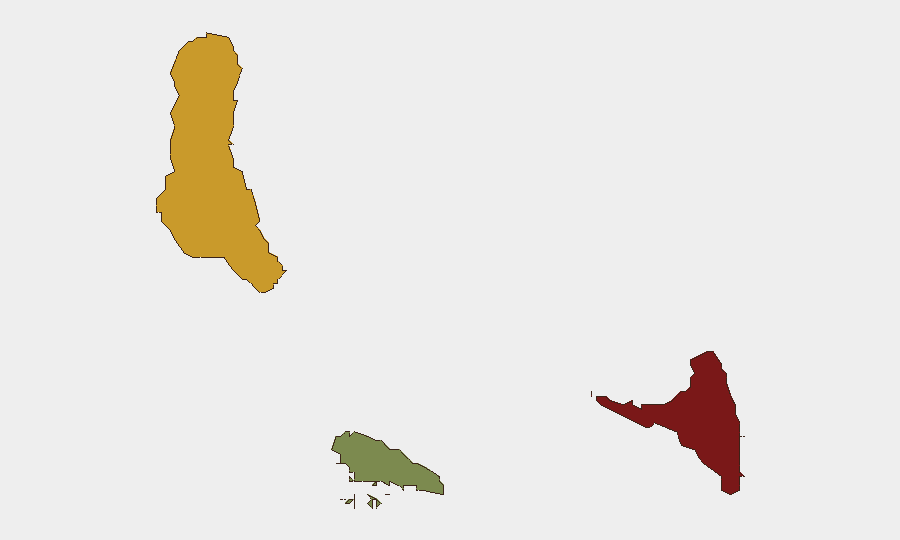
Situation Summary
Comoros remains in a baseline security posture with no significant incidents reported in the last 24–48 hours and no acute crises affecting territorial security or travel infrastructure. Open-source aggregators report 19 routine events over the past seven days with "no significant trend," indicating low-level, endemic risks rather than escalating threats. The archipelago continues to experience structural instability centered on Anjouan, but no new security developments have materialized to alter the current risk envelope for corporate operations or personnel.
Key Developments
- No discrete security, civil unrest, or crime incidents confirmed in Comoros territory during 24–48 July 2026. Openwatch platform reports routine activity only; no actionable security spike identified.
- Maritime: M/T Charminar (Comoros-flagged) boarded by U.S. Central Command, Arabian Sea, 25 July 2026. Vessel was inspected as part of Iran-sanctions enforcement and released; incident occurred outside Comoros waters and does not affect territorial security.
- Regional news silence on Comoros. Major African and Indian Ocean news services (Reuters Africa, Africanews) contain no Comoros-specific entries as of 25 July, indicating absence of internationally reported incidents in the reporting window.
- Openwatch baseline assessment: routine, non-escalating. Aggregated signals show no emerging security thesis or trend change warranting elevated alert status across the islands.
Highest-Risk Areas
Anjouan (composite risk 72–88) remains the archipelago's primary vulnerability, driven by endemic inter-island political fragmentation, limited state capacity, and a history of separatist activity and piracy staging. Grande Comore (risk 72), home to the capital Moroni and primary international gateway, concentrates political risk and petty-crime exposure linked to urban density and informal-sector employment. Moheli (risk 35) presents markedly lower threat surface. Risk concentration in Anjouan and Grande Comore reflects both structural governance deficits and geographic factors; Anjouan's remoteness and weaker administrative reach historically enable trafficking, maritime criminality, and factional posturing, while Grande Comore's urbanization and port activity create routine street-crime and administrative-friction vectors.
How GeoBit Would Assist
Intel Sweep, multi-language OSINT, and X/Telegram monitoring provide real-time surveillance of local political rhetoric, maritime activity, and incident signals across the three islands—critical for corporate teams with limited on-ground situational awareness. AOI (Area-of-Interest) Monitoring & Early Warning with persistent watch on Moroni port, Hahaya Airport, and inter-island ferry routes enables automated alerting if security conditions deteriorate or civil unrest emerges. Maritime & Aviation tracking combined with Routing & Network Analysis supports contingency planning and alternative-passage identification should labor unrest, port disruptions, or factional activity restrict primary travel corridors.
7-Day Outlook
No escalation is forecast for the immediate seven days; baseline routine risks (petty crime, administrative delays, maritime safety considerations) will persist. Continued close monitoring of Anjouan political signals and Moroni administrative activity is warranted to detect early warning of civil unrest or inter-island friction, particularly around government capacity announcements or electoral positioning. Duty-of-care teams should maintain standard protocols for staff check-ins and contingency routing options, with no requirement for heightened alert posture at present.
Highest-Risk Areas — Ranked
| # | State / Region | Risk |
|---|---|---|
| 1 | Anjouan | 88 |
| 2 | Grande Comore | 72 |
| 3 | Moheli | 35 |
Sources
Previous Daily Briefs
A new Comoros brief is written every day — each with its own risk map and downloadable CSV. Here's the last week; use the calendar to go further back.
📅 Browse every day by calendar →
Highlighted days have a brief. Tap a day for that day's map & analysis, or “csv” for that day's dataset ($5).
Atlas — our AI intelligence desk — emails them this snapshot personally. Nothing else, no list.