Situation Summary
Cuba remains a moderate regional security concern (global rank #54, composite threat score 17) with concentrated volatility in Havana and Sancti Spiritus, driven by recurring property seizures, administrative sanctions, and political tensions with the United States and internal regime friction. The past 48 hours show continued signals of state-company disputes and institutional friction, though open-source corroboration for specific incident timing and location remains limited. The overall trend reflects structural economic strain and governance instability rather than acute large-scale unrest or imminent systemic collapse.
Key Developments
- Property seizure and company dispute (2026-06-17, location unconfirmed): GeoBot event signals indicate a company-vs-Cuba seize/damage property event; additional administrative action against Cuba reported same date. Specific operational details, affected asset types, and corporate identity require field confirmation.
- Administrative sanctions escalation (2026-06-15): Cuban sanctions imposed by United States, signaling continued bilateral penalty cycle. Timing and scope consistent with existing U.S. policy posture; operational impact on business continuity in Cuba remains under assessment.
- Institutional friction (2026-06-17): Hospital-vs-school rejection signal and colonel public statement registered. Nature of dispute (resource allocation, governance, jurisdictional) unclear from available signal; local consequence limited unless indicative of wider administrative breakdown.
- Regime-clergy tension (2026-06-15): Priest disapproval of regime noted. Historical pattern; no violence or mass mobilization reported to date.
- Chinese diplomatic engagement (2026-06-15): Public statement by Chinese actors; consistent with Beijing's Caribbean positioning and does not indicate acute threat to Western corporate interests.
Note: Event-signal density is elevated, but independent, time-stamped corroboration for most incidents is not available in current open-source feeds. Intelligence teams should treat the above as indicator flags requiring field or classified-channel confirmation before operational decisions.
Highest-Risk Areas
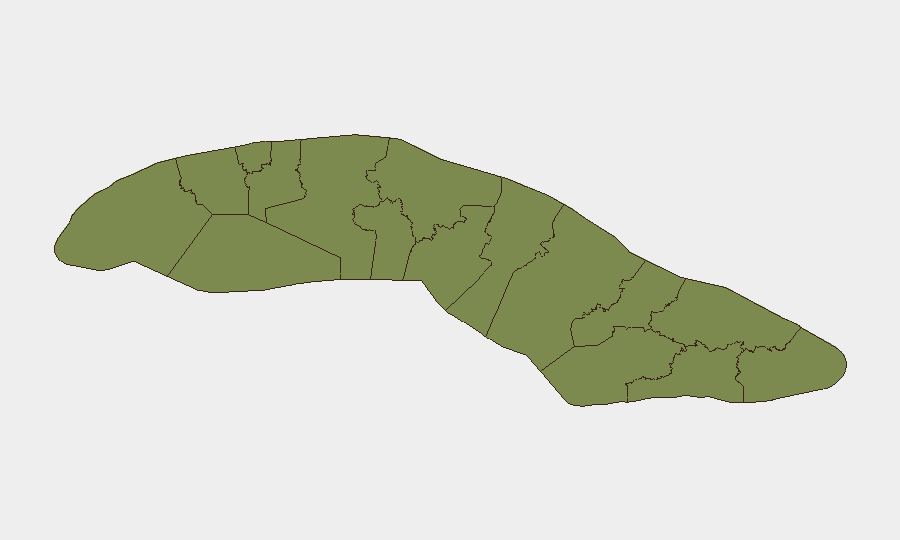
Havana (risk 33.2) and Sancti Spiritus (risk 30.4) account for the overwhelming majority of tracked events and composite risk, with all other provinces clustered below risk score 5. The capital concentration reflects both higher population density and institutional presence (government, major commercial hubs, port/logistics nodes), making Havana the primary exposure zone for corporate security, property risk, and duty-of-care operations. Sancti Spiritus's elevated ranking, despite smaller absolute event volume, suggests concentrated friction—possibly linked to resource distribution, local governance, or agricultural/industrial disputes—and warrants targeted monitoring by firms with sugar, energy, or agricultural interests in central Cuba.
How GeoBit Would Assist
Security teams should deploy AOI Monitoring & Early Warning against Havana and Sancti Spiritus to track property seizures, administrative actions, and crowd activity in real time; pair this with OSINT Fusion (X/Twitter, Telegram, YouTube, local news feeds) and Sentiment & Temporal Analysis to distinguish noise from actionable escalation. Network & Actor Analysis will help map regime factional tensions and company-state friction points, informing risk prioritization and evacuation planning. Economic & Trade and Conflict & Military modules provide sanctions-impact modeling and administrative-action tracking to support supply-chain and licensing continuity.
7-Day Outlook
No imminent large-scale civil unrest or regime destabilization is signaled; property seizures and administrative friction are likely to persist at current low-to-moderate intensity. Watch for further U.S. sanctions cycles, which typically prompt Cuban counter-messaging and localized enforcement actions. Corporate teams should maintain heightened awareness of port/logistics disruption and personnel safety in Havana; consider contingency routing and asset repositioning if seizure tempo accelerates.
Highest-Risk Areas — Ranked
| # | State / Region | Risk |
|---|---|---|
| 1 | Havana | 33.2 |
| 2 | Sancti Spiritus | 30.4 |
| 3 | Las Tunas | 4.4 |
| 4 | Artemisa | 4 |
| 5 | Pinar del Rio | 3.2 |
| 6 | Mayabeque | 3.2 |
| 7 | Matanzas | 3.2 |
| 8 | Cienfuegos | 3.2 |
| 9 | Villa Clara | 3.2 |
| 10 | Isle of Youth | 3.2 |
| 11 | Ciego de Avila | 3.2 |
| 12 | Camagüey | 3.2 |
Sources
Previous Daily Briefs
A new Cuba brief is written every day — each with its own risk map and downloadable CSV. Here's the last week; use the calendar to go further back.
📅 Browse every day by calendar →
Highlighted days have a brief. Tap a day for that day's map & analysis, or “csv” for that day's dataset ($5).