Situation Summary
Djibouti remains at low overall threat level (global rank #172, composite score 4) with no credible reports of acute security incidents, civil unrest, infrastructure disruption, or elevated travel risk in the last 24–48 hours. A small number of event signals flagged in the platform relate to geopolitical posturing rather than on-the-ground activity affecting the country directly. The security environment is stable and routine, though northern border regions retain structural vulnerability to regional spillover.
Key Developments
- No significant security, conflict, or civil unrest incidents confirmed in Djibouti within the last 24–48 hours across open-source news, wire services, embassy alerts, social media monitoring, or incident dashboards.
- Recent GeoBit event signals (2026-07-05 to 2026-07-06) flagged diplomatic disapproval and military-posture reporting involving UK and Yemen; no direct impact on Djibouti territory, ports, or civilian operations reported to date.
- Port and maritime operations in Djibouti continue without reported disruption; shipping and logistics reporting for the Horn of Africa region shows routine activity.
- No new government statements, emergency decrees, curfews, or security lockdowns issued in Djibouti during the monitoring window.
Highest-Risk Areas
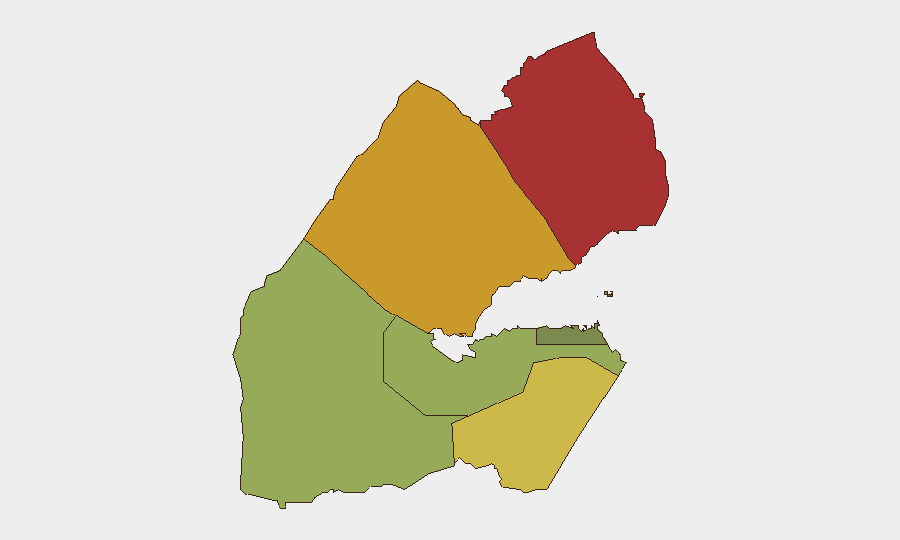
Northern and eastern border regions drive the country's sub-national risk profile. Obock (risk 78) and Tadjourah (risk 72) remain highest-risk due to proximity to Yemen, maritime trafficking routes, and historical cross-border movement of irregular armed actors. Ali Sabieh (risk 65) faces elevated exposure to broader Horn of Africa instability and cross-border criminal networks. By contrast, the capital region (Djibouti city, risk 35) is significantly lower-risk and remains the safest operational hub for corporate and diplomatic presence. Risk in peripheral areas reflects structural factors (border permeability, limited state presence) rather than acute incident clustering in the last 24–48 hours.
How GeoBit Would Assist
Intel Sweep and OSINT Fusion would provide continuous monitoring of cross-border militia, trafficking, and maritime threat signals in Obock and Tadjourah, with sentiment and temporal analysis of regional social media to detect early warning of unrest before it reaches population centers. AOI Monitoring & Early Warning with persistent geospatial watch on key infrastructure (ports, airport, border crossings) and Maritime & Aviation Tracking would alert security teams to anomalous vessel or movement patterns signaling imminent risk. Routing & Network Analysis would enable duty-of-care teams to plan alternative transit corridors around highest-risk northern zones and pre-emptively adjust personnel movement and supply chains.
7-Day Outlook
No acute escalation is forecast for the next seven days based on current reporting and trend analysis. The country's baseline stability is expected to hold, though security teams should maintain heightened vigilance in Obock and Tadjourah given persistent regional volatility in Yemen and the Red Sea. Any material shift in UK or US military posturing, or reported cross-border incursions from Yemen, would warrant rapid reassessment.
Highest-Risk Areas — Ranked
| # | State / Region | Risk |
|---|---|---|
| 1 | Obock | 78 |
| 2 | Tadjourah | 72 |
| 3 | Ali Sabieh | 65 |
| 4 | Arta | 48 |
| 5 | Dikhil | 42 |
| 6 | Djibouti | 35 |
Sources
Previous Daily Briefs
A new Djibouti brief is written every day — each with its own risk map and downloadable CSV. Here's the last week; use the calendar to go further back.
📅 Browse every day by calendar →
Highlighted days have a brief. Tap a day for that day's map & analysis, or “csv” for that day's dataset ($5).
Atlas — our AI intelligence desk — emails them this snapshot personally. Nothing else, no list.