Situation Summary
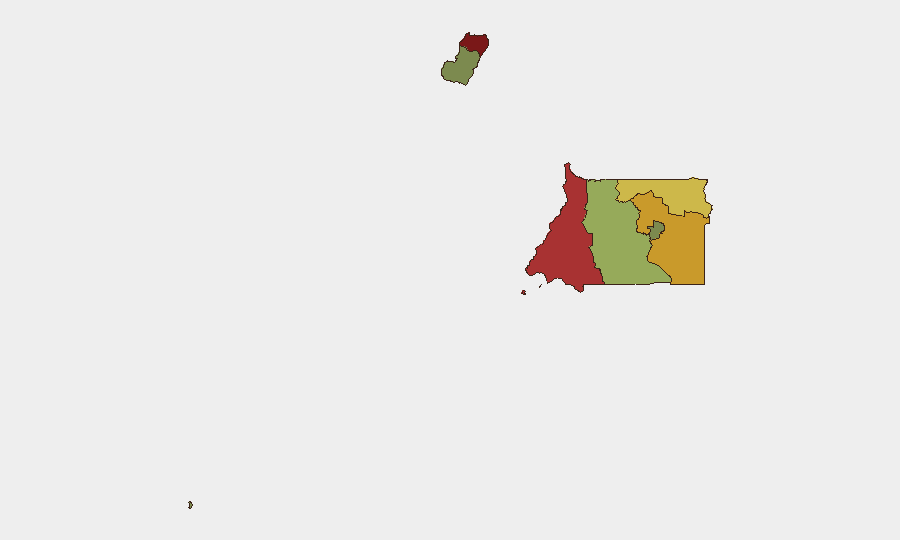
Equatorial Guinea remains a low-threat environment globally (rank #145, composite score 2.2) with no discrete security incidents recorded in the current monitoring window. The country's overall stability profile is stable, though subnational risk concentrations—particularly in Bioko Norte and Litoral Province—warrant targeted awareness for organizations with operations in those zones. No active civil unrest, cross-border incidents, or critical infrastructure disruptions are currently tracked.
Key Developments
No discrete security, civil-unrest, crime, political-instability, or infrastructure incidents were verified in Equatorial Guinea during the last 24–48 hours. Live web research (news, social media, and open-source feeds) returned no current event signals meeting publication threshold. Organizations should maintain routine monitoring protocols; the absence of reported incidents does not eliminate baseline operational risks typical of the operating environment.
Highest-Risk Areas
Bioko Norte (risk 85) and Litoral Province (risk 78) drive the country's composite subnational risk profile and warrant priority in duty-of-care planning. Both regions carry elevated risk relative to the national baseline, likely reflecting urban concentration, port/maritime activity, and administrative density in Bioko Norte (Malabo) and logistical/trade flows through Litoral. Wele-Nzas Province (risk 72) and Kié-Ntem Province (risk 68) present secondary concentrations, while southern and island provinces (Bioko Sur, Centro Sur, Annobón) show materially lower risk profiles. Teams with staff or assets in the top-two zones should maintain enhanced situational awareness and contingency planning.
How GeoBit Would Assist
Organizations with ongoing operations in Equatorial Guinea would benefit from GeoBit's AOI Monitoring & Early Warning capability, configured to flag developments in Bioko Norte and Litoral Province with automated alerting. Multi-language OSINT and social-media intelligence (X/Telegram/YouTube) would capture emerging tensions, labor actions, or infrastructure issues before they reach mainstream news thresholds. Additionally, Intel Sweep and conflict/crime/cyber search modules can rapidly profile baseline threats (organized crime, cybercrime, supply-chain vulnerabilities) and track shifts in regime stability or border-area activity, enabling teams to adjust travel routing, facility security posture, or evacuation readiness in near-real time.
7-Day Outlook
No acute escalation indicators are present. Equatorial Guinea's near-term trajectory remains stable absent unexpected regional contagion (e.g., spillover from Central African instability) or domestic political shocks. Security teams should maintain standard monitoring cadence and ensure contingency protocols remain current; the low current event density does not reduce the need for baseline preparedness in higher-risk subnational zones.
Report Date: 2026-07-11
Next Update: 2026-07-12
Classification: Unclassified / Corporate Use
Highest-Risk Areas — Ranked
| # | State / Region | Risk |
|---|---|---|
| 1 | Bioko Norte | 85 |
| 2 | Litoral Province | 78 |
| 3 | Wele-Nzas Province | 72 |
| 4 | Kié-Ntem Province | 68 |
| 5 | Centro Sur Province | 45 |
| 6 | Bioko Sur | 38 |
| 7 | Djibloho | 15 |
| 8 | Annobón Province | 8 |
Sources
Previous Daily Briefs
A new Equatorial Guinea brief is written every day — each with its own risk map and downloadable CSV. Here's the last week; use the calendar to go further back.
📅 Browse every day by calendar →
Highlighted days have a brief. Tap a day for that day's map & analysis, or “csv” for that day's dataset ($5).
Atlas — our AI intelligence desk — emails them this snapshot personally. Nothing else, no list.