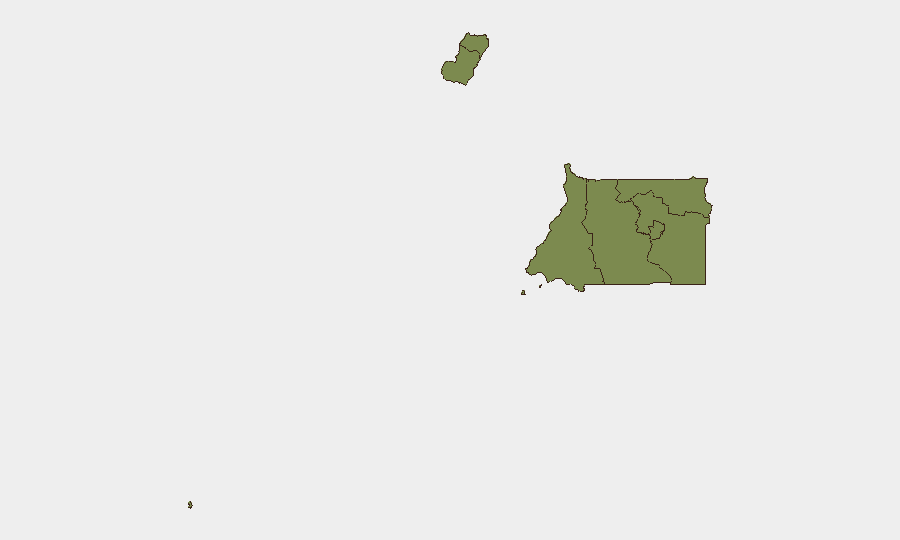
Situation Summary
Equatorial Guinea remains a low-frequency threat environment (global rank #142, composite score 11) with no discrete security incidents confirmed in the current reporting week. The country's security profile is characterized by persistent concerns around detention practices and rule-of-law gaps rather than active conflict or organized unrest. Northern coastal and border provinces—particularly Bioko Norte and Litoral—carry elevated operational risk, though activity levels remain subdued. The overall trajectory suggests continued stability with localized governance and human-rights concerns unlikely to generate broad systemic instability in the near term.
Key Developments
- Malabo — 8 October 2026: A U.S. federal judge ordered the U.S. government to facilitate the release and return of Ahmed Soliman, an Egyptian national, following his alleged deportation to Equatorial Guinea and subsequent detention under armed guard. The case involves reported beatings, threats at gunpoint, and incommunicado detention by Equatorial Guinean authorities, underscoring ongoing rule-of-law and detention-practice concerns in the capital.
Highest-Risk Areas
Bioko Norte (risk 85) and Litoral Province (risk 78) dominate the sub-national threat landscape, likely reflecting a combination of border permeability, maritime trafficking exposure, and proximity to regional instability in Cameroon and Gabon. Wele-Nzas and Kié-Ntem provinces, which border Cameroon and Gabon respectively, carry elevated scores (72 and 68) consistent with cross-border crime, smuggling, and logistical vulnerabilities. The interior and southern provinces show substantially lower risk profiles, with Annobón Island registering minimal threat (risk 8). For personnel and asset security, exposure in Bioko Norte—home to the capital, Malabo—remains the primary concern, although risk is driven more by governance and detention practices than active conflict.
How GeoBit Would Assist
Security teams operating in Equatorial Guinea would prioritize AOI Monitoring & Early Warning focused on Bioko Norte and coastal entry points to detect emerging unrest or criminal activity; Intel Sweep and OSINT fusion (including X/Twitter and Telegram monitoring, multi-language search) to track governance developments, arrest patterns, and detention-practice allegations; and Network & Actor Analysis to map trafficking, smuggling, and cross-border criminal networks operating through the highest-risk provinces. Routing & Network Analysis supports alternative journey planning for personnel traveling between Malabo and interior destinations, while Regime-Stability search provides ongoing monitoring of political sustainability.
7-Day Outlook
No imminent security escalation is forecast. Equatorial Guinea's stability is likely to persist absent external shocks or significant regional spillover from Cameroon or the Central African Republic. Monitoring should remain focused on detention practices and rule-of-law trends in Malabo, as reputational and legal exposure to foreign governments (as illustrated by the Soliman case) may gradually influence official conduct but will not alter near-term risk posture. Duty-of-care teams should maintain routine vigilance on northern provinces and maritime boundaries but can expect the current low-event environment to continue.
Highest-Risk Areas — Ranked
| # | State / Region | Risk |
|---|---|---|
| 1 | Bioko Norte | 85 |
| 2 | Litoral Province | 78 |
| 3 | Wele-Nzas Province | 72 |
| 4 | Kié-Ntem Province | 68 |
| 5 | Centro Sur Province | 45 |
| 6 | Bioko Sur | 38 |
| 7 | Djibloho | 15 |
| 8 | Annobón Province | 8 |
Sources
Previous Weekly Briefs
A new Equatorial Guinea brief is written every Monday, covering the week — each with its own risk map and downloadable CSV. Use the calendar to go further back.
- October 6, 2026
- September 29, 2026
- September 22, 2026
- September 15, 2026
- September 8, 2026
- September 1, 2026
- August 29, 2026
📅 Browse past briefs by calendar →
Highlighted days have a brief. Tap a day for that day's map & analysis, or “csv” for that day's dataset ($5).
Atlas — our AI intelligence desk — emails them this snapshot personally. Nothing else, no list.