Situation Summary
Finland faces a compound security environment marked by sustained Russian hybrid threats, critical infrastructure vulnerabilities, and domestic crime activity. The week saw significant diplomatic incidents tied to undersea cable sabotage, drone incursions, and border management, alongside large-scale civil-defence exercises underscoring state-level wartime preparedness concerns. The national threat level remains moderate (composite score 7, #161 globally), but regional concentration—particularly Uusimaa and eastern border zones—and the velocity of critical-infrastructure targeting indicate elevated operational risk for organizations with assets in southern and eastern regions.
Key Developments
- Helsinki District Court, 8 Sep – Trial opened against Russian *Fitburg* captain and Azerbaijani boatswain charged with aggravated sabotage and interference with telecommunications for deliberately damaging two undersea cables and attempting to damage eight additional cables and gas pipelines; case directly threatens Finnish national telecommunications, electricity, and gas networks.
- Porvoo/Pellinge, southern coast, 2–4 Sep – Border Guard investigating territorial violation after Russian-manufactured Geoscan 701 surveillance drone recovered on shore near Porvoo; investigation ongoing, authorities assess no immediate public danger but treat as potential breach of Finnish sovereignty.
- Nuijamaa border crossing, South Karelia, 7 Sep – Completion announced of 200-km security fence and sensor array along Russia–Finland border; all eastern land border crossings remain closed "until further notice" as part of response to instrumentalised migration and hybrid threats.
- Helsinki, 8 Sep – Finnish Ministry for Foreign Affairs summoned Russian ambassador in connection with drone security incident at Leipzig airport, Germany; reflects Finland's linkage of regional drone activity to hybrid-threat operations.
- Nationwide, 7 Sep – Finland executed Europe's largest civil-defence exercise since World War II, testing response to cyberattacks, infrastructure sabotage, and potential missile strikes, including underground-shelter protocols and continuity-of-government measures.
- Tampere (Pirkanmaa District Court), 7 Sep – Major child sexual-abuse trial began involving 361 child victims aged 9–15; case highlights cyber-enabled online exploitation risks.
- Mäntsälä–Lahti commuter line, 6 Sep – Witness reported far-right propaganda incident on Z commuter train (Sinimusta Liike racist sticker handed to four-year-old); reflects ongoing extremist messaging in public transit.
- Helsinki, 5 Sep – Police warned of anticipated traffic disruption and confrontation risk from two opposing demonstrations; counter-protest coordination remains a mobility hazard.
- National Archives of Finland, 7 Sep – Institution imposed unprecedented restrictions on remote access to nearly one million pages from Russian archives, setting digital access deadline to year 9999 and mandating on-site consultation only, citing cybersecurity posture and lack of secure digital environment.
- National government, 3–7 Sep – Announced extension of temporary Border Security Act to 31 December 2028, maintaining authority to turn away asylum seekers at eastern border; rail freight continues only via Vainikkala.
Highest-Risk Areas
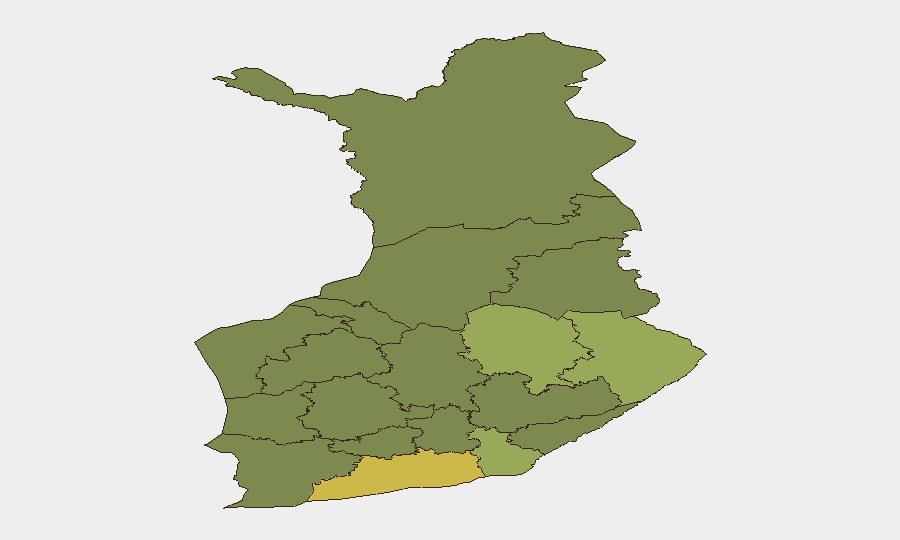
Uusimaa (risk 65) dominates the regional threat landscape, driven by Helsinki's concentration of government, critical infrastructure, diplomatic presence, and telecommunications hubs—the sites of this week's sabotage trial and ambassador summons. Eastern border regions (North Karelia, South Karelia, Kymenlaakso) rank second and third in risk, reflecting instrumentalised migration, drone incursions, and border-closure protocols now extended to end-2028. These zones face compounding exposure to hybrid threats, undersea infrastructure targeting, and surveillance operations.
How GeoBit Would Assist
Security teams in Finland should employ AOI Monitoring & Early Warning on critical-infrastructure corridors (undersea cables, border crossings, energy networks) and Maritime & Aviation tracking to detect vessel and drone signatures consistent with reconnaissance or sabotage activity. Network & Actor Analysis and OSINT fusion would establish patterns of Russian state and non-state actors involved in cable damage and drone operations, while Intel Sweep and conflict/cyber search keep teams current on legal proceedings, diplomatic responses, and infrastructure vulnerabilities as they evolve.
7-Day Outlook
Sabotage and hybrid-threat operations are likely to remain elevated as winter approaches and energy demand increases; undersea-cable and pipeline vulnerabilities will remain a priority target. Civil-defence preparedness will drive continued public exercises and infrastructure hardening. Border management and asylum-processing procedures will remain under strain and diplomatic tension throughout the period.
Highest-Risk Areas — Ranked
| # | State / Region | Risk |
|---|---|---|
| 1 | Uusimaa | 65 |
| 2 | North Karelia | 44 |
| 3 | Kymenlaakso | 42 |
| 4 | North Savo | 40 |
| 5 | South Karelia | 38 |
| 6 | Kainuu | 36 |
| 7 | Päijät-Häme | 35 |
| 8 | South Savo | 32 |
| 9 | Kanta-Häme | 30 |
| 10 | Pirkanmaa | 28 |
| 11 | Central Finland | 26 |
| 12 | Southwest Finland | 25 |
Sources
Previous Weekly Briefs
A new Finland brief is written every Monday, covering the week — each with its own risk map and downloadable CSV. Use the calendar to go further back.
- September 3, 2026
- August 31, 2026
- August 29, 2026
- August 26, 2026
- August 24, 2026
- August 22, 2026
- August 20, 2026
📅 Browse past briefs by calendar →
Highlighted days have a brief. Tap a day for that day's map & analysis, or “csv” for that day's dataset ($5).
Atlas — our AI intelligence desk — emails them this snapshot personally. Nothing else, no list.