Situation Summary
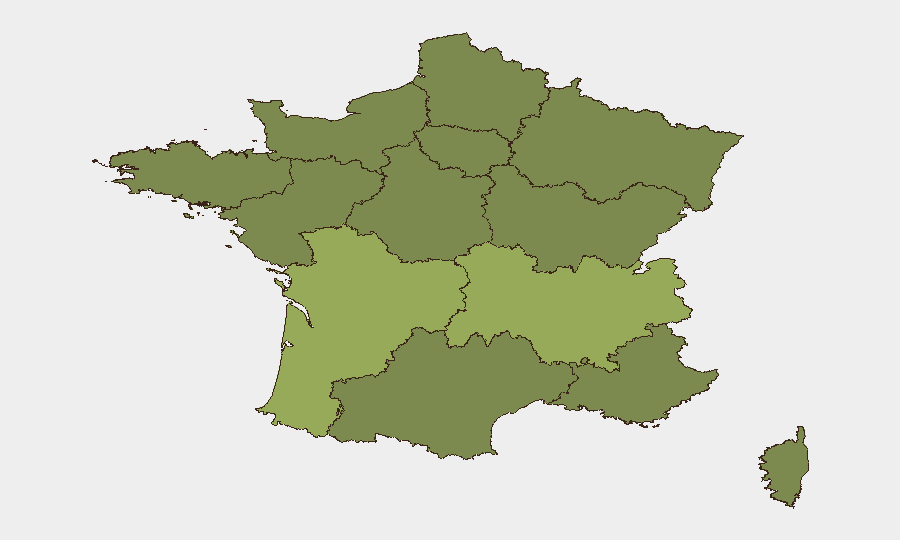
France remains at moderate-global threat level (#38 globally, composite score 40) with 277 tracked events in the monitoring window. Recent signals indicate administrative and diplomatic friction—particularly media sanctions disputes and cross-border statements—rather than acute security deterioration. Sub-national risk remains concentrated in southwestern and southeastern regions, with Nouvelle-Aquitaine significantly elevated. The overall trajectory is stable but requires continued monitoring of administrative disputes and intelligence-military tension.
Key Developments
- 2026-06-17 · Administrative Sanctions (Nationwide) — Media outlets facing sanctions from French administration and state entities; specific sector and scale unclear from available signals but indicates regulatory friction affecting press operations.
- 2026-06-16 · Presidential Statement (International) — French President issued statement regarding Geneva engagement; context suggests diplomatic positioning but exact substance requires follow-on reporting.
- 2026-06-16 · Government Rejection (Nationwide) — Government rejected unspecified proposal; signals policy resistance but lacks geographic or sectoral specificity.
- 2026-06-15 · Intelligence-Military Demonstration (France, specific location TBD) — Reported demonstration or rally involving intelligence and military actors; potential indicator of inter-agency friction or internal security positioning.
- 2026-06-15 · Cross-Border Aviation Dispute (France–Germany) — French airline disapproved action by or relating to Germany; commercial or regulatory dispute, not security threat at present.
- 2026-06-15 · Foreign Relations Statement (Britain–France) — UK statement directed at France; bilateral diplomatic signal; context and severity remain unconfirmed.
Data Limitation Note: Web-accessible open reporting for the last 24–48 hours has not returned time-stamped, location-specific, independently corroborated incidents meeting operational security brief standards. The signal list above reflects GeoBit event-tracking metadata but lacks actionable incident detail. Security teams should escalate any verified local incidents (protests, infrastructure impacts, travel disruption, crime clusters) for priority analysis.
Highest-Risk Areas
Nouvelle-Aquitaine (score 57.9) is the dominant risk driver—more than 40% above the national average and 19+ points above the second-ranked region. Auvergne-Rhône-Alpes (40.6) follows, suggesting persistent tension in the south and southeast. Ile-de-France (Paris metro, 32.8) carries elevated risk due to concentration of government, media, and international presence, though below the southwestern and Alpine zones. These three regions warrant priority duty-of-care monitoring; all others cluster between 27.9–29.1, indicating relatively even distribution of residual risk across the remainder of the country.
How GeoBit Would Assist
AOI Monitoring & Early Warning with persistent watch on Nouvelle-Aquitaine, Auvergne-Rhône-Alpes, and Ile-de-France can flag emerging protest activity, infrastructure disruption, or crime clusters in real-time. Intel Sweep and multi-language OSINT fusion (X/Twitter, local news, Telegram) will cross-check administrative disputes and police/intelligence signals to separate noise from actionable risk. Conflict & Network Analysis can map actor relationships in government, media, and security services to anticipate friction points and policy shifts affecting corporate operations or personnel safety.
7-Day Outlook
Administrative and diplomatic friction is likely to persist over the near term; no indicators suggest rapid escalation to public disorder or infrastructure impact. Sub-national risk remains highest in the southwest; security teams with people or assets in Nouvelle-Aquitaine should maintain heightened awareness of local developments. Continued monitoring of media-state relations and intelligence-military signaling is warranted to detect any shift toward internal institutional instability.
Highest-Risk Areas — Ranked
| # | State / Region | Risk |
|---|---|---|
| 1 | Nouvelle-Aquitaine | 57.9 |
| 2 | Auvergne-Rhône-Alpes | 40.6 |
| 3 | Ile-de-France | 32.8 |
| 4 | Normandy | 29.1 |
| 5 | Hauts-de-France | 28.7 |
| 6 | Provence-Alpes-Côte d'Azur | 28.7 |
| 7 | Occitania | 28.5 |
| 8 | Pays de la Loire | 28 |
| 9 | Brittany | 27.9 |
| 10 | Centre-Val de Loire | 27.9 |
| 11 | Grand Est | 27.9 |
| 12 | Bourgogne – Franche-Comté | 27.9 |
Sources
Previous Daily Briefs
A new France brief is written every day — each with its own risk map and downloadable CSV. Here's the last week; use the calendar to go further back.
📅 Browse every day by calendar →
Highlighted days have a brief. Tap a day for that day's map & analysis, or “csv” for that day's dataset ($5).