Situation Summary
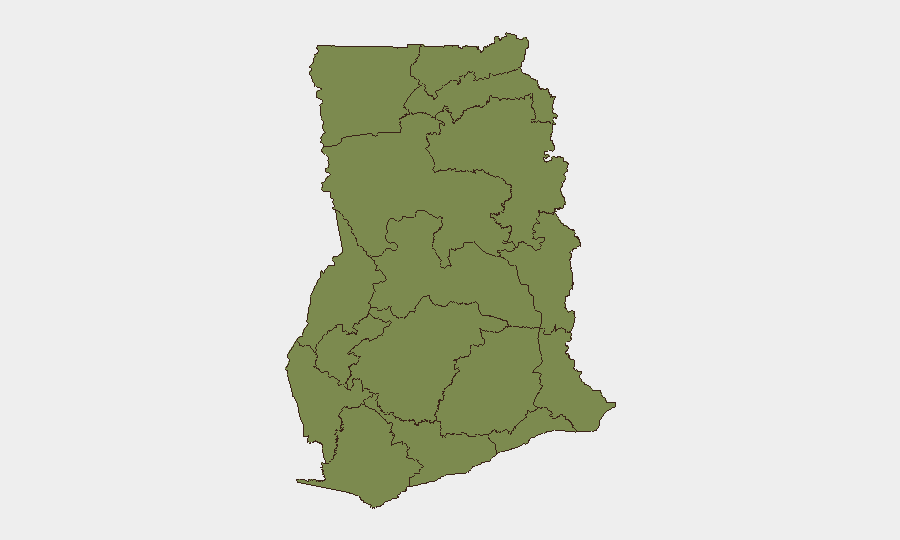
Ghana remains at low-to-moderate composite threat risk (global rank #149; score 6/100) with 74 tracked security events. However, regulatory enforcement and private-security sector conduct have emerged as acute focal points in the last 48 hours, particularly in Accra, signaling tightened government oversight and public scrutiny of armed non-state actors. The capital continues to drive national risk concentration, with Greater Accra Region scoring 31.7 on the sub-national index—more than double any other region. Near-term trajectory suggests sustained administrative and reputational pressure on private security providers and continued police visibility operations.
Key Developments
- Accra (national) – 22 June 2026: The Minister for the Interior suspended the operating licence of Kantanka Security Services Limited, citing illegal possession and use of firearms. The National Commission on Small Arms and Light Weapons and Ghana Police Service directed to investigate and enforce follow-up action. Signals regulatory willingness to enforce compliance in a historically loosely monitored sector.
- Dome Kwabenya, Accra – 22 June 2026: TV3 reported an alleged altercation between former MP Sarah Adwoa Safo and private security personnel, triggering public debate on private-sector armed personnel conduct and oversight in urban constituencies.
- Accra – 22 June 2026: GTV evening bulletin reported arrest of alleged gunmen; authorities emphasized ongoing investigation and public-safety impact in the capital, indicating active law-enforcement response to armed crime.
- National – 22 June 2026: Ghana Police Service broadcast "Safe Start" messaging emphasizing operational readiness, road enforcement, and crime prevention nationwide—consistent with reactive posturing following recent incidents and regulatory action.
- International dimension – 21–23 June 2026: Multiple international actors (Germany, UN bodies, care organizations) issued public statements and disapprovals referencing Ghana-related matters; specific content unclear from available signals, but suggests elevated external scrutiny of governance and humanitarian issues.
Highest-Risk Areas
Greater Accra Region (31.7) dominates the risk landscape, accounting for the majority of tracked security events and hosting both the regulatory intervention and alleged private-security incident cited above. Bono East (16.2) and Ashanti (14.1) regions trail significantly, suggesting that capital-city dynamics—including private-security regulation, urban armed crime, and political visibility—are the primary drivers of national risk concentration. All other regions score below 5, indicating geographically fragmented, low-level threat activity outside the Greater Accra corridor.
How GeoBit Would Assist
Teams with personnel or assets in Accra should deploy AOI (Area-of-Interest) Monitoring & Early Warning on high-density business districts and transport hubs to track armed-crime and policing activity in real time. Intel Sweep and multi-language OSINT fusion across local broadcast, social media, and regulatory sources will provide early signals of further private-security enforcement actions or sector-wide compliance changes, allowing duty-of-care teams to adjust staffing and supplier vetting. Network & Actor Analysis of private-security licensees and enforcement bodies supports procurement-risk assessment and vendor due diligence.
7-Day Outlook
Regulatory enforcement momentum is likely to continue, with additional licence audits or suspensions possible as Ghana Police Service and the Small Arms Commission execute follow-up investigations. Private-security and armed-personnel conduct will remain a high-visibility issue in Accra media and political discourse, increasing reputational and operational scrutiny of non-state security providers. No significant escalation in underlying violent crime is indicated, but heightened police and government visibility operations may temporarily increase checkpoint activity and minor transport delays in the capital.
Highest-Risk Areas — Ranked
| # | State / Region | Risk |
|---|---|---|
| 1 | Greater Accra Region | 31.7 |
| 2 | Bono East Region | 16.2 |
| 3 | Ashanti Region | 14.1 |
| 4 | Western Region | 12.7 |
| 5 | Savannah Region | 4.4 |
| 6 | Eastern Region | 2.4 |
| 7 | Volta Region | 2.4 |
| 8 | Upper East Region | 1.7 |
| 9 | Upper West Region | 1.7 |
| 10 | North East Region | 1.7 |
| 11 | Northern Region | 1.7 |
| 12 | Oti Region | 1.7 |
Sources
Previous Daily Briefs
A new Ghana brief is written every day — each with its own risk map and downloadable CSV. Here's the last week; use the calendar to go further back.
📅 Browse every day by calendar →
Highlighted days have a brief. Tap a day for that day's map & analysis, or “csv” for that day's dataset ($5).