Situation Summary
Greece remains a low-to-moderate threat environment (global rank #135, composite score 6), with risk heavily concentrated in the greater Athens metropolitan area and Central Greece. Recent signal activity reflects domestic political and administrative friction rather than acute security incidents, though localized protest and civil unrest remain recurring baseline risks. No imminent national-level threats to critical infrastructure or mass-casualty events are evident from current event tracking.
Key Developments
GeoBit's event signals from 26–27 June indicate:
- 26 June, Athens region: Arrest/detain operation reported; concurrent demonstration/rally activity in unspecified neighborhood, suggesting localized civil unrest or protest response.
- 26 June, nationwide: Multiple public statements from government, presidential, and ministerial sources on a settlement or administrative matter; senator disapproval signal suggests parliamentary friction.
- 25 June, hospital facility: Investigation initiated; nature and location unclear from available signal metadata.
- 27 June, Istanbul–Thessaloniki axis: Demand/contention event flagged, possibly involving bilateral or cross-border administrative/diplomatic matter.
- 27 June, web/citizen domain: Public statement with disapproval sentiment detected; indicates online civic/political friction.
*Note: Specific incident details, casualty counts, and operational outcomes remain unconfirmed pending deeper corroboration. These signals represent event-type and stakeholder detection; underlying causes require live source confirmation.*
Highest-Risk Areas
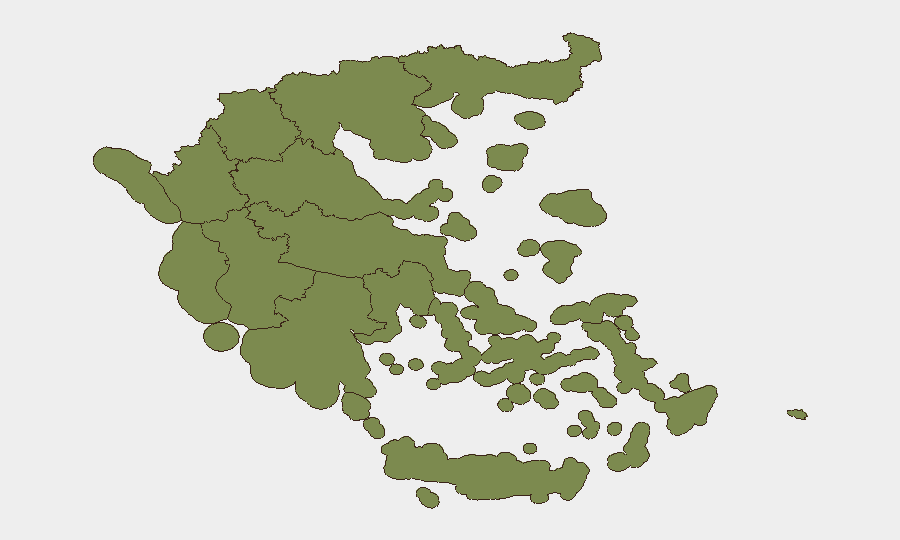
Attica (composite risk 31.9) dominates the threat landscape, accounting for the majority of tracked incidents and reflecting Athens' role as Greece's political, economic, and administrative hub. Elevated risk correlates with protest frequency, law-enforcement activity, and inter-agency friction typical of capital regions. Central Greece (risk 16.9) shows secondary but material elevation, suggesting either geographic or sectoral concentration of grievance or instability. Remaining regions (Western Greece, Western Macedonia, Peloponnese, Central Macedonia, island territories) exhibit baseline risk levels (1.9–3.3), consistent with stable provincial conditions. Risk in Attica and Central Greece is primarily civil/administrative rather than criminal-violence or terrorism-driven at present.
How GeoBit Would Assist
Intel Sweep & OSINT Fusion across Greek news outlets, law-enforcement statements, and social media would clarify the nature and scale of current incidents—distinguishing routine administrative action from escalating unrest. AOI Monitoring & Early Warning deployed on Attica (especially Athens municipal and port zones) and Central Greece would provide persistent alerting on protest, labor action, or civil-order disruptions that could affect corporate operations, supply chains, or personnel safety. Sentiment & Temporal Analysis on Greek-language and English-language sources would flag emerging political/social friction before it manifests as street-level risk, enabling duty-of-care teams to adjust staffing, routing, and contingency postures ahead of impact.
7-Day Outlook
Administrative and political friction is likely to remain elevated over the near term, with recurring low-level protest and parliamentary dissent visible across Attica and Central Greece. No indicators suggest rapid escalation to large-scale civil unrest or security-force response that would materially disrupt business operations or travel; baseline vigilance and standard risk-mitigation measures remain appropriate. Seasonal summer tourism and holiday patterns may temporarily suppress street-level activity but could also create flashpoints around transport, accommodation, and service-sector labor actions.
Highest-Risk Areas — Ranked
| # | State / Region | Risk |
|---|---|---|
| 1 | Attica | 31.9 |
| 2 | Central Greece | 16.9 |
| 3 | Western Greece | 3.3 |
| 4 | Western Macedonia | 2.6 |
| 5 | Peloponnese Region | 2.6 |
| 6 | Central Macedonia | 1.9 |
| 7 | Eastern Macedonia and Thrace | 1.9 |
| 8 | Thessaly | 1.9 |
| 9 | Autonomous Monastic State of the Holy Mountain | 1.9 |
| 10 | Northern Aegean | 1.9 |
| 11 | South Aegean | 1.9 |
| 12 | Crete | 1.9 |
Sources
Previous Daily Briefs
A new Greece brief is written every day — each with its own risk map and downloadable CSV. Here's the last week; use the calendar to go further back.
📅 Browse every day by calendar →
Highlighted days have a brief. Tap a day for that day's map & analysis, or “csv” for that day's dataset ($5).