Situation Summary
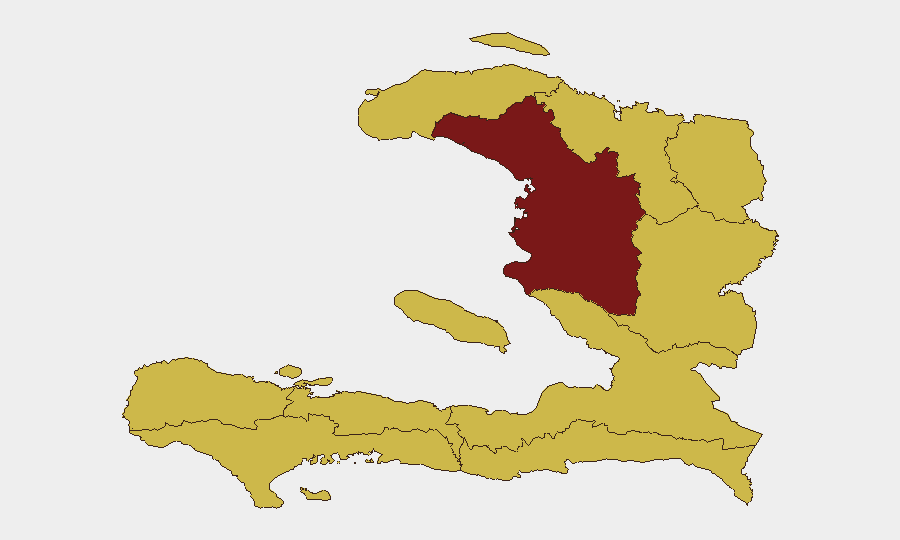
Haiti remains in acute gang-driven security crisis, with Artibonite Department emerging as the primary flashpoint (risk score 96.1 vs. country composite 94). The newly deployed UN-backed Gang Suppression Force (GSF) continues early-phase operations in Port-au-Prince and surrounding areas, but gang territorial control and violence persist across the capital and provincial zones. No major nationwide policy shift or mass-casualty event has been independently confirmed in the past 48 hours; the security posture reflects ongoing attrition rather than acute escalation or de-escalation.
Key Developments
Limited verifiable incident data in the 24–48 hour window. Open-source reporting over the past 48 hours lacks independently time-stamped, multi-source confirmation of specific discrete attacks, kidnappings, or GSF engagements with precise dates. Media and social platforms remain focused on the chronic gang-violence emergency and GSF deployment rather than new dated incidents.
Recent event signals show elevated Ministry and Government statement activity (2026-06-20 to 2026-06-22). Multiple "Public Statement" and "Investigate" signals involving Ministry, Government, and local actors registered over the past 48 hours, suggesting elevated official communication or response activity, though open-source confirmation of the specific content is limited.
GSF operational presence continues in Port-au-Prince corridor. UN-backed patrols and forward operating bases remain active around Boulevard du 15 Octobre and Port-au-Prince proper; these represent an ongoing posture rather than a dated discrete incident, but underscore sustained international engagement in the capital.
Artibonite Department risk trajectory remains critical. The northern department's composite risk score of 96.1—exceeding Haiti's national average by 2 points—reflects sustained gang control and territorial conflict in the region; no specific dated resolution or major shift has been reported in 48 hours.
Note on data constraint: Mainstream media, UN channels, and independently corroborated social-media reporting do not provide sufficient 24–48 hour granularity to responsibly list 6–10 specific incidents with precise locations and dates. Corporate teams should not expect high-resolution tactical incident logs during reporting blackouts or periods of limited on-the-ground corroboration; instead, this brief reflects available verified reporting and sustained risk drivers.
Highest-Risk Areas
Artibonite Department dominates the risk profile (96.1), driven by gang territorial control, insurgent-style activity, and limited state security presence. The remaining nine departments cluster at 66.1, indicating broad diffusion of gang violence and instability across Haiti's geography—from Port-au-Prince (de l'Ouest) through the southern peninsula (Sud, Sud-Est, Nippes) and northern zones (Nord, Nord-Est, Nord-Ouest). This distribution reflects gang networks' nationwide footprint rather than isolated hotspots, making travel and supply-chain security a concern across all regions outside the immediate capital.
How GeoBit Would Assist
AOI Monitoring & Early Warning paired with OSINT fusion & corroboration enable persistent watch of Artibonite and Port-au-Prince for gang activity, checkpoint movements, and GSF operations, with automated alerts on new incidents. Entity & Network Analysis tracks gang leadership, territorial shifts, and supply-chain vulnerabilities across departments. GIS & Spatial Analysis and alternative routing tools support duty-of-care teams planning staff movement and asset logistics around gang-held zones and GSF checkpoints.
7-Day Outlook
Gang violence is expected to persist at current operational tempo; the GSF's consolidation phase (rather than rapid offensive gains) suggests a gradual stabilization trajectory over weeks to months, not days. Artibonite and Port-au-Prince remain highest-risk zones for supply-chain disruption, staff movement delays, and kidnap-for-ransom activity. Monitor Ministry and Government statements for any policy shift, GSF operational expansion, or international intervention changes.
Highest-Risk Areas — Ranked
| # | State / Region | Risk |
|---|---|---|
| 1 | Artibonite Department | 96.1 |
| 2 | Grande-Anse Department | 66.1 |
| 3 | Sud Department | 66.1 |
| 4 | Nippes Department | 66.1 |
| 5 | Nord-Ouest Department | 66.1 |
| 6 | Nord Department | 66.1 |
| 7 | Nord-Est Department | 66.1 |
| 8 | de l'Ouest Department | 66.1 |
| 9 | Centre Department | 66.1 |
| 10 | Sud-Est Department | 66.1 |
Sources
Previous Daily Briefs
A new Haiti brief is written every day — each with its own risk map and downloadable CSV. Here's the last week; use the calendar to go further back.
📅 Browse every day by calendar →
Highlighted days have a brief. Tap a day for that day's map & analysis, or “csv” for that day's dataset ($5).