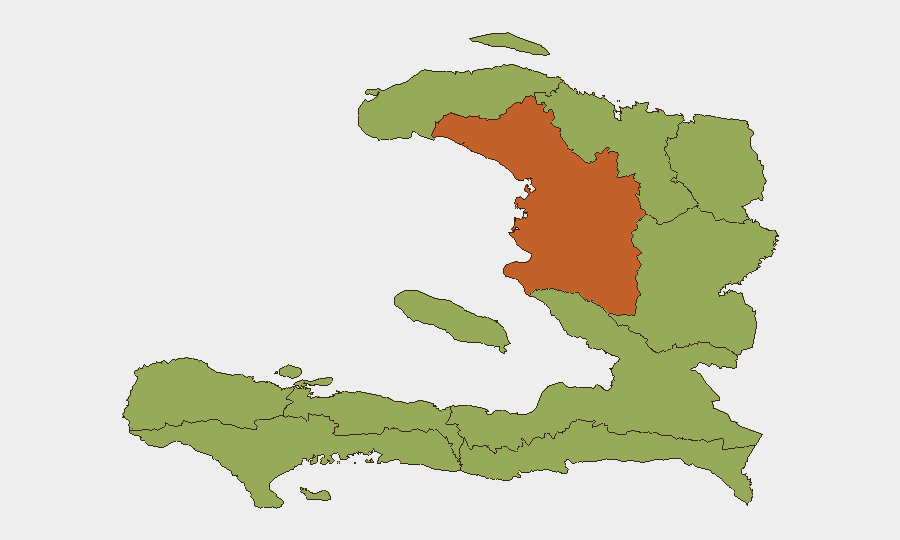
Situation Summary
Haiti remains under sustained pressure from gang violence, inter-communal tensions, and institutional instability, with a composite threat score of 64 placing it at #27 globally. Recent event signals indicate escalating friction between Haitian state actors and both domestic and international stakeholders, compounded by arrest/detention campaigns and reports of abduction activity. The security environment is characterized by fragmentation across departments, with Artibonite significantly outpacing other regions in threat intensity. Near-term trajectory remains volatile without clear de-escalation drivers.
Key Developments
- 2026-06-26 · Abduction/Kidnapping Activity (Nationwide): Multiple signals of abduction and hostage incidents attributed to Haitian actors. Specific location data and casualty counts unavailable at this briefing time; monitor humanitarian and NGO channels for victim identification and gang attribution.
- 2026-06-25 · Military Activity (Nation): Conventional military force deployment by Haitian armed forces recorded on 2026-06-25. No corroborated location or operational scope confirmed; likely related to gang-suppression or gang-related conflict response. Verify current curfew status and airfield access.
- 2026-06-25 · Police Detention Operations (Multiple Locations): Two separate arrest/detention events involving police and Haiti state security on 2026-06-25. Extent, locations, and cause unknown; monitor for allegations of extrajudicial action or counter-gang sweeps that could trigger community backlash.
- 2026-06-24 · Inter-Community Friction (Unspecified): "Demand" event signal between Islamic actors and Haitian stakeholders on 2026-06-24; nature and location unclear. Low-confidence event; may reflect diaspora tension rather than in-country incident. Escalation unlikely absent additional signals.
- 2026-06-25 · Foreign Military Activity (Morocco–Haiti): Conventional military force event attributed to Morocco on 2026-06-25. Highly unusual; unclear if diplomatic incident, naval activity, or data anomaly. Requires urgent clarification via State Department, OAS, or UN channels.
- 2026-06-26 · Migrant/Community Tensions (Unspecified): "Disapprove" event between migrants and Haitian nationals on 2026-06-26. Likely reflects spillover from U.S. Supreme Court TPS termination ruling (2026-06-25), which revoked temporary protected status for Haitians in the U.S. and may trigger deportations and return-migrant friction in Port-au-Prince and border areas. Monitor Toussaint Louverture Airport and land borders for movement surges.
Highest-Risk Areas
Artibonite Department is a critical outlier, with a composite risk score of 74.5—nearly 30 points above the second-ranked region. This concentration reflects entrenched gang presence, weak state control, and active kidnapping/extortion networks that disrupt supply lines to the capital and impede humanitarian access. The remaining nine departments cluster at 44.5–45.7, indicating widespread but more diffuse threats; de l'Ouest (Port-au-Prince's parent department) ranks second and deserves close attention for capital-area gang activity, road blockades, and institutional breakdown.
How GeoBit Would Assist
Security teams should deploy AOI Monitoring & Early Warning on Artibonite and Ouest departments to track gang activity, blockades, and displacement events in real time. Complement this with OSINT fusion (X/Twitter, local radio, NGO alerts, embassy advisories) and temporal analysis to distinguish current incidents from historical patterns. Routing & Network Analysis can identify alternative supply and personnel movement corridors as primary routes (RN1, RN2, airport access) are disrupted.
7-Day Outlook
Gang consolidation and migrant-return pressures are likely to sustain or modestly elevate incident frequency through early July. If TPS deportations proceed rapidly, arrival surges in Port-au-Prince and Cap-Haïtien may strain local order and trigger secondary displacement. Monitor for police/military escalation in response; any major operation in Artibonite or metropolitan areas risks collateral civilian impact and retaliation.
Highest-Risk Areas — Ranked
| # | State / Region | Risk |
|---|---|---|
| 1 | Artibonite Department | 74.5 |
| 2 | de l'Ouest Department | 45.7 |
| 3 | Grande-Anse Department | 44.5 |
| 4 | Sud Department | 44.5 |
| 5 | Nippes Department | 44.5 |
| 6 | Nord-Ouest Department | 44.5 |
| 7 | Nord Department | 44.5 |
| 8 | Nord-Est Department | 44.5 |
| 9 | Centre Department | 44.5 |
| 10 | Sud-Est Department | 44.5 |
Sources
Previous Daily Briefs
A new Haiti brief is written every day — each with its own risk map and downloadable CSV. Here's the last week; use the calendar to go further back.
📅 Browse every day by calendar →
Highlighted days have a brief. Tap a day for that day's map & analysis, or “csv” for that day's dataset ($5).