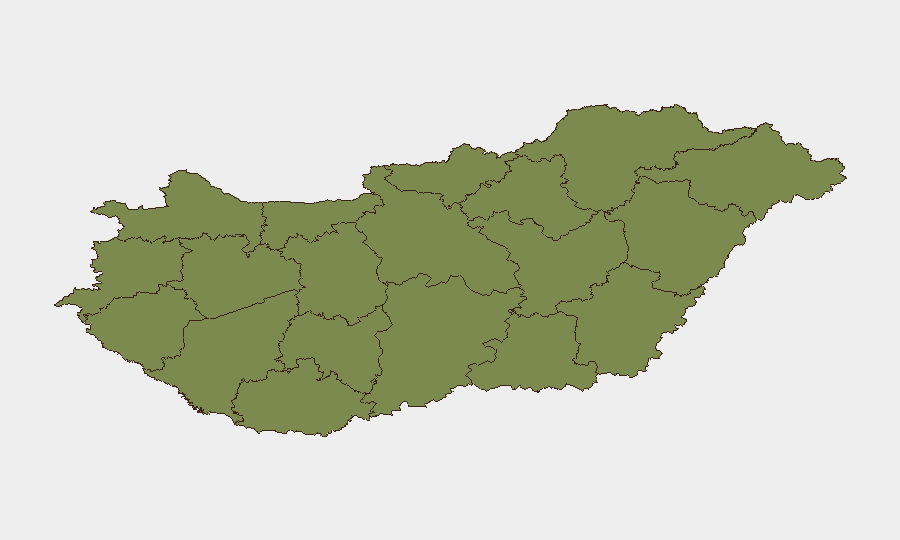
Situation Summary
Hungary remains a stable, low-threat environment (global rank #128, composite threat score 6) with security posture dominated by routine crime and localized administrative enforcement rather than organized violence or systemic instability. Sub-national risk is heavily concentrated in Pest County (score 32), which substantially exceeds Budapest proper (9.3), indicating that peripheral urban and industrial zones present elevated exposure compared to the capital itself. Recent activity signals include government statements, labor actions, and international diplomatic friction, but no confirmed large-scale incidents or critical infrastructure threats within the last 24–48 hours. The overall trajectory remains stable with manageable, predictable risk profiles for corporate operations.
Key Developments
- Budapest (multiple districts) — 2026-07-16 — Budapest Police Headquarters announced expanded public-safety operations for the next month, including reinforced street patrols and joint checks across the city, in response to local complaints and police assessment of crime patterns.
- Budapest, Tatai út (Újlipótváros, 13th District) — 2026-07-16 or earlier (within current police cycle) — Police arrested a man and woman suspected of crystal methamphetamine distribution from a residential apartment.
- Budapest, Zugló district — Within last 48 hours (police feed) — Authorities arrested a man for vehicle theft (stolen from his girlfriend's workplace) and apprehended him within two days of the incident.
- Sárbogárd — Within last 48 hours (police feed) — Integrated enforcement inspection uncovered illegal waste-management violations and resulted in the arrest of three wanted individuals.
- Baranya County — Within last 48 hours (police feed) — Drug-related arrest following a police response; details remain limited in available reporting.
Note: Event signals tracked by GeoBit (public statements by government and Turkish officials, labor strikes, Austrian banking disapproval) have not been independently corroborated with specific, localized incident-level reporting in the last 24–48 hours. These signals suggest elevated political and social friction but do not currently map to confirmed security events affecting corporate operations or travel safety.
Highest-Risk Areas
Pest County dominates the sub-national risk profile with a score 3.4 times higher than Budapest, reflecting concentrated vulnerability in industrial zones, transportation hubs, and peripheral urban areas where migrant labor, smuggling routes, and organized-crime networks pose sustained exposure. Budapest (score 9.3) remains the second-highest-risk jurisdiction, driven by volume of incidents and transient populations; however, the city benefits from intensive police presence and routine enforcement, which may partially offset absolute risk. Remaining counties (Zala, Komárom-Esztergom, Fejér, and others) cluster at scores of 2–3.4, indicating manageable, background-level risk. Organizations with personnel or logistics in Pest County should prioritize area-based monitoring and route security; Budapest operations benefit from established law-enforcement infrastructure but require standard urban-security protocols.
How GeoBit Would Assist
Security teams monitoring Hungary would leverage Intel Sweep and multi-language OSINT to detect emerging labor, political, or trafficking signals before they localize into incidents; AOI Monitoring & Early Warning on Pest County and Budapest transport corridors to track crime patterns and enforcement activity in real time; and Routing & Network Analysis to identify safe transit alternatives during periods of elevated police operations or protests. Cross-referencing entity extraction and sentiment analysis on political statements (government, Turkish, Austrian actors) would provide early warning of diplomatic friction that could affect cross-border operations or banking relationships.
7-Day Outlook
Routine crime enforcement and low-level political friction are expected to continue without escalation. Expanded Budapest police operations (announced 2026-07-16) will likely increase visible patrols and checkpoints for approximately one month; corporate teams should anticipate minor delays in city transit but no significant disruption. No credible signals suggest systemic destabilization or acute security events in the coming week.
Highest-Risk Areas — Ranked
| # | State / Region | Risk |
|---|---|---|
| 1 | Pest | 32 |
| 2 | Budapest | 9.3 |
| 3 | Zala | 3.4 |
| 4 | Komárom-Esztergom | 2 |
| 5 | Fejér | 2 |
| 6 | Nógrád | 2 |
| 7 | Szabolcs-Szatmár-Bereg | 2 |
| 8 | Vas | 2 |
| 9 | Győr-Moson-Sopron | 2 |
| 10 | Veszprém | 2 |
| 11 | Somogy | 2 |
| 12 | Baranya | 2 |
Sources
Previous Daily Briefs
A new Hungary brief is written every day — each with its own risk map and downloadable CSV. Here's the last week; use the calendar to go further back.
📅 Browse every day by calendar →
Highlighted days have a brief. Tap a day for that day's map & analysis, or “csv” for that day's dataset ($5).
Atlas — our AI intelligence desk — emails them this snapshot personally. Nothing else, no list.