Situation Summary
India's composite threat ranking (76/100, #14 globally) reflects persistent volatility across multiple security domains—communal tensions, electoral integrity concerns, maritime attacks affecting Indian nationals, and counterterrorism operations. The past 48 hours have seen a sharp spike in incidents spanning electoral sabotage, law-enforcement action against alleged terror suspects, political friction, and two confirmed maritime attacks on Indian-crewed vessels in the Gulf region, signaling a convergence of domestic and transnational risks. Western and central states, along with Delhi and Maharashtra, remain the highest-risk zones, but recent maritime escalation and diplomatic friction with the US over Gulf security represent a new vector requiring immediate attention.
Key Developments
- Kolkata, West Bengal – 12 June: A warehouse fire destroyed EVMs (electronic voting machines) linked to 15 constituencies; authorities have ordered forensic examination to determine whether the blaze resulted from electrical fault, accident, or deliberate sabotage, raising electoral integrity concerns.
- Bhopal, Madhya Pradesh – 12 June: The Anti-Terrorism Squad arrested resident Mohd Faraz near Nanhe Bee's Mosque on allegations of planning "lone-wolf" terror attacks; the operation was described as highly confidential and preceded by surveillance.
- Kolkata, West Bengal – 12 June: West Bengal CID served notice on Trinamool Congress leader Abhishek Banerjee, directing his appearance in connection with remarks made during assembly election campaign; simultaneously, a hate-speech case was registered against Chief Minister Mamata Banerjee over allegedly communal remarks during the same campaign period.
- Strait of Hormuz / off Oman – 10–11 June: Two separate maritime security incidents involving Indian-crewed vessels: MT Settebello (three Indian seafarers killed, others injured) and MT Jal Veer (20 Indian crew, all reported safe but evacuated). Attacks occurred near the Strait of Hormuz and Shinas Port area.
- New Delhi – within 48 hours: India summoned the US Chargé d'Affaires Jason Meeks for the second time in under 48 hours, formally protesting attacks on commercial vessels with Indian crews and demanding stronger protection for Indian seafarers in the Gulf region.
- New Delhi / Gulf maritime routes – within 48 hours: The Indian government heightened alert status and safety measures for Indian seafarers in the Gulf, including intensified ship-security monitoring and coordination on evacuation and repatriation.
Highest-Risk Areas
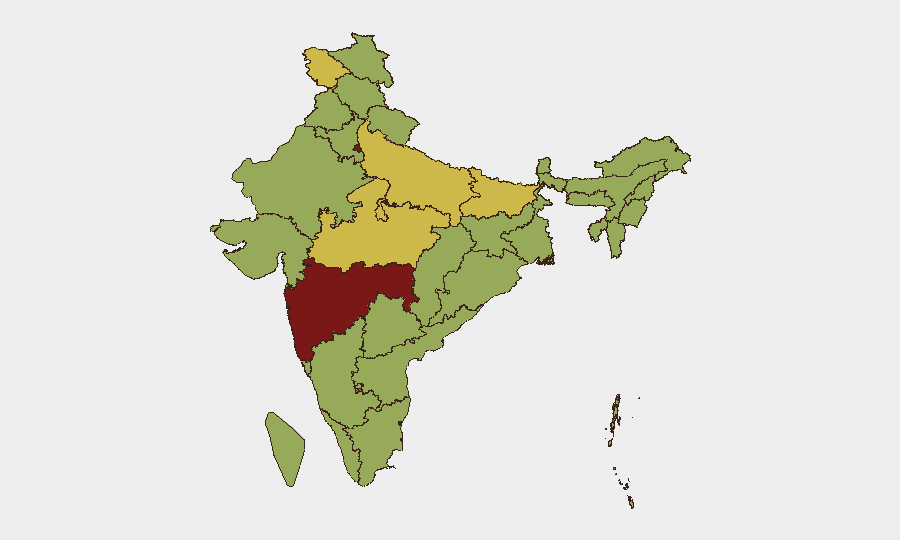
Delhi (82.9) and Maharashtra (81.1) lead the national risk index, driven by concentrated urban density, political activity, and historical patterns of communal friction. Madhya Pradesh (66.5) and Bihar (65.6) rank third and fourth, reflecting ongoing criminality and periodic violence. West Bengal (57.2, ranked 9th) has moved into sharper focus in the past 48 hours due to electoral sabotage allegations, political law-enforcement actions, and communal hate-speech cases—indicating elevated tension ahead of electoral processes or governance transitions. Jammu and Kashmir (61.7) remains a persistent flashpoint for military-linked incidents and unconventional violence.
How GeoBit Would Assist
Security teams would deploy Election Monitoring capabilities to track EVM-related incidents and electoral integrity threats across state-level operations; Intel Sweep and OSINT fusion to correlate communal speech, arrests, and political tensions in real time; and Maritime & Aviation tracking combined with Network & Actor Analysis to monitor threats to Indian seafarers and vessels in the Gulf, with Early Warning & Prediction algorithms flagging escalation patterns before they materialize into further loss of life.
7-Day Outlook
Electoral and communal tensions in West Bengal are likely to intensify as political cases proceed and investigation outcomes become public. Maritime incidents in the Gulf region may trigger secondary security responses (heightened convoy protocols, rerouting of Indian-flagged vessels) and further diplomatic engagement. Domestic counterterrorism operations will continue, particularly in central states; monitor for copycat or retaliatory incidents in low-security urban areas.
Highest-Risk Areas — Ranked
| # | State / Region | Risk |
|---|---|---|
| 1 | Delhi | 82.9 |
| 2 | Maharashtra | 81.1 |
| 3 | Madhya Pradesh | 66.5 |
| 4 | Bihar | 65.6 |
| 5 | Uttar Pradesh | 64.3 |
| 6 | Jammu and Kashmir | 61.7 |
| 7 | Punjab | 57.6 |
| 8 | Telangana | 57.5 |
| 9 | West Bengal | 57.2 |
| 10 | Karnataka | 56.8 |
| 11 | Gujarat | 56.3 |
| 12 | Tamil Nadu | 56.2 |
Sources
Previous Daily Briefs
A new India brief is written every day — each with its own risk map and downloadable CSV. Here's the last week; use the calendar to go further back.
📅 Browse every day by calendar →
Highlighted days have a brief. Tap a day for that day's map & analysis, or “csv” for that day's dataset ($5).