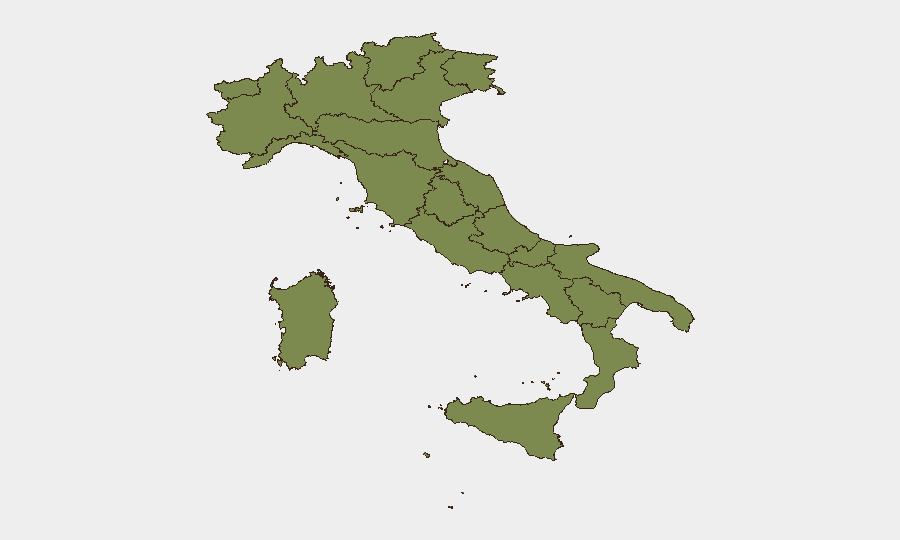
Situation Summary
Italy remains a composite threat level 7 globally (rank #131), with 254 tracked security events. The country's security environment is characterized by persistent organized-crime activity, localized civil unrest, and occasional foreign-state messaging, but no systemic instability. Risk is heavily concentrated in the Lazio region (composite score 31.8), which accounts for a disproportionate share of national threat events.
Key Developments
No corroborated security incidents meeting the 24–48-hour recency threshold have been identified in the last 24–48 hours. Open-source reporting available as of 2026-07-01 does not contain clearly dated, multi-source-confirmed developments in Italy within this window. Recent local incidents (railway station assaults in Campania, journalist-attack arrests in Lazio) are documented in sources that place them 5+ days prior or link them to historical incidents (October 2025 bombing). Absence of reported developments in this narrow timeframe does not indicate absence of risk; it reflects the lag in public reporting and the need for deeper OSINT collection to capture emerging threats.
Highest-Risk Areas
Lazio dominates the sub-national risk profile, with a composite score of 31.8—nearly double that of the second-ranked region (Umbria, 16.9). The region encompasses Rome and surrounding metropolitan areas; elevated risk reflects organized-crime activity (particularly mafia-linked operations), occasional violent crime, and recurring foreign-state messaging toward Italian entities and officials. Umbria and Lombardy rank second and third but at substantially lower scores (16.9 and 9.2 respectively), suggesting that Lazio-specific drivers—likely 'Ndrangheta operations, Camorra activity, and state-level tensions—are the primary national risk concentrators. Campania (rank 4; score 6.7) remains a secondary node of concern, consistent with historical organized-crime presence in the Naples metropolitan area. All other regions fall below risk 6, indicating that company and personnel exposure is manageable outside the top two regions.
How GeoBit Would Assist
Security and duty-of-care teams should employ AOI Monitoring & Early Warning on Lazio, Umbria, and Lombardy to capture emerging threats in real time, with automated alerting for organized-crime, civil-unrest, and foreign-state activity. OSINT Fusion & Corroboration (cross-referencing news, social-media, and Telegram channels with temporal and sentiment analysis) will disambiguate incident timing and distinguish historical context from current developments—critical for rapid response in high-tempo environments. Entity & Network Analysis applied to organized-crime actors and state-sponsored messaging will enable teams to anticipate targeting of corporate assets or personnel and adjust duty-of-care posture accordingly.
7-Day Outlook
No near-term escalation triggers are evident, but the persistent concentration of risk in Lazio and the ongoing organized-crime presence suggest that localized violence, extortion, or surveillance targeting of businesses and individuals will remain a steady background threat. Continued foreign-state messaging toward Italian institutions (as flagged in recent public statements) may create indirect reputational or operational risk for companies with sensitive contracts or government relationships. Monitoring should remain elevated in Lazio and Campania; all other regions present baseline European-standard risk.
Highest-Risk Areas — Ranked
| # | State / Region | Risk |
|---|---|---|
| 1 | Lazio | 31.8 |
| 2 | Umbria | 16.9 |
| 3 | Lombardy | 9.2 |
| 4 | Campania | 6.7 |
| 5 | Liguria | 5.5 |
| 6 | Basilicata | 4.5 |
| 7 | Marche | 3 |
| 8 | Piedmont | 2.7 |
| 9 | Emilia-Romagna | 2.4 |
| 10 | Sicily | 2.4 |
| 11 | Sardinia | 2.1 |
| 12 | Tuscany | 1.8 |
Sources
Previous Daily Briefs
A new Italy brief is written every day — each with its own risk map and downloadable CSV. Here's the last week; use the calendar to go further back.
📅 Browse every day by calendar →
Highlighted days have a brief. Tap a day for that day's map & analysis, or “csv” for that day's dataset ($5).