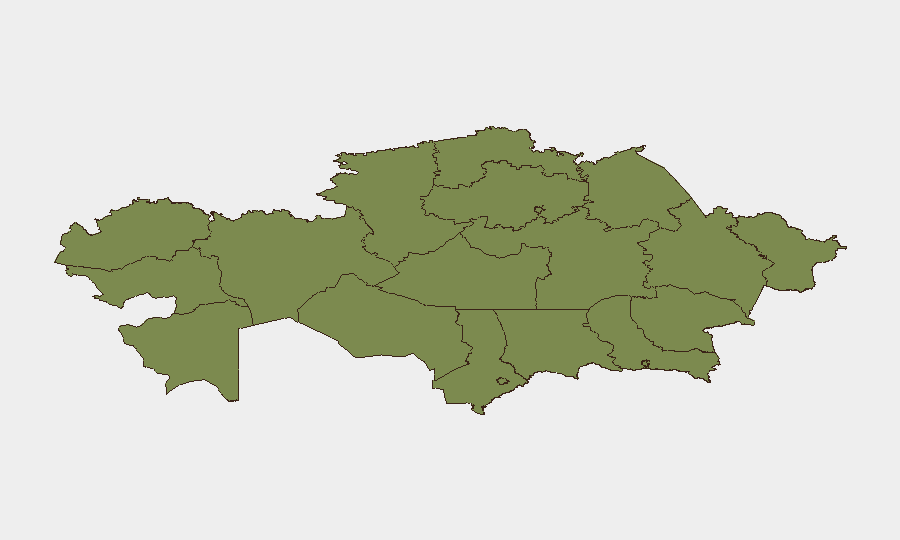
Situation Summary
Kazakhstan remains a relatively stable country with a composite threat score of 2.2 (global rank #135), though elevated risk is concentrated in specific sub-national areas rather than evenly distributed. Current developments center on border enforcement operations, external regional conflicts affecting trade corridors, and political-process activity ahead of early parliamentary elections. No major civil unrest, terror attacks, or significant crime incidents have been reported in Kazakhstan's major urban centers in the last 24–48 hours, and the overall security environment does not present acute threats to corporate operations or personnel at present.
Key Developments
- Western Kazakhstan / Aktobe / Pavlodar regions (9–10 July): Border authorities tightened vehicle entry controls from Russia to once per day and escalated inspections at crossing points to counter illegal fuel smuggling. Over 60 smuggling attempts were intercepted within 48 hours, signaling elevated cross-border enforcement and potential for minor delays at affected checkpoints.
- Kazakhstan–Russia border (national level, 9–10 July): Kazakhstan's Foreign Ministry formally denied that its territory, airspace, or infrastructure were used for any operations against other states, following Russian claims that Ukrainian drones striking the Omsk refinery may have been launched from Kazakh soil. The statement reaffirmed Kazakhstan's neutrality and territorial protection posture.
- Astana (10 July): The OSCE Office for Democratic Institutions and Human Rights (ODIHR) officially opened an election observation mission in the capital ahead of early parliamentary elections, bringing international monitors to assess the political and security environment.
- Iran–Turkmenistan rail corridor (9–10 July): A cruise-missile strike damaged a railway bridge near Aqqala, Golestan Province, Iran, affecting the Gorgan–Incheh Borun line that carries cargo toward Turkmenistan and Kazakhstan. This incident, linked to broader U.S.–Iran escalation, creates temporary infrastructure and logistics risk for Kazakhstan's planned southern trade corridor to the Persian Gulf.
- Kazakhstan Gulf trade corridor (by 9 July): Analysts note that recent U.S. strikes on Iranian targets and Iranian retaliation against U.S. bases in the Gulf region significantly increase security and insurance costs for Kazakh cargo moving via Gulf routes, affecting medium-term shipping and travel risk rather than domestic operations.
Highest-Risk Areas
Ulytau Region dominates the sub-national ranking with a composite risk score of 31.5, substantially exceeding all other areas and warranting focused attention on industrial security, asset protection, and personnel safety in that zone. Almaty (score 13.5) and Kostanay Region (7.5) represent secondary concentrations of risk, likely driven by population density, economic activity, and cross-border dynamics. Astana (7.5) carries electoral and political-process risk through early July and August, though this does not translate to acute violence or civil order threats at present. All other regions score 1.5 or lower and are not currently elevated.
How GeoBit Would Assist
Security teams with assets or personnel in Kazakhstan should deploy AOI Monitoring & Early Warning focused on Ulytau, Almaty, and Kostanay regions to detect emerging labor, criminal, or border-related incidents in near-real time. Multi-language OSINT and Telegram/X intelligence collection on political-party activity and election-related statements will provide early signal of any civil process deterioration ahead of parliamentary votes. Trade route and economic monitoring, combined with satellite imagery analysis, can track the Iran–Turkmenistan rail corridor recovery and quantify logistics delays affecting Kazakhstan's southern supply chains.
7-Day Outlook
No acute escalation of domestic violence or civil unrest is forecast in the near term; the security environment is expected to remain stable through the first half of July. Border enforcement activity in western regions will likely persist as Russian fuel-smuggling pressure continues, and election observation activity in Astana will increase as campaign periods intensify. External risks—chiefly the Iran–Gulf conflict's impact on southern trade corridors—remain elevated but do not presently threaten core domestic security or major urban centers.
Highest-Risk Areas — Ranked
| # | State / Region | Risk |
|---|---|---|
| 1 | Ulytau Region | 31.5 |
| 2 | Almaty | 13.5 |
| 3 | Kostanay Region | 7.5 |
| 4 | Astana | 7.5 |
| 5 | Turkistan Region | 1.5 |
| 6 | Almaty Region | 1.5 |
| 7 | East Kazakhstan Region | 1.5 |
| 8 | Abay Region | 1.5 |
| 9 | Jetisu Region | 1.5 |
| 10 | West Kazakhstan Region | 1.5 |
| 11 | Atyrau Region | 1.5 |
| 12 | Mangystau Region | 1.5 |
Sources
Previous Daily Briefs
A new Kazakhstan brief is written every day — each with its own risk map and downloadable CSV. Here's the last week; use the calendar to go further back.
📅 Browse every day by calendar →
Highlighted days have a brief. Tap a day for that day's map & analysis, or “csv” for that day's dataset ($5).
Atlas — our AI intelligence desk — emails them this snapshot personally. Nothing else, no list.