Situation Summary
Mexico remains at composite threat level 100 (rank #7 globally), with 1,398 tracked events primarily driven by insurgency activity. The country is currently in a heightened security posture due to World Cup hosting (13 June – 14 July 2026), with over 100,000 security personnel deployed across Mexico City, Guadalajara, and Monterrey. Teacher unions and families of missing persons are conducting active protests and barricades near Estadio Azteca and central Mexico City corridors, creating localized disruption risks around match-day operations and transportation corridors.
Key Developments
- Mexico City (Estadio Azteca area, Tlalpan/Coyoacán) – 12 June 2026: CNTE-affiliated teachers' unions erected barricades and blocked main access routes to the stadium approximately 48 hours before the opening match, citing wage and pension demands and signaling intent to disrupt tournament operations.
- Mexico City (Zócalo and surrounding avenues) – 12 June 2026: Massive protest encampments and security cordons by families of missing persons and social-movement affiliates brought the historic center to near standstill, with metal barriers and restricted vehicle access as part of the expanded World Cup security perimeter.
- Mexico City, Guadalajara, Monterrey – 12 June 2026: Federal authorities confirmed deployment of 100,000+ personnel (army, National Guard, police, special units) under the "Kukulkán Plan," including concrete barriers, checkpoints, traffic restrictions, and anti-drone coverage around stadiums and critical infrastructure (energy, water, telecom).
- Guadalajara, Jalisco – 12 June 2026: Local and federal authorities announced visible increases in heavily armed police and National Guard patrols around World Cup venues and tourist areas, framing heightened posture as reassurance despite absence of recent security incidents since February.
- National level – 12 June 2026: U.S. Embassy reiterated state-by-state travel advisories, recommending Americans reconsider travel to Jalisco and exercise increased caution in Mexico City and Nuevo León due to crime, armed robbery, and kidnapping risks, with specific warnings for highway travel near Monterrey at night.
- National coordination – 12 June 2026: Mexico activated real-time threat monitoring and critical-infrastructure protection in coordination with USNORTHCOM, with official analysis noting highest visitor risk exists outside secured stadium and fan-zone perimeters, particularly on public transport and urban outskirts.
Highest-Risk Areas
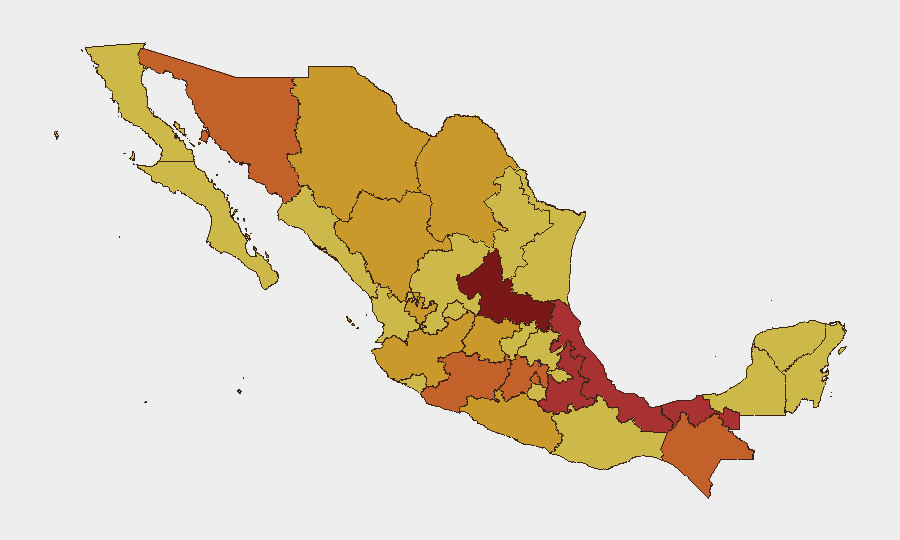
San Luis Potosí (100), Puebla (78.4), and Veracruz (77.6) drive the national composite threat score, followed by Tabasco, Chiapas, and Mexico City itself (75.5–76.0 range). Insurgency activity dominates the threat profile in northern and central states; Mexico City's elevated ranking reflects both protest activity and underlying organized-crime presence. Non-host states Sonora, Michoacán, and Guerrero maintain scores above 72, indicating persistent cartel and criminal network activity independent of World Cup security measures.
How GeoBit Would Assist
Security teams should deploy AOI Monitoring & Early Warning on Estadio Azteca, fan zones, and transport corridors to detect protest expansion or violence in real time. OSINT fusion (Twitter/Telegram, YouTube, radio SIGINT, entity extraction) will track union and activist messaging for operational intent signals. Routing & Network Analysis combined with GIS & Spatial Analysis enables real-time alternative-route planning for personnel and assets around active barricades and checkpoints.
7-Day Outlook
Protest activity and barricade presence near stadium venues are expected to persist through match-day (13 June) and potentially escalate if wage negotiations stall. Security operations will remain at maximum deployment through the tournament window, creating sustained congestion and access restrictions in Mexico City and Guadalajara. Risk outside secured perimeters—public transport, highways, and urban outskirts—remains elevated and unaffected by stadium-focused security.
Highest-Risk Areas — Ranked
| # | State / Region | Risk |
|---|---|---|
| 1 | San Luis Potosí | 100 |
| 2 | Puebla | 78.4 |
| 3 | Veracruz | 77.6 |
| 4 | Tabasco | 76 |
| 5 | Chiapas | 75.6 |
| 6 | Mexico City | 75.5 |
| 7 | Sonora | 75.3 |
| 8 | State of Mexico | 73.7 |
| 9 | Michoacán | 73.1 |
| 10 | Jalisco | 72.6 |
| 11 | Guerrero | 72.4 |
| 12 | Durango | 72.1 |
Previous Daily Briefs
A new Mexico brief is written every day — each with its own risk map and downloadable CSV. Here's the last week; use the calendar to go further back.
📅 Browse every day by calendar →
Highlighted days have a brief. Tap a day for that day's map & analysis, or “csv” for that day's dataset ($5).