Situation Summary
Mongolia remains a low-threat environment with no verified security incidents, civil unrest, or infrastructure disruptions reported in the last 24–48 hours. The country ranks #105 globally on composite threat scoring, reflecting a stable baseline security posture across most provinces. Ulaanbaatar and secondary urban centers maintain normal operational conditions. The security trajectory shows no imminent escalation.
Key Developments
No verified security, conflict, civil-unrest, crime, political-instability, or infrastructure incidents meeting reporting standards have been confirmed in Mongolia over the last 24–48 hours by independent cross-referenced open-source sources. Open-source news wires, regional outlets, Mongolian government and law-enforcement channels, and OSINT aggregators report no credible activity in protest activity, significant crime, terrorism, border incidents, or travel disruption during this period. Major international travel-risk advisories and geopolitical monitoring streams do not flag new Mongolia-specific warnings or operational impacts.
Highest-Risk Areas
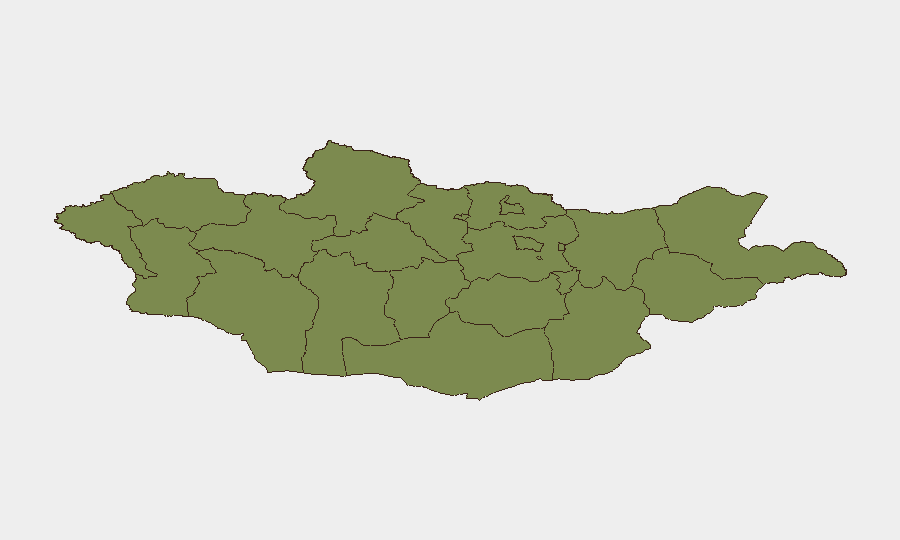
Dundgovi province carries significantly elevated baseline risk (31.8 composite score) compared to all other provinces, driven by structural vulnerabilities rather than acute incident activity. Ulaanbaatar (5.2) ranks second and remains the primary focus for corporate asset and personnel protection, given population density and capital-city dynamics. All other provinces cluster around baseline (1.8), indicating risk is geographically concentrated; standard duty-of-care protocols for Ulaanbaatar and enhanced monitoring for Dundgovi cross-border or resource-sector operations remain appropriate.
How GeoBit Would Assist
Corporate security teams operating in Mongolia should employ AOI Monitoring & Early Warning on Dundgovi province and Ulaanbaatar to maintain persistent alert coverage on emerging instability, protest activity, or supply-chain disruption. OSINT Fusion & Corroboration across news wires, social-media signals (X/Twitter, Telegram), and local government channels provides real-time incident detection and reduces false-positive noise. GIS & Spatial Analysis combined with Routing & Network Analysis can support alternative journey planning for personnel and logistics moving through higher-risk provinces or near border zones.
7-Day Outlook
No escalation is anticipated in the near term; Mongolia's security profile is expected to remain flat and stable over the next 7 days. Routine monitoring of Dundgovi and Ulaanbaatar should continue; international travel and business operations do not face imminent disruption. Standard travel advisories, local-authority coordination, and incident-reporting protocols remain sufficient for most corporate operations.
Highest-Risk Areas — Ranked
| # | State / Region | Risk |
|---|---|---|
| 1 | Dundgovi | 31.8 |
| 2 | Ulaanbaatar | 5.2 |
| 3 | Orkhon | 1.8 |
| 4 | Selenge | 1.8 |
| 5 | Övörkhangai | 1.8 |
| 6 | Töv | 1.8 |
| 7 | Ömnögovi | 1.8 |
| 8 | Bayan-Ölgii | 1.8 |
| 9 | Uvs | 1.8 |
| 10 | Hovsgel | 1.8 |
| 11 | Arkhangai | 1.8 |
| 12 | Bayankhongor | 1.8 |
Sources
Previous Daily Briefs
A new Mongolia brief is written every day — each with its own risk map and downloadable CSV. Here's the last week; use the calendar to go further back.
📅 Browse every day by calendar →
Highlighted days have a brief. Tap a day for that day's map & analysis, or “csv” for that day's dataset ($5).