Situation Summary
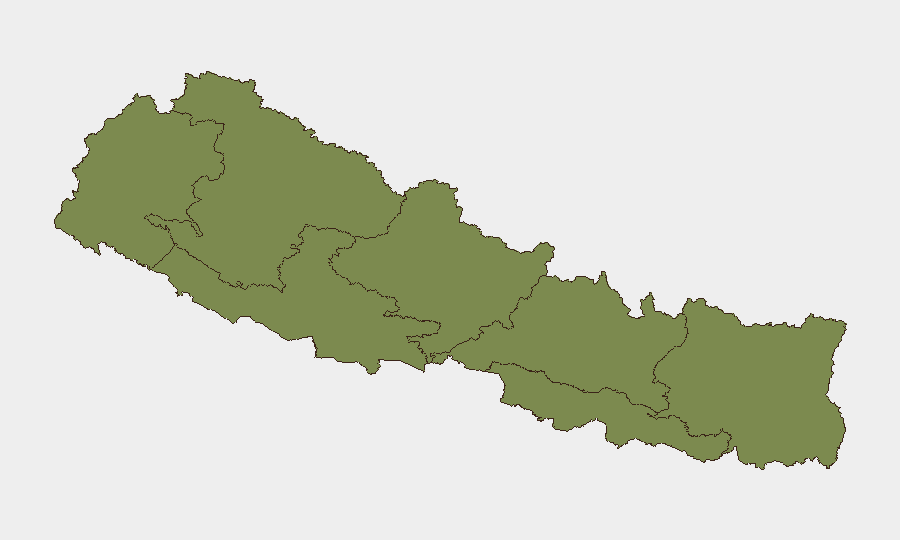
Nepal remains a low-to-moderate threat environment (global rank #96, composite score 7.0) with 27 tracked events, but risk is heavily concentrated in Bagamati Province—which scores 31.4 and dominates the national profile. Recent event signals (15–16 June) point to government statements, police investigations, inter-community tensions, and business-related arrests or detentions, though open-source verification of specific incidents within the last 24–48 hours remains limited. The India–Nepal border remains a persistent background friction point, with historical tension in Susta and Humla districts, but no confirmed new incidents can be dated to the current reporting window. Overall trajectory: contained but fragmented, with Kathmandu-area activity (Bagamati) as the primary focal point.
Key Developments
GeoBit's event-signal tracking identified the following categories of activity on 15–16 June, though independent real-time corroboration remains incomplete:
- Government & Official Action – Government public statements recorded on 15 June; police investigations initiated (15 June) in connection with unspecified subjects. Specific location and nature of investigations not yet independently verified in open reporting.
- Business & Law Enforcement – Arrest or detention of business-related actors reported (14 June); follow-up investigation signal (15 June). No confirmed location or detail in public sources as of 17 June 06:00 UTC.
- Inter-Community Tensions – Multiple public statements by community groups on 15 June suggesting localized disagreement or dispute; escalation potential assessed as low-to-moderate absent triggering event. Geographic specificity unclear from available signals.
- Institutional Scrutiny – Bank sector activity signal recorded (14 June); Rana family disapproval noted (15 June). Neither indicates active security incident; both suggest administrative or reputational scrutiny.
- Border & Regional – No new cross-border incidents confirmed in the last 24–48 hours. Historical context: India–Nepal border disputes in Susta (West Nawalparasi) and Humla remain unresolved from 2026 and earlier; no escalation signal from those zones in current window.
*Note: Real-time verification from independent news, police, or civil-society sources for 16–17 June remains pending; recommendations issued pending receipt of corroborating detail.*
Highest-Risk Areas
Bagamati Province—home to Kathmandu and Nepal's capital region—drives the national threat picture, with a risk score of 31.4 versus 4.7 for the next-highest province (Gandaki). This concentration reflects political sensitivity, population density, institutional presence, and historical labor/protest activity in the capital and Kathmandu Valley. All other provinces score 1.4 or below, indicating either lower baseline risk or limited event signal density. Organizations with staff or assets in Kathmandu should treat Bagamati as the primary monitoring zone; security teams should focus on civil unrest, transport disruption, and institutional instability rather than armed conflict or terrorism.
How GeoBit Would Assist
Intel Sweep & OSINT Fusion on Bagamati and border areas would consolidate scattered social-media signals, police reports, and NGO alerts into a single timeline, reducing verification lag. Sentiment & Temporal Analysis on government, business, and community statements (15–16 June) would clarify intent and escalation risk. AOI Monitoring & Early Warning on Kathmandu Valley and historical flashpoint zones (Susta, Humla) enables 24/7 alerting when event density or rhetoric intensity changes, giving duty-of-care teams lead time for travel advisory or personnel movement decisions.
7-Day Outlook
No major escalation is forecast for 17–24 June absent a triggering incident (e.g., arrest of high-profile figure, border clash, or labor action). Bagamati Province will remain the primary locus of low-level government, institutional, and community activity. Border tensions will persist as background friction but are unlikely to spike without external driver. Teams should maintain standard vigilance and rely on real-time alert feeds rather than assume stability.
Highest-Risk Areas — Ranked
| # | State / Region | Risk |
|---|---|---|
| 1 | Bagamati Province | 31.4 |
| 2 | Gandaki Province | 4.7 |
| 3 | Sudurpashchim Province | 1.4 |
| 4 | Karnali Province | 1.4 |
| 5 | Lumbini Province | 1.4 |
| 6 | Koshi Province | 1.4 |
| 7 | Madhesh Province | 1.4 |
Sources
Previous Daily Briefs
A new Nepal brief is written every day — each with its own risk map and downloadable CSV. Here's the last week; use the calendar to go further back.
📅 Browse every day by calendar →
Highlighted days have a brief. Tap a day for that day's map & analysis, or “csv” for that day's dataset ($5).