Situation Summary
Poland remains a moderate-risk environment (global rank #108) with a composite threat score of 10, characterized by elevated counter-intelligence and hybrid-threat activity rather than acute civil unrest or infrastructure disruption. Recent detentions of suspected foreign intelligence operatives and organized disruption networks, combined with official warnings of Russian hybrid attacks, signal that Polish security services are actively countering state-sponsored influence operations targeting diaspora communities and critical systems. The diplomatic tensions with Ukraine reported July 2 add a secondary layer of political friction, though no major street-level incidents or travel disruptions have been verified in the last 48 hours. The threat environment is best described as *elevated but contained*, with risk concentrated in intelligence and information operations rather than kinetic events.
Key Developments
- Warsaw – Belarusian spy detentions (announced July 2, 2026): Polish Internal Security Agency (ABW) detained a Belarusian citizen and Polish national suspected of surveillance on Belarusian exile communities on behalf of Belarusian intelligence services, including monitoring of opposition meetings and public activities.
- Warsaw – Diaspora filming operation (disclosed within 48 hours): ABW disclosed the detention of a 19-year-old Belarusian and 44-year-old Polish national for allegedly filming Belarusian community events for intelligence purposes, consistent with hostile intelligence targeting of diaspora networks.
- Multi-city Ukrainian refugee operation (recent days, reported within 48 hours): Joint ABW operations in Warsaw, Wroclaw, Krakow, Zakopane, and Bydgoszcz resulted in detention of nine Ukrainian and two Belarusian nationals suspected of organizing anti-Ukrainian demonstrations among refugee populations and amplifying anti-Ukrainian online narratives aligned with Russian influence objectives.
- National security warning (July 1–3, 2026): Tomasz Siemoniak, Poland's minister coordinating special services, issued public warnings within the last 48 hours that hybrid-attack threats remain elevated, citing drone operations, sabotage preparation, and information warfare targeting critical infrastructure and Ukrainian communities.
- Polish-Ukrainian diplomatic tensions (July 2, 2026): Ukraine's Foreign Minister Andrii Sybiha publicly acknowledged that Polish-Ukrainian relations are in "a state of crisis," reflecting heightened political friction that may influence the operating environment for Ukrainian nationals and political organizations in Poland.
Highest-Risk Areas
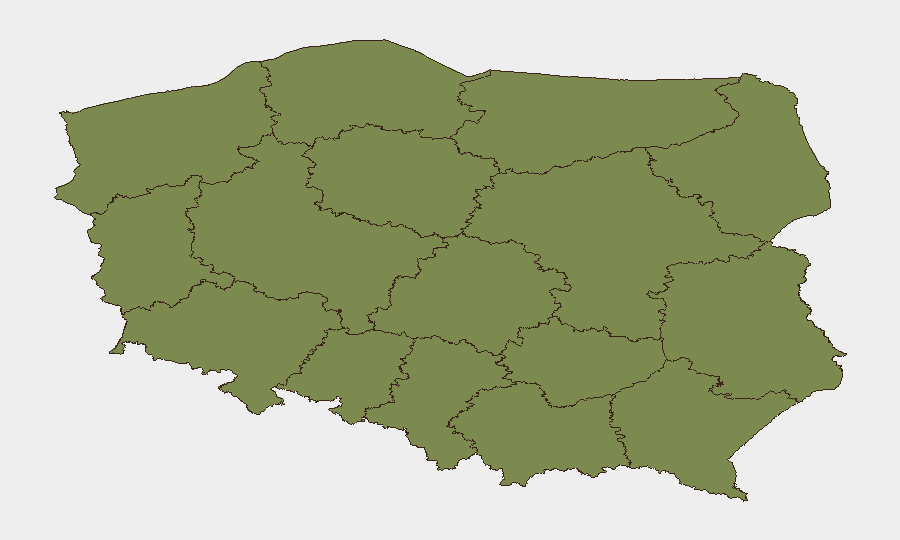
Łódź Voivodeship (risk 31.8) significantly outpaces all other regions and accounts for the plurality of tracked security events; Masovian Voivodeship (16.6), which includes Warsaw, ranks second and hosts the capital's counter-intelligence and diplomatic infrastructure. These two regions together drive the national risk profile, reflecting concentration of intelligence operations, diaspora populations, and state-level security activity in urban centers rather than dispersed civil unrest. The remaining ten voivodeships all score below 5, indicating that acute risk is heavily centralized in the Warsaw-Łódź corridor; regional risk outside these zones remains minimal.
How GeoBit Would Assist
Security and risk teams would deploy Intel Sweep and multi-language OSINT fusion to track ongoing detentions, official statements, and diaspora-community tensions in near real-time across Polish and regional sources. Network & Actor Analysis capabilities would map suspected foreign intelligence operatives and influence networks targeting Ukrainian and Belarusian communities, while AOI Monitoring with early-warning alerting on Warsaw, Wroclaw, and Krakow would flag emerging protest activity, infrastructure incidents, or suspicious gatherings. Sentiment and temporal analysis of online discourse would provide early signals of coordinated disinformation or agitation campaigns targeting refugee populations before street-level mobilization occurs.
7-Day Outlook
Polish authorities will likely continue discrete counter-intelligence operations against suspected Russian and Belarusian networks without major public incidents. Diplomatic friction with Ukraine may persist and complicate the operating environment for Ukrainian nationals and organizations. No major escalation in civil unrest, kinetic attacks, or infrastructure disruption is currently indicated, though hybrid and information-warfare activity should be expected to remain elevated through the near term.
Highest-Risk Areas — Ranked
| # | State / Region | Risk |
|---|---|---|
| 1 | Łódź Voivodeship | 31.8 |
| 2 | Masovian Voivodeship | 16.6 |
| 3 | Greater Poland Voivodeship | 4.3 |
| 4 | Kuyavian-Pomeranian Voivodeship | 2 |
| 5 | Opole Voivodeship | 2 |
| 6 | Warmian-Masurian Voivodeship | 1.8 |
| 7 | Subcarpathian Voivodeship | 1.8 |
| 8 | Podlaskie Voivodeship | 1.8 |
| 9 | Lublin Voivodeship | 1.8 |
| 10 | West Pomeranian Voivodeship | 1.8 |
| 11 | Lubusz Voivodeship | 1.8 |
| 12 | Lower Silesian Voivodeship | 1.8 |
Sources
Previous Daily Briefs
A new Poland brief is written every day — each with its own risk map and downloadable CSV. Here's the last week; use the calendar to go further back.
📅 Browse every day by calendar →
Highlighted days have a brief. Tap a day for that day's map & analysis, or “csv” for that day's dataset ($5).