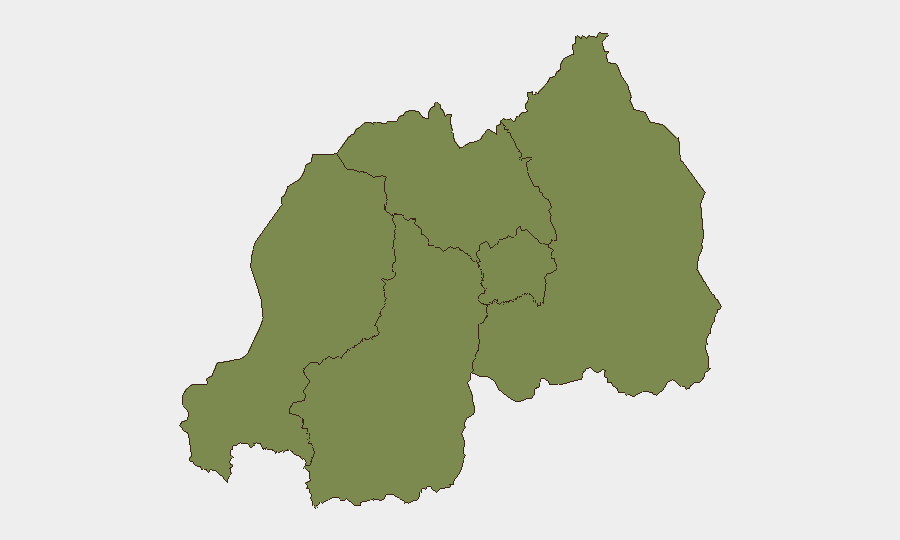
Situation Summary
Rwanda remains a low-threat environment globally (rank #153; composite score 5), with no clearly documented security incidents, civil unrest, or conflict events recorded in the last 24–48 hours. The country's security posture remains stable relative to regional comparators, though Southern Province carries elevated composite risk (score 32) that warrants ongoing monitoring. Current threat signals include unverified threat communications and a diplomatic statement involving Egypt, neither of which has produced corroborated on-ground security impacts.
Key Developments
- 2026-07-06 · Unspecified Threat Signal · Rwanda (nationwide). A threat communication was flagged on 2026-07-06 without corroborated incident detail, location specificity, or secondary source validation. Status and nature remain unclear pending verification.
- 2026-07-06 · Diplomatic Statement · Egypt vs Rwanda. A public statement involving Egypt and Rwanda was recorded on 2026-07-06. Substance and operational security implication not yet clarified in available sources.
- Recent · Marburg Virus Disease Activity · Rwanda (health, not security). Multiple signals indicate ongoing Marburg virus disease events in Rwanda. This is a health/humanitarian risk, not a security incident, but may affect business continuity, supply chains, and personnel movement. Confirm with local health authorities and internal occupational health protocols.
- No active conflict, civil unrest, crime surge, political instability, or infrastructure disruption events documented in the last 24–48 hours across accessible open-source and social media channels. Absence of reporting does not guarantee absence of risk; continued monitoring recommended.
Highest-Risk Areas
Southern Province dominates Rwanda's sub-national risk profile (composite score 32), significantly exceeding all other provinces (Western, Northern, Eastern, and Kigali City all at score 2). The concentration of risk in the south suggests either elevated historical incident density, ongoing transnational criminal or armed-group activity, or persistent cross-border vulnerabilities—likely linked to Burundi border dynamics and legacy conflict-affected zones. Western Province and border areas warrant secondary attention due to regional instability, though current scores reflect lower active threat levels. Kigali City and Eastern Province show minimal current composite threat, though as administrative and economic hubs they remain logical targets for monitoring and contingency planning.
How GeoBit Would Assist
Corporate security teams should deploy Area-of-Interest (AOI) monitoring and early warning on Southern Province, with persistent watch on Burundi border crossings and known conflict-legacy zones to capture emerging incidents before secondary reporting. Multi-language Intel Sweep and X/Twitter OSINT should track unverified threat signals (such as the 2026-07-06 threat communication) and diplomatic communications between Rwanda and Egypt in real time, with sentiment and actor analysis to distinguish rhetoric from operational risk. Marburg virus tracking via environmental and health intelligence should feed occupational health and business continuity teams to adjust personnel movement and supply-chain routing.
7-Day Outlook
No imminent security escalation is signaled for Rwanda in the near term; the low global threat rank and absence of corroborated recent incidents support a stable near-term outlook. However, the concentration of risk in Southern Province and ongoing health threats (Marburg) warrant sustained monitoring rather than complacency. Diplomatic statements and unverified threats should be tracked for secondary effects or clarification over the next 7 days.
Highest-Risk Areas — Ranked
| # | State / Region | Risk |
|---|---|---|
| 1 | Southern Province | 32 |
| 2 | Western Province | 2 |
| 3 | Northern Province | 2 |
| 4 | Kigali City | 2 |
| 5 | Eastern Province | 2 |
Sources
Previous Daily Briefs
A new Rwanda brief is written every day — each with its own risk map and downloadable CSV. Here's the last week; use the calendar to go further back.
📅 Browse every day by calendar →
Highlighted days have a brief. Tap a day for that day's map & analysis, or “csv” for that day's dataset ($5).
Atlas — our AI intelligence desk — emails them this snapshot personally. Nothing else, no list.