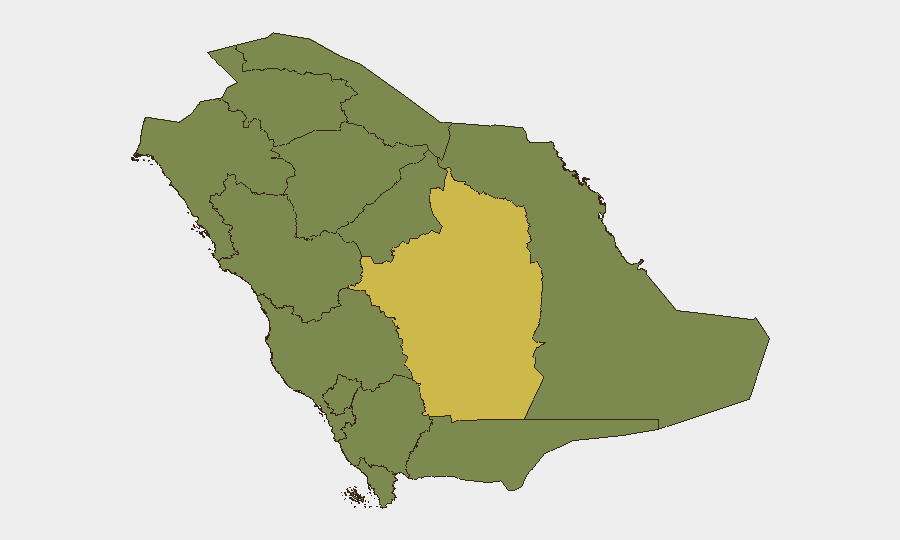
Situation Summary
Saudi Arabia remains at composite threat rank #43 globally with a score of 49, reflecting moderate but active security dynamics driven primarily by regional escalation rather than direct domestic incidents. The past 48 hours have been marked by heightened diplomatic activity and statements in response to Iranian military action against Bahrain and US strikes near the Strait of Hormuz, alongside new Saudi legislative action on terrorism financing. No major protests, civil unrest, or significant crime events have been reported inside Saudi cities in the immediate reporting window; risk concentration remains in Riyadh Region (64.3) and is driven by indirect regional military tension and financial-regulatory frameworks.
Key Developments
- Riyadh (Foreign Ministry), 27 June – Saudi Arabia issued a formal condemnation of Iranian drone attacks on Bahraini territory, citing violations of international law and describing the incident as undermining regional security and de-escalation efforts. This represents direct diplomatic escalation on the Iran-GCC axis.
- Gulf Region (Strait of Hormuz), 26–27 June – US military conducted multiple strikes against Iranian missile, drone storage, and coastal radar sites in response to an Iranian drone attack on the *Ever Lovely* cargo vessel. While not in Saudi territory, this acute escalation affects regional shipping routes, energy transit, and aviation routings with indirect impact on Saudi commercial and travel corridors.
- Doha–Riyadh, 27 June – Qatar's Prime Minister and Foreign Minister held a phone call with the Saudi Foreign Minister during the period of highest regional tension, signaling active GCC-level coordination on security and political positioning.
- Kingdom-wide (Cabinet), 27 June – Saudi Arabia approved a new Law on the Management of Assets Seized and Confiscated in Money Laundering, Predicate Offenses, and Terrorism Financing Cases, strengthening judicial and regulatory frameworks for asset governance. This reflects ongoing enforcement focus on terrorism financing compliance and financial crime.
- Multi-state statement, 27 June – Saudi Arabia joined multiple Arab states in condemning Iranian actions as violations of sovereignty and threats to regional stability, consolidating a unified Arab diplomatic response.
Highest-Risk Areas
Riyadh Region dominates the risk profile at 64.3, significantly elevated above all other provinces; the remaining 11 tracked regions cluster at 34.3–38.8. This concentration reflects Riyadh's status as the political, economic, and diplomatic capital, where government institutions, foreign missions, and critical infrastructure are concentrated and thus exposed to secondary effects of regional conflict escalation, diplomatic incidents, and policy changes. Medina Province (38.8) and Makkah Region (37.8) show modest elevation, likely reflecting hajj/umrah security considerations and religious site protection protocols. Risk below the Riyadh tier is relatively homogeneous and baseline, indicating that immediate threat drivers are centralized in the capital and regional diplomatic sphere rather than dispersed across provinces.
How GeoBit Would Assist
Security teams should deploy AOI Monitoring & Early Warning on Riyadh's diplomatic and government districts, plus persistent Intel Sweep and X/Twitter OSINT to track Iranian statements, GCC coordination, and sanctions announcements in real time. Routing & Network Analysis and Maritime & Aviation tracking are operationally relevant for supply-chain and personnel travel routing around Strait of Hormuz instability. Conflict & Military mapping and early warning & prediction capabilities would flag military escalation thresholds and cross-border drone or missile activity affecting Saudi airspace and critical infrastructure.
7-Day Outlook
Regional tension is likely to remain elevated through early July as Iran and US forces maintain postures near the Strait of Hormuz and GCC states continue diplomatic and public messaging. No imminent direct threat to Saudi domestic security is indicated, but secondary effects—shipping delays, air-route congestion, energy-market volatility, and heightened security protocols at critical infrastructure—should be anticipated. Watch for further Iranian military action, additional GCC statements, or escalatory rhetoric that could shift threat posture on shorter notice.
Highest-Risk Areas — Ranked
| # | State / Region | Risk |
|---|---|---|
| 1 | Riyadh Region | 64.3 |
| 2 | Medina Province | 38.8 |
| 3 | Makkah Region | 37.8 |
| 4 | Northern Borders Province | 34.3 |
| 5 | Al-Bahah Province | 34.3 |
| 6 | 'Asir Province | 34.3 |
| 7 | Jazan Province | 34.3 |
| 8 | Najran Region | 34.3 |
| 9 | Tabuk Province | 34.3 |
| 10 | Al Jawf Region | 34.3 |
| 11 | Ḥa'il Province | 34.3 |
| 12 | Al-Qassim Province | 34.3 |
Sources
Previous Daily Briefs
A new Saudi Arabia brief is written every day — each with its own risk map and downloadable CSV. Here's the last week; use the calendar to go further back.
📅 Browse every day by calendar →
Highlighted days have a brief. Tap a day for that day's map & analysis, or “csv” for that day's dataset ($5).