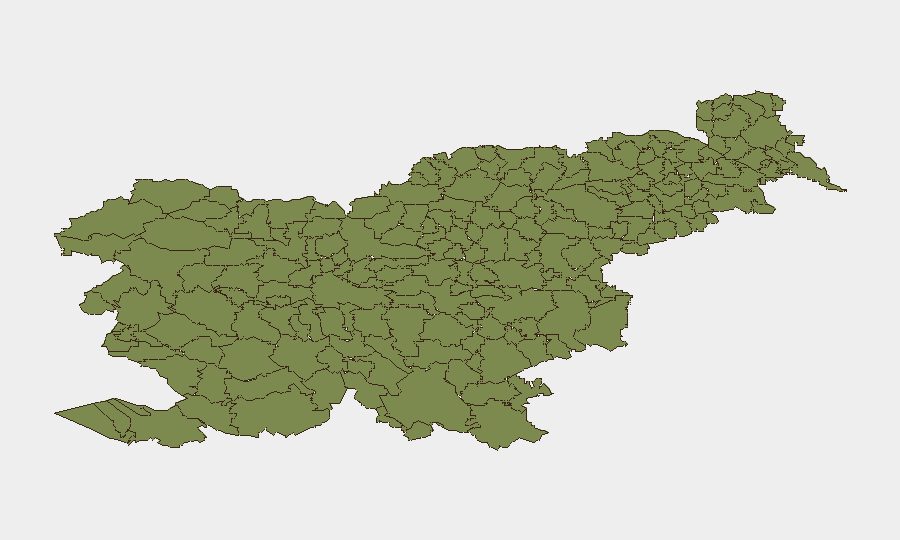
Situation Summary
Slovenia remains one of Europe's most stable countries, ranked #159 globally with a composite threat score of 5. No security incidents, civil unrest, crime spikes, infrastructure failures, or travel disruptions have been confirmed in the last 24–48 hours. The security environment shows no material change from the previous reporting period, and no credible indicators suggest imminent deterioration.
Key Developments
No discrete security, conflict, civil-unrest, crime, political-instability, infrastructure, or travel-risk incidents meeting the 24–48 hour confirmation window were identified in Slovenia during the reporting period.
Note on Recent Context: While several policy developments have circulated in open reporting—including parliamentary-election assessments (finalized 3 July), statements on military-equipment restrictions involving Israel, and Palestine-recognition reversals—these represent commentary on decisions made earlier in 2026 or do not carry verifiable timestamps placing them within the last 1–2 days. They do not meet the threshold for inclusion as current developments.
Highest-Risk Areas
All twelve sub-national regions tracked in Slovenia carry a composite risk score of 0, reflecting the country's consistent domestic stability. The northwest municipalities—including Bovec, Kobarid, Tolmin, and Bohinj—are ranked highest by default algorithmic order but show no elevated threat indicators differentiating them from the remainder of the country. Slovenia's relatively homogeneous low-risk profile across regions underscores the absence of geographic hotspots for crime, unrest, infrastructure vulnerability, or political instability.
How GeoBit Would Assist
For corporate security and duty-of-care teams with personnel or assets in Slovenia, GeoBit's AOI Monitoring & Early Warning capability would provide persistent, automated alerting for any emerging incidents across designated municipalities or facilities, enabling rapid escalation if conditions shift. Intel Sweep and multi-language OSINT (including X/Twitter and Telegram feeds, local news, and election-monitoring data) would sustain real-time situational awareness of political developments, labor disputes, or cross-border movements affecting the Schengen perimeter. Routing & Network Analysis can support duty-of-care journey planning and alternative-route identification for staff in the unlikely event of localized disruptions.
7-Day Outlook
No indicators suggest material security deterioration in Slovenia over the next seven days. Barring unforeseen developments in the Western Balkans or broader EU context, the country is expected to maintain its current stability baseline. Continued monitoring of Schengen-border activity, parliamentary implementation of recent policy shifts, and regional developments in neighboring states will inform ongoing threat assessment.
GEOBIT RECOMMENDATION: Given the absence of current incident data and the low-threat environment, standard duty-of-care protocols (staff awareness, emergency contact registers, routine perimeter security) remain appropriate. Escalation to heightened alerting or travel restrictions is not warranted. Teams should maintain passive monitoring posture and enable rapid activation of AOI alerts if conditions change.
Highest-Risk Areas — Ranked
| # | State / Region | Risk |
|---|---|---|
| 1 | Bovec | 0 |
| 2 | Kobarid | 0 |
| 3 | Kanal | 0 |
| 4 | Kranjska Gora | 0 |
| 5 | Gorje | 0 |
| 6 | Tolmin | 0 |
| 7 | Bohinj | 0 |
| 8 | Cerkno | 0 |
| 9 | Brda | 0 |
| 10 | Šempeter-Vrtojba | 0 |
| 11 | Renče-Vogrsko | 0 |
| 12 | Miren-Kostanjevica | 0 |
Sources
Previous Daily Briefs
A new Slovenia brief is written every day — each with its own risk map and downloadable CSV. Here's the last week; use the calendar to go further back.
📅 Browse every day by calendar →
Highlighted days have a brief. Tap a day for that day's map & analysis, or “csv” for that day's dataset ($5).
Atlas — our AI intelligence desk — emails them this snapshot personally. Nothing else, no list.