Situation Summary
South Korea's overall security posture remains stable, with a composite threat score of 19 and no credible reports of kinetic security incidents (terrorism, major violent crime, civil unrest) in the past 24–48 hours. The primary near-term risk vector is cyber and data-privacy related, driven by the regulatory enforcement action and public disclosure of South Korea's largest-ever data breach on 11 June 2026. Corporate security and duty-of-care teams should anticipate elevated fraud and phishing exposure for staff and customers using major Korean e-commerce platforms, though physical security risk to personnel and facilities remains low.
Key Developments
- 11 June 2026 | Seoul (national) – South Korea's Personal Information Protection Commission (PIPC) issued a record 624.7 billion won (~US$409m) fine against e-commerce giant Coupang for a data breach exposing personal information of 33.67 million users, including names, email addresses, phone numbers, shipping addresses, and order histories. The breach was reported 48 hours after detection, missing the legally mandated 24-hour notification window.
- 11 June 2026 | Seoul (national) – PIPC investigation revealed that a former Coupang engineer retained and abused a cryptographic signing key months after departure to access customer data, highlighting insider-risk and key-management failures at a major Korean technology firm.
- 11 June 2026 | Seoul (national) – Combined financial impact of the PIPC fine and Coupang's previously announced 1.7 trillion won customer compensation plan now exceeds US$1.6 billion, marking one of the costliest cyber-incident outcomes in Korean corporate history.
- 11 June 2026 | Nationwide (online channels) – Following the regulatory ruling, Korean media outlets and security researchers noted renewed associations between the now-confirmed large-scale Coupang breach and increases in spam, phishing, and social-engineering attacks targeting Coupang users since 2020.
- No new kinetic security incidents reported – Current open-source monitoring and web research do not confirm credible reports of physical security threats, terrorism, major violent crime targeting foreigners, or infrastructure disruption in South Korea over the past 24–48 hours.
Highest-Risk Areas
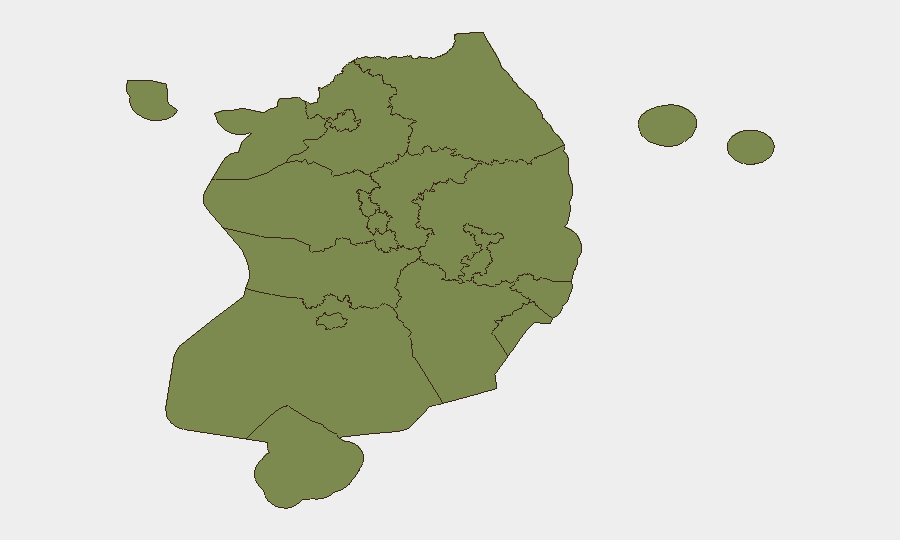
Seoul and North Chungcheong provinces drive the majority of tracked risk (31.3 and 29.4 composite scores respectively), though the sub-national ranking reflects historical event density rather than acute physical threats. Seoul's elevated score is consistent with its role as the national capital and hub for government, finance, technology, and media; the Coupang breach—headquartered and managed in Seoul—contributes to current cyber-risk visibility. All other provinces remain at low absolute risk levels (1.3–4.9), indicating geographically dispersed and relatively contained threat exposure. Cyber and regulatory risk, not physical security, is the primary differentiator in the current risk profile.
How GeoBit Would Assist
Corporate security teams should deploy Intel Sweep and multi-language OSINT monitoring to track ongoing phishing and fraud campaigns targeting Coupang users, correlating mentions across Korean social media, Telegram, and public forums. Network & Actor Analysis would identify criminal and opportunistic actors exploiting the exposed dataset, enabling targeted awareness for staff. AOI Monitoring & Early Warning on Seoul and major business districts would continue real-time watch for any escalation in physical incidents or civil unrest tied to regulatory enforcement or consumer backlash.
7-Day Outlook
Regulatory and reputational pressure on Coupang and competitor e-commerce platforms is expected to intensify as media coverage and consumer reaction mature over the next 7 days. Fraud and phishing attempts will likely peak as criminal groups operationalize the disclosed 33.67 million user records. Physical security risk remains low; watch for consumer-led protests or advocacy activity, though no credible early indicators suggest organized or violent action in the immediate term.
Highest-Risk Areas — Ranked
| # | State / Region | Risk |
|---|---|---|
| 1 | Seoul | 31.3 |
| 2 | North Chungcheong | 29.4 |
| 3 | South Jeolla | 4.9 |
| 4 | Incheon | 2.4 |
| 5 | Gyeonggi | 2.1 |
| 6 | Jeonbuk State | 2.1 |
| 7 | Daejeon | 2.1 |
| 8 | Gangwon State | 1.6 |
| 9 | Jeju | 1.6 |
| 10 | Busan | 1.6 |
| 11 | South Chungcheong | 1.3 |
| 12 | Sejong | 1.3 |
Previous Daily Briefs
A new South Korea brief is written every day — each with its own risk map and downloadable CSV. Here's the last week; use the calendar to go further back.
📅 Browse every day by calendar →
Highlighted days have a brief. Tap a day for that day's map & analysis, or “csv” for that day's dataset ($5).