Situation Summary
Sri Lanka remains a low-to-moderate composite threat environment (rank #112 globally; score 9/100) with acute governance instability concentrated in the Western Province. Recent activity signals (11–13 June) center on administrative sanctions, arrests, detentions, and inter-agency disputes involving the Attorney General, Inspector General, and presidential office, suggesting internal institutional friction rather than widespread civil unrest or violent conflict. The political system appears under strain, but no travel bans, curfews, or large-scale security incidents have been declared as of 14 June 2026. Risk remains heavily asymmetric by geography.
Key Developments
- 2026-06-13 · Western Province/National – Public statements issued between the Attorney General and the presidency, and separate public statements within government ranks, indicating escalating friction over investigative and administrative authority.
- 2026-06-12 · National – Inspector General subject to disapproval action; simultaneous disapproval action by police against unspecified target; Ministry investigation initiated against the state, signaling multi-agency institutional discord.
- 2026-06-12 · National – Arrests or detentions executed by state actors; concurrent investigation by Attorney General's office against state entities, suggesting possible law-enforcement or corruption-related action.
- 2026-06-12 · National – Administrative sanctions imposed; separate investigation launched by Sri Lankan authorities against themselves, consistent with internal governance review or anti-corruption activity.
- 2026-06-11 · Western Province/National – Administrative sanctions action completed, preceding the wider institutional friction signals noted on 12–13 June.
Note: Live web research did not yield corroborated current news reporting or social-media intelligence on these events. Signals derive from GeoBit event feeds; verification via independent news sources and official Sri Lankan government statements is recommended before operational response.
Highest-Risk Areas
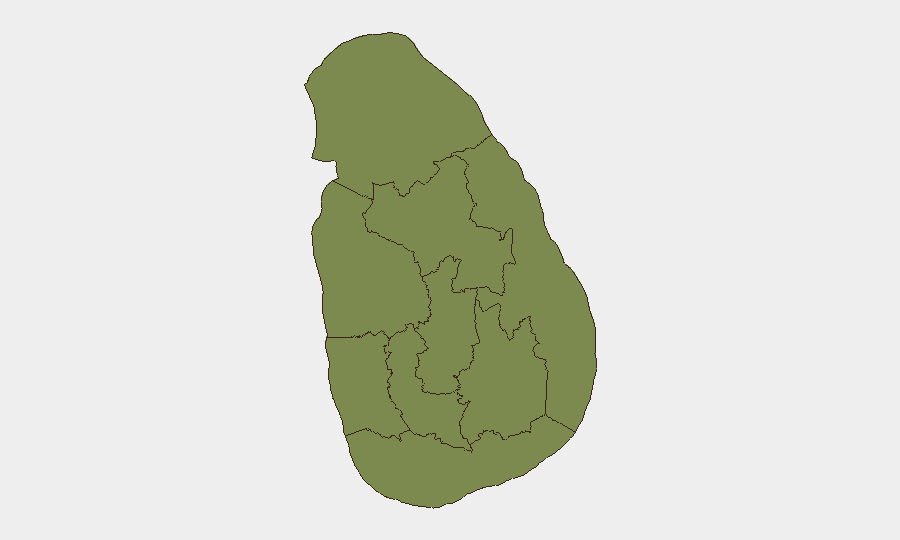
The Western Province (risk score 36.4) accounts for the overwhelming majority of assessed threat concentration—more than double the second-ranked North Central Province (15.4). This pattern aligns with Colombo's role as the capital, administrative hub, and commercial center; governance friction, arrests, and inter-agency disputes naturally cluster here. The North Central Province's secondary rank (15.4) likely reflects residual post-conflict sensitivities or economic instability. All remaining provinces score below 7, indicating diffuse, low-level risk. For duty-of-care purposes, teams with personnel or assets in the Western Province (Colombo, suburbs, port districts) should prioritize situational awareness of government stability and official movement restrictions; provincial staff elsewhere face baseline risk only.
How GeoBit Would Assist
Intel Sweep and X/Twitter & Telegram OSINT would triangulate the 11–13 June signals against independent news, official statements, and social-media sentiment to confirm or refute governance instability narratives. AOI Monitoring & Early Warning (persistent watch on Colombo, Western Province government and transport hubs) would alert security teams to curfews, protests, roadblocks, or official travel advisories within hours of onset. Entity Extraction & Network Analysis would map relationships among the Attorney General, Inspector General, and presidency to assess escalation risk and identify safe transit routes or facility-access constraints ahead of ground movement.
7-Day Outlook
Governance friction may intensify if investigations or sanctions broaden, or stabilize if internal mechanisms resolve disputes within one week. No indicators suggest imminent large-scale unrest, civil conflict, or international intervention. Security teams should maintain heightened situational awareness of official announcements and monitor Colombo's main transport corridors and business districts for any disruption signals; provincial operations remain stable.
Highest-Risk Areas — Ranked
| # | State / Region | Risk |
|---|---|---|
| 1 | Western Province | 36.4 |
| 2 | North Central Province | 15.4 |
| 3 | Uva Province | 10.2 |
| 4 | Northern Province | 6.4 |
| 5 | North Western Province | 6.4 |
| 6 | Central Province | 6.4 |
| 7 | Eastern Province | 6.4 |
| 8 | Sabaragamuwa Province | 6.4 |
| 9 | Southern Province | 6.4 |
Sources
Previous Daily Briefs
A new Sri Lanka brief is written every day — each with its own risk map and downloadable CSV. Here's the last week; use the calendar to go further back.
📅 Browse every day by calendar →
Highlighted days have a brief. Tap a day for that day's map & analysis, or “csv” for that day's dataset ($5).