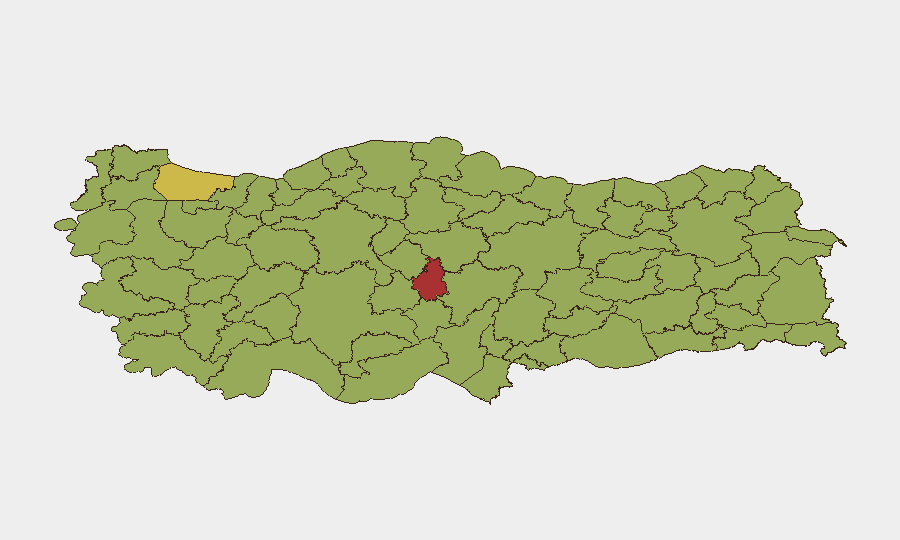
Situation Summary
Turkey remains a mid-range global security concern (rank #22, composite score 69) with elevated diplomatic and regional tensions but no major new domestic incidents in the past 48 hours. President Erdoğan and Foreign Minister Fidan have issued statements linking Israeli military operations in Syria and Lebanon to Turkish security interests and warning against foreign intervention in Iran and Cyprus, raising the strategic risk profile around Turkey's neighborhood. The absence of new verified internal security events, coupled with continued regional rhetoric, suggests current threat materialization remains primarily at the diplomatic and border-posture level rather than acute domestic violence or infrastructure disruption.
Key Developments
- Ankara – 11 June 2026 | President Erdoğan stated in parliament that Israeli strikes on Lebanon and Syria have escalated to directly threaten Turkish security, framing regional escalation as a Turkish strategic concern and calling on world powers to counter Israeli "aggression."
- Turkey (diplomatic posture) – 10–11 June 2026 | Foreign Minister Fidan reiterated Turkey's opposition to foreign military intervention in Iran and renewed commitment to diplomatic channels, signaling Ankara's effort to manage regional conflict spillover risk.
- Ankara/Eastern Mediterranean – 10–11 June 2026 | Erdoğan warned that initiatives "led by Israel" are intended to destabilize the Mediterranean and Cyprus, framing Turkey's security as inseparable from Syrian and Lebanese stability.
- Turkey (national airspace) – 10–11 June 2026 | Major carriers including KLM continue rerouting around Iranian, Iraqi, and Israeli airspace due to Middle Eastern security conditions; while Turkish airspace remains open, regional avoidance patterns may indirectly affect flight routings to/from Turkey.
- Regional intelligence baseline | No new verified terror attacks, mass civil unrest, critical infrastructure sabotage, or domestic travel restrictions have been reported inside Turkey in the past 48 hours; GeoBit's event tracker shows multiple diplomatic and declaratory signals but no location-tagged tactical incidents meeting corroboration thresholds.
Highest-Risk Areas
Nevşehir (risk 78) and Istanbul (risk 61) lead the sub-national ranking, followed by the capital Ankara (56.1) and a cluster of mid-Anatolian and southeastern provinces (Bursa, Diyarbakır, Mersin). Nevşehir's elevated score likely reflects historical protest activity and geopolitical sensitivities; Istanbul's rank reflects ongoing demonstrations, labor actions, and its status as Turkey's largest urban center and international transport hub. The concentration of risk in Istanbul, Ankara, and Bursa—coupled with persistent mid-range scores across southeastern border regions (Diyarbakır, Hatay, Mersin)—suggests that urban political volatility and cross-border dynamics (PKK, Syrian refugee flows, Israel-Syria spillover) remain the primary sub-national drivers. Personnel and assets in these zones should maintain heightened situational awareness and contingency protocols.
How GeoBit Would Assist
Security teams should leverage AOI Monitoring & Early Warning (persistent watch on Istanbul, Ankara, Nevşehir, and border provinces with real-time alerting), Intel Sweep and multi-language OSINT (tracking Turkish political rhetoric, protest mobilization, and border-community sentiment), and Conflict & Military tracking (monitoring PKK/YPG activity, Syrian border dynamics, and Israeli-Turkish strategic signaling). Routing & Network Analysis would identify safe corridors and flight alternatives should regional escalation accelerate, while satellite imagery and GIS analysis would support near-real-time situational assessment of sensitive areas.
7-Day Outlook
Diplomatic and rhetorical tension with Israel/the Middle East is likely to remain elevated, with Turkey positioning itself as a stabilizing actor while reinforcing alliance signaling. No sharp uptick in domestic violence is presently signaled, but border provinces and major urban centers warrant continued close monitoring for protest escalation or security force responses tied to regional spillover or domestic political calendars.
Highest-Risk Areas — Ranked
| # | State / Region | Risk |
|---|---|---|
| 1 | Nevşehir | 78 |
| 2 | Istanbul | 61 |
| 3 | Ankara | 56.1 |
| 4 | Bursa | 53.2 |
| 5 | Diyarbakır | 52.8 |
| 6 | Mersin | 52.8 |
| 7 | Izmir | 50.8 |
| 8 | Erzurum | 50.4 |
| 9 | Adana | 49.6 |
| 10 | Ordu | 49.6 |
| 11 | Hatay | 48.6 |
| 12 | Yozgat | 48.4 |
Sources
Previous Daily Briefs
A new Turkey brief is written every day — each with its own risk map and downloadable CSV. Here's the last week; use the calendar to go further back.
📅 Browse every day by calendar →
Highlighted days have a brief. Tap a day for that day's map & analysis, or “csv” for that day's dataset ($5).