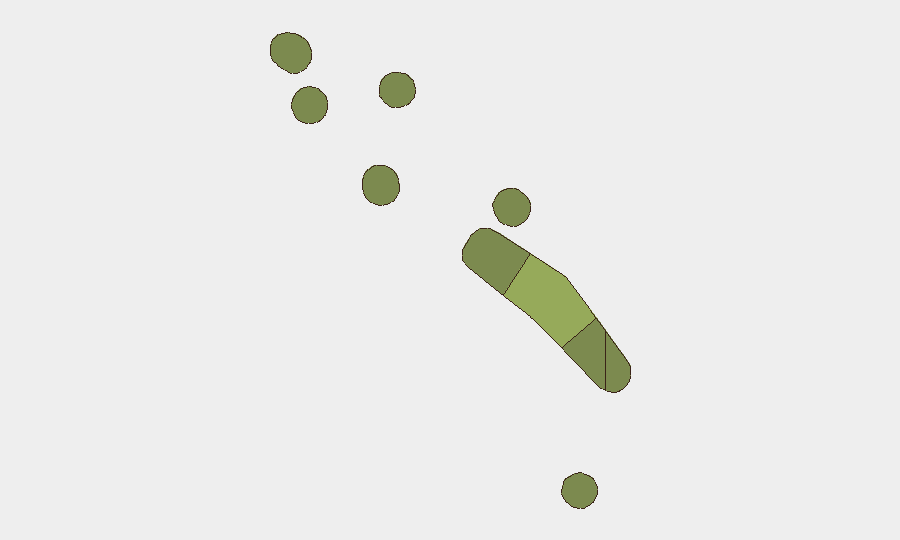
Situation Summary
Tuvalu remains a low-threat environment with no verified security incidents, civil unrest, crime escalations, or infrastructure disruptions reported in the last 24–48 hours (15–16 July 2026). The nation's composite threat score of 3 (ranked #194 globally) reflects sustained stability across the archipelago. Current conditions support routine operations and travel for personnel and assets, with no active advisories or alerts in effect.
Key Developments
- Tuvalu (national) — 15–16 July 2026 — No domestic security incidents, civil unrest, crime spikes, or political instability reported in the last 48 hours. Conditions remained stable and normal.
- Tuvalu (national) — 15–16 July 2026 — No infrastructure, transport, or utility disruptions confirmed in the last 48 hours.
- Tuvalu (diplomatic, regional context) — 9 July 2026 — Tuvalu joined other Pacific governments in condemning China's ballistic missile test over regional waters. This was a diplomatic statement and does not represent a domestic security incident.
- Funafuti (capital) — 15–16 July 2026 — No specific incidents reported; however, Funafuti remains the highest sub-national risk area (score 45) and warrants standard corporate duty-of-care monitoring.
- No event backlog — Current GeoBit event signal tracking shows zero tracked security events in Tuvalu's active window, consistent with the stable threat posture.
Highest-Risk Areas
Funafuti (capital, risk score 45) accounts for the majority of sub-national risk and should be the primary focus of in-country security protocols. The remaining islands—Vaitupu (28), Nui (25), and Nukufetau (22)—carry moderate composite risk but remain well below Funafuti's concentration. The disparity reflects Funafuti's role as the population and commercial hub; risk drivers include standard urban concentration factors (density, transient populations, port activity) rather than acute instability. Outer islands carry minimal independent risk profiles and should be monitored as secondary priorities.
How GeoBit Would Assist
Teams with personnel or assets in Tuvalu should employ AOI (Area-of-Interest) Monitoring & Early Warning on Funafuti and secondary locations to detect any emergence of security, civil-unrest, or infrastructure events in near-real-time. Intel Sweep and multi-language OSINT (X, Telegram, local radio SIGINT, YouTube/podcast intelligence) provide early detection of political tension, protest activity, or crime patterns before they escalate. For duty-of-care routing and contingency planning, Routing & Network Analysis can identify alternative transport and evacuation pathways across the archipelago, while Maritime & Aviation tracking monitors vessel and aircraft movements into and out of Funafuti and outer islands as part of broader situational awareness.
7-Day Outlook
No acute security threats are forecast for the next 7 days. Tuvalu's political and social environment is expected to remain stable, with routine maritime, aviation, and administrative activity continuing. Teams should maintain baseline monitoring protocols and remain alert to any unscheduled announcements from the Government of Tuvalu; no significant events (political, weather, or conflict-related) are anticipated to alter the current low-risk trajectory.
Highest-Risk Areas — Ranked
| # | State / Region | Risk |
|---|---|---|
| 1 | Funafuti | 45 |
| 2 | Vaitupu | 28 |
| 3 | Nui | 25 |
| 4 | Nukufetau | 22 |
| 5 | Niutao | 20 |
| 6 | Nanumanga | 18 |
| 7 | Nanumea | 15 |
| 8 | Nukulaelae | 12 |
Sources
Previous Daily Briefs
A new Tuvalu brief is written every day — each with its own risk map and downloadable CSV. Here's the last week; use the calendar to go further back.
📅 Browse every day by calendar →
Highlighted days have a brief. Tap a day for that day's map & analysis, or “csv” for that day's dataset ($5).
Atlas — our AI intelligence desk — emails them this snapshot personally. Nothing else, no list.